

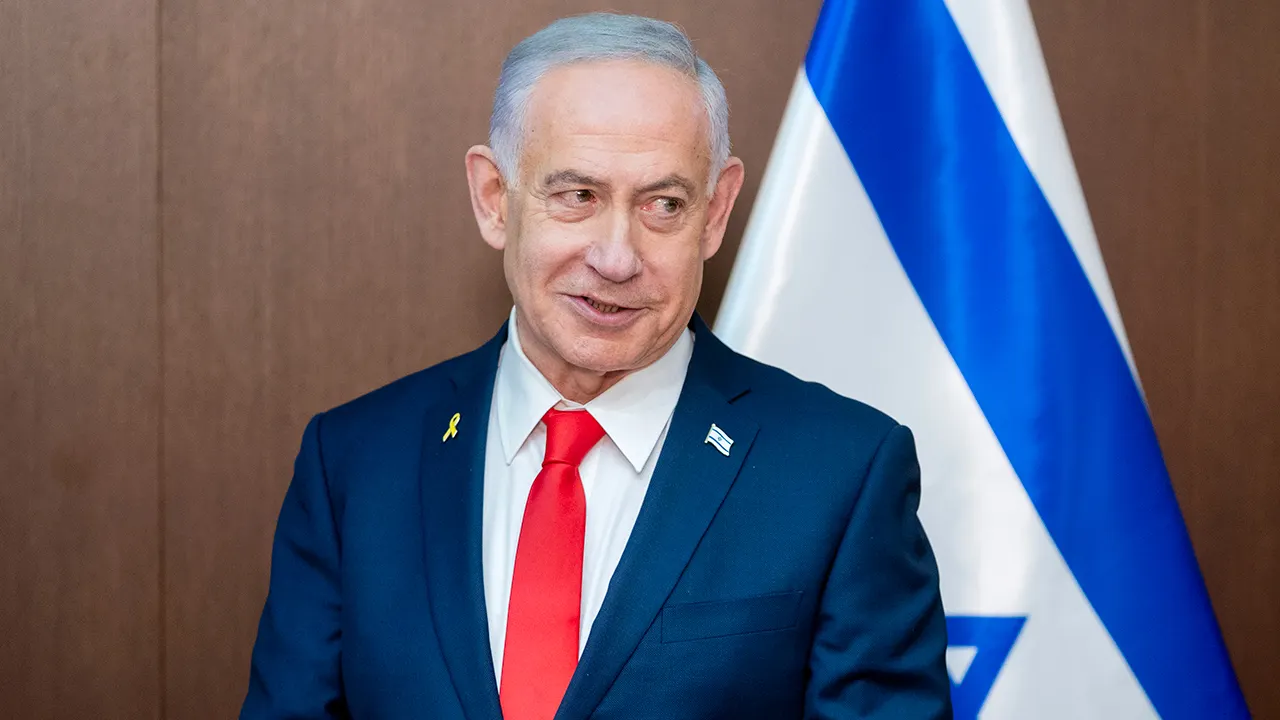

Israeli Prime Minister Benjamin Netanyahu announced on Saturday that he is open to temporarily stepping aside as part of a proposed power-sharing agreement with political rival Gadi Eisenkot, who leads the Yashar party. This initiative aims to form a unity government amid a deadlock following the recent Israeli elections held on October 27. Netanyahu’s suggestion comes as Eisenkot is reportedly nearing the formation of a coalition that could end Netanyahu’s lengthy tenure in power.
During this transitional period, Netanyahu would assume the role of alternate prime minister while Eisenkot would govern first. This arrangement seeks to address the pressing challenges facing Israel, including national security issues and the need for effective governance. The proposed deal reflects the complex political landscape where no party emerged with a definitive majority following the elections, leaving the future leadership uncertain until a coalition is effectively established.
As negotiations unfold, Eisenkot has until December 6 to finalize a coalition deal, with a potential 14-day extension. Observers are closely monitoring this evolving situation, which could significantly shift the dynamics of Israeli politics in the coming weeks.
| Article Subheadings |
|---|
| 1) Proposal for a Unity Government |
| 2) Motivations Behind the Pact |
| 3) Current Political Landscape |
| 4) Eisenkot’s Coalition Strategy |
| 5) Reaction and Next Steps |
Proposal for a Unity Government
The plan proposed by Benjamin Netanyahu indicates a willingness to temporarily cede power in what could be seen as a historic move within Israeli politics. Under this rotating agreement, both the Likud party, led by Netanyahu, and the Yashar party, headed by Gadi Eisenkot, would share power, allowing Eisenkot to serve first as prime minister. This is a notable shift for Netanyahu, who has maintained a firm grip on Israeli politics for over a decade.
This political arrangement aims to stabilize the government during a period of heightened insecurity and division among the electorate. Netanyahu stated that despite his belief that he should retain leadership as head of Israel’s largest political party, he recognizes the urgency of the situation, citing the “existential threat” facing Israel. He emphasized the need to prioritize the country’s stability over personal ambition.
Motivations Behind the Pact
Netanyahu’s concession is significantly influenced by the current political climate, characterized by intense challenges, both domestically and internationally. The Israeli Prime Minister’s office has recently faced pressure from various factions within the government and civil society, reflecting widespread calls for effective leadership against threats from neighboring states and internal divisions.
Given the disarray after the October legislative elections, where no single party or coalition achieved a functional majority, Netanyahu’s compromise may serve as a strategy to prevent a complete political upheaval. The prospect of an opposition coalition run by Eisenkot is formidable enough to compel Netanyahu to consider alternatives he once might have dismissed.
Current Political Landscape
Since the elections held on October 27, Israel’s political scene has been marked by uncertainty and fragmentation. The results revealed a divided electorate, producing a hung parliament, thus thwarting both Netanyahu and Eisenkot’s ambitions for a clear majority. In this context, Eisenkot has been entrusted by Israeli President Isaac Herzog with the critical task of forming a government.
The legislative structure requires that Eisenkot can negotiate with various political blocs to assemble a coalition. With time constraints looming, he has begun to engage potential partners, such as The Democrats (a left-wing party) and the right-leaning Yisrael Beiteinu, signaling that his coalition possibilities could be expanding. As negotiations unfold, the potential unity government presents a front against threats posed by regional adversities and internal strife.
Eisenkot’s Coalition Strategy
With an emphasis on forming a viable governing coalition, Gadi Eisenkot has been proactive in navigating alliances among various political factions. His initiatives showcase a commitment to establishing a cohesive front that could effectively address significant national issues, such as security concerns and social cohesion.
Eisenkot’s strategy entails conducting “real, sincere, and accelerated negotiations” with Netanyahu’s Likud party, despite encountering initial reluctance. He has reframed his approach to attract moderate factions that might be apprehensive about aligning with either extreme political wing in Israeli politics. His approach seems geared toward fostering common ground amidst ideological divergences, focusing on policy instead of partisan rivalry.
Reaction and Next Steps
While Netanyahu’s proposal for a rotating leadership arrangement marks a significant shift, responses from Eisenkot and other political players reflect underlying tensions. Eisenkot has publicly declared a commitment to sincere negotiations but has also indicated disappointment with the progress thus far, emphasizing that his party’s negotiation team faces hurdles of refusal and evasion from the Likud bloc.
“We have been trying to conduct meaningful negotiations, yet we face unnecessary hesitations,”
Eisenkot outlined in response to Netanyahu’s offer.
As both leaders grapple with public and legislative pressures, the stakes continue to rise. The upcoming weeks are critical as Eisenkot seeks to solidify a coalition by the December 6 deadline. Should an agreement materialize, it may reshape Israel’s political future significantly as it attempts to navigate through its most substantial challenges.
| No. | Key Points |
|---|---|
| 1 | Netanyahu proposed a unity government featuring a power-sharing arrangement with Eisenkot. |
| 2 | This move aims to address the pressing national security threats faced by Israel. |
| 3 | Eisenkot has been tasked with forming a coalition following the election results, which left no clear majority. |
| 4 | Various political factions are currently being negotiated to create a governing coalition. |
| 5 | The forthcoming negotiations are critical for both leaders, potentially impacting Israel’s political landscape. |
Summary
The recent proposal by Benjamin Netanyahu to temporarily yield power to Gadi Eisenkot underscores the volatile political dynamics in Israel following inconclusive elections. As both leaders face mounting pressures to form a government capable of addressing urgent national issues, the proposed rotation of leadership represents a possible pathway toward stabilizing the current political climate. This evolving situation will require continued negotiation and strategic alliance building in the weeks ahead.
Frequently Asked Questions
Question: What is the significance of the proposed unity government in Israel?
The proposed unity government aims to provide stable leadership during a critical time, addressing ongoing national and security concerns while navigating a fragmented political landscape.
Question: Who is Gadi Eisenkot, and what role does he play in this political scenario?
Gadi Eisenkot is the leader of the Yashar party and a former military chief. He has been tasked with forming a government following the recent elections and has engaged in negotiations to establish a governing coalition.
Question: What are the next steps in the negotiations between the parties involved?
The parties will continue negotiations to finalize a coalition, with a deadline set for December 6. Eisenkot aims to secure agreements with various factions to form a viable government.
