

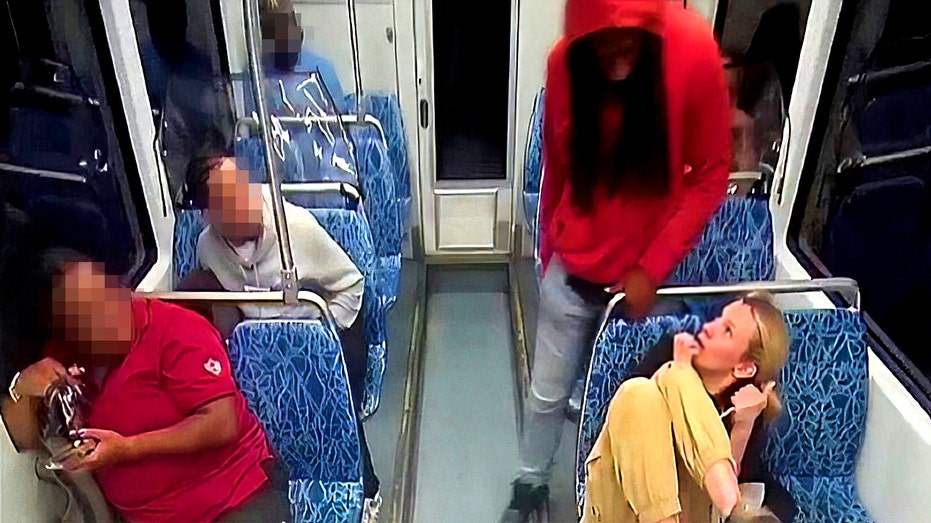

Charlotte is asking a North Carolina judge to dismiss a wrongful-death lawsuit filed by the family of Iryna Zarutska, arguing governmental immunity protects decisions involving transit policing and public safety. Zarutska was fatally stabbed aboard the city’s Lynx Blue Line in August 2025. Her family alleges that inadequate security, fare enforcement and physical barriers left passengers vulnerable. The city denies that its policies caused the death and says the accused killer acted independently.
The city’s 34-page filing was submitted Monday in Mecklenburg County Superior Court. It asks the judge to dismiss all claims against Charlotte and prevent the family from filing them again. The judge has not yet ruled.
| 1) | Charlotte invokes governmental immunity |
| 2) | The fatal attack aboard the Lynx Blue Line |
| 3) | Family alleges security and fare-control failures |
| 4) | City disputes causation and potential damages |
| 5) | The judge has not ruled on the motion |
Charlotte invokes governmental immunity
Charlotte argues that the lawsuit challenges government functions protected under North Carolina law. The filing identifies law-enforcement deployment, transit policing, crime prevention, oversight of security contractors and public-safety administration as activities covered by governmental immunity. The city says those decisions cannot serve as the basis for liability in the family’s civil claims.
The lawsuit names Charlotte and Professional Police Services, a private transit security contractor. The family’s complaint anticipated an immunity defense and argues that the city waived immunity. It also contends that operating a fare-based light-rail system is a proprietary function rather than a governmental one.
The fatal attack aboard the Lynx Blue Line
Iryna Zarutska, a 23-year-old Ukrainian refugee, had recently left work at a local pizzeria when she boarded a Lynx Blue Line train in Charlotte on August 22, 2025. Surveillance video showed Decarlos Brown Jr. seated behind her before he was accused of stabbing her in the neck about four minutes after she boarded.
The killing received national attention, and Brown is charged in the case. The city acknowledges that no private security guard was inside Zarutska’s train car when the attack occurred. It also acknowledges that Brown apparently boarded without presenting a ticket or pass, while the light-rail system operates without turnstiles or fare gates.
Family alleges security and fare-control failures
Zarutska’s family filed the wrongful-death lawsuit in August, alleging Charlotte failed to adequately police and secure the light-rail system. The complaint argues that stronger fare enforcement, physical barriers and sufficient security could have stopped Brown from boarding or prevented the attack.
The family cites findings from a North Carolina state auditor concerning planned safety spending for 2025. Charlotte and the Charlotte Area Transit System planned to spend approximately $2.23 million on safety and security equipment but spent about $470,000, leaving roughly $1.76 million unspent and some planned work unfinished. The allegations remain disputed in court.
City disputes causation and potential damages
Charlotte denies that it ignored passenger safety. The city says the transit system maintained contracted armed and unarmed security, coordinated with law enforcement and pursued other public-safety initiatives before Zarutska’s death.
The city further argues that Brown’s failure to pay a fare did not indicate he intended to attack anyone. It says decisions about staffing, guard placement, surveillance and fare enforcement did not cause Zarutska’s death because Brown acted on his own and the assault could not have been predicted from prior crime on the system.
If the court permits any claim against Charlotte to proceed, the city argues that Zarutska’s estate should not recover more than $1 million. Charlotte is seeking dismissal of all claims against it and wants the family barred from bringing the claims again.
The judge has not ruled on the motion
The motion is now before a Mecklenburg County Superior Court judge, who has not issued a decision. The ruling will determine whether the family’s claims against Charlotte can continue or whether governmental immunity ends the case against the city at this stage.
The civil case is separate from the criminal prosecution of Brown. The city’s filing addresses liability for alleged transit-security failures, while the criminal case concerns responsibility for the stabbing itself. The parties’ legal arguments will be evaluated by the court as the proceedings continue.
| Number | Key Point |
|---|---|
| 1 | Charlotte seeks dismissal based on governmental immunity. |
| 2 | Iryna Zarutska was killed aboard the Lynx Blue Line in August 2025. |
| 3 | Her family alleges failures involving security, fare enforcement and infrastructure. |
| 4 | The city denies its policies caused the attack and disputes potential damages. |
Summary
Charlotte’s motion places governmental immunity and causation at the center of the civil case over Iryna Zarutska‘s death. The family attributes the attack to alleged shortcomings in transit security, while the city says public-safety decisions are protected and that Decarlos Brown Jr. alone caused the killing. The court has yet to decide whether the lawsuit against Charlotte will proceed.
Frequently Asked Questions
Why is Charlotte seeking dismissal?
The city argues that governmental immunity protects decisions involving transit policing, security contractors, crime prevention and public safety.
What does Zarutska’s family allege?
The family alleges that inadequate security, fare enforcement, physical barriers and other transit safeguards left passengers vulnerable to the fatal attack.
Has the judge ruled on the motion?
No. The Mecklenburg County Superior Court judge had not ruled on Charlotte’s request when the filing was reported.
