

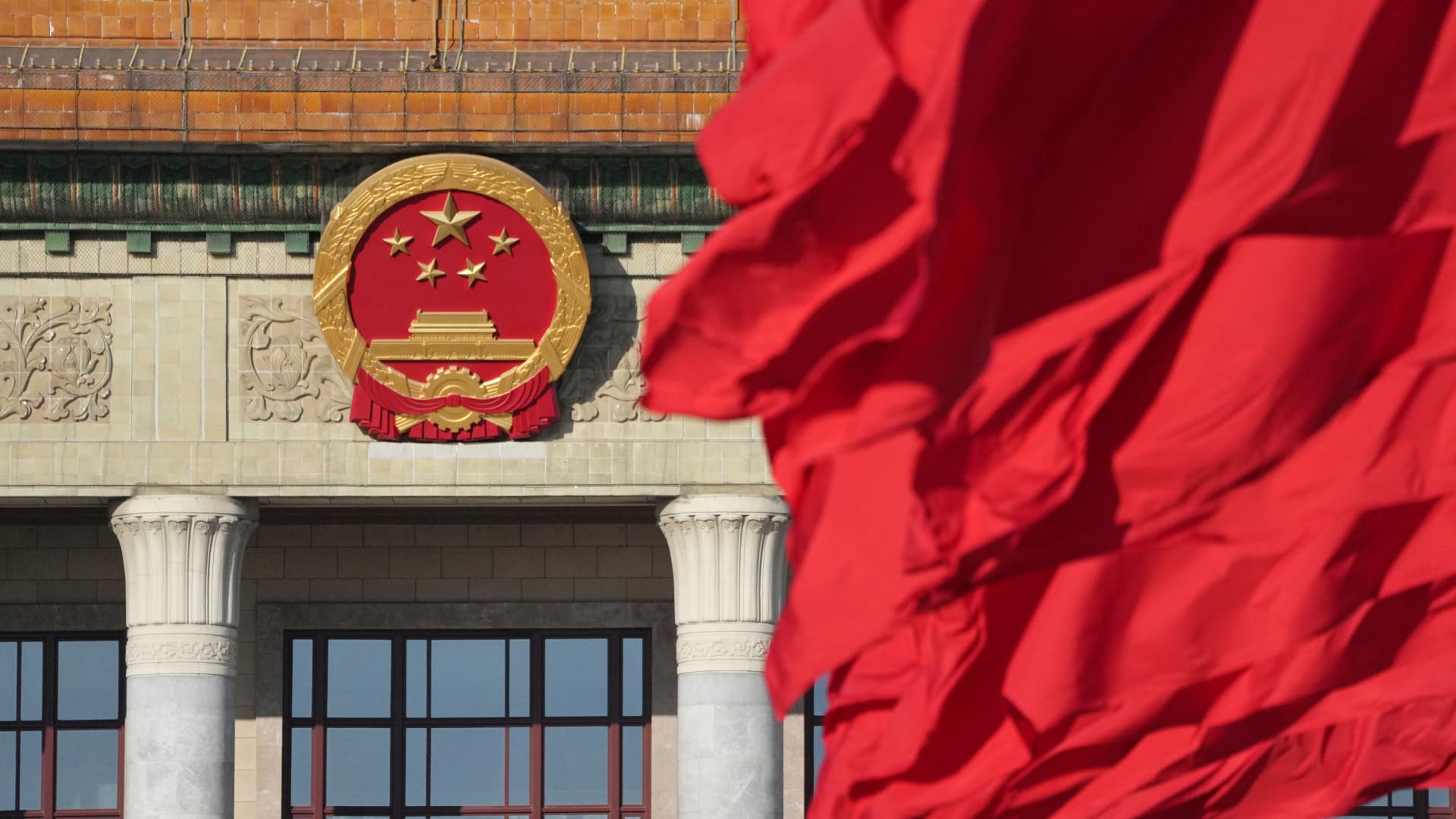

Recent reports have highlighted the increasing role of China’s Ministry of State Security (MSS) as tensions between the U.S. and China grow over cybersecurity, espionage, and technological competition. Since its establishment in 1983, the MSS has evolved into a crucial agency for Beijing, particularly in the context of national security and technological advancements. Recent incidents indicate the agency’s continued focus on infiltrating high-profile organizations, including allegations surrounding Nvidia CEO Jensen Huang and an increasing scrutiny of tech-centric espionage efforts in the U.S.
| Article Subheadings |
|---|
| 1) Growing prominence of the Ministry of State Security |
| 2) The focus on technological espionage |
| 3) Recent incidents highlighting MSS activity |
| 4) International collaborations and challenges |
| 5) The future of U.S.-China relations in tech |
Growing prominence of the Ministry of State Security
The Ministry of State Security (MSS) was established in 1983, primarily to safeguard China against foreign infiltration and espionage in response to an environment marked by increased openness to international engagement. According to research by Sheena Chestnut Greitens, an associate professor at the University of Texas at Austin, the MSS has played a significant role in China’s evolving national security strategy, particularly under the leadership of President Xi Jinping. The ministry’s political influence has significantly increased, acting as a bulwark to enhance China’s intelligence-gathering capabilities and to tackle threats which could undermine the state.
In 2023, the MSS intensified its operations and public engagements, such as launching a WeChat account aimed at raising awareness on national security issues among the Chinese populace. This initiative indicates a shift toward not only hunting domestic threats but also educating citizens to report suspicious activities, thus reinforcing its reach and visibility within society. The organization has also actively engaged in discrediting negative information, as illustrated by a recent public denouncement of an unnamed individual for allegedly spreading false accusations about a colleague being a spy, which was likely tied to a personal grievance. This demonstrates the MSS’s proactive measures to protect its image and authority.
The focus on technological espionage
In the ever-evolving landscape of technology and artificial intelligence, the MSS has increasingly scrutinized the U.S. tech sector as Beijing aims to close the technological gap with Western nations. Strategies employed include aggressive infiltration tactics aimed at extracting sensitive information from leading organizations. Recently, it was reported that an MSS agent had masqueraded as a student at Stanford University to gain access to critical research and data. This tactic reflects a broader trend where the MSS utilizes civilian proxies to stealthily procure invaluable insights into American innovations in technology, particularly in artificial intelligence.
Reports also reveal that China accounts for a substantial portion of state-sponsored cyber intrusions, particularly targeting tech companies that are critical to the U.S. economy and security. According to findings from cybersecurity firm CrowdStrike, Chinese entities were behind over half of the state-sponsored intrusions reported in the previous twelve months, thereby underlining their sophisticated methods of hacking into technological hubs. The MSS is thus seen as a driving force behind such cyber operations, signaling its unwavering commitment to enhancing China’s tech capabilities through clandestine activities.
Recent incidents highlighting MSS activity
One of the more striking recent developments involved the recruitment of businesswoman Alice Huang, who was allegedly contacted by the MSS regarding information on Nvidia CEO Jensen Huang, who, despite sharing a last name, is not related to her. This inquiry by the MSS followed allegations that Nvidia had been implicated in improper conduct regarding chip supplies. While Jensen Huang has publicly acknowledged an affair, the implications of such personal breaches on corporate intelligence and state espionage remain speculative at best.
The investigation reportedly sought to shed light on the extent of Alice Huang‘s connections and potential knowledge of sensitive corporate matters. Industry observers have noted that allegations such as these can destabilize not only individual careers but also entire sectors intertwined with U.S.-China relations in technology. Significant concerns have arisen among U.S. business executives regarding the security of their proprietary technologies amidst fears of state-sponsored espionage directed by agencies like the MSS.
International collaborations and challenges
The MSS does not operate in isolation; its operations often intersect with other state agencies, including the Cyberspace Administration and the Ministry of Public Security. This interconnected web of organizations enhances the efficiency and effectiveness of state initiatives aimed at cybersecurity and industrial espionage. There have been instances where ministers from these bodies have collaborated, as evidenced by Chen Yixin, the State Security Minister, who has publicly advocated for improved governance over artificial intelligence specifically to mitigate associated risks.
In a broader context, the MSS has sought to bolster international relations, with officials like Chen engaging with counterparts from countries such as Vietnam and Laos. Such meetings underline China’s strategy of establishing diplomatic relations while concurrently securing its technological ambitions. This dual approach creates complexities in international relations as nations negotiate how to balance cooperation with security and counter-espionage measures.
The future of U.S.-China relations in tech
Looking ahead, the dynamics of U.S.-China relations, particularly concerning technology, remain uncertain. With rising tensions and accusations regarding espionage and cybersecurity breaches, there are growing calls within the U.S. for a more robust defense against perceived threats posed by Chinese entities. This situation is exacerbated by ongoing economic competitions in technological domains vital for future growth.
The MSS, as a key player in China’s strategic planning, is likely to continue its aggressive pursuit of intelligence and counterintelligence measures. Institutions in the United States may find it essential to adapt their approaches toward safeguarding intellectual property and innovation. As cybersecurity threats evolve, so too must the strategies to counteract them: through both enhanced defensive measures and collaborative international relations aimed at addressing shared concerns.
| No. | Key Points |
|---|---|
| 1 | China’s Ministry of State Security has grown in prominence since its establishment in 1983, particularly under President Xi Jinping. |
| 2 | The MSS is focused on espionage efforts within the U.S. tech sector to bridge the technological gap between China and the West. |
| 3 | Allegations involving Nvidia CEO Jensen Huang indicate the MSS’s tactics are increasingly personal and invasive. |
| 4 | The MSS collaborates with other Chinese state agencies to enhance their intelligence and cybersecurity initiatives. |
| 5 | U.S.-China relations are at a critical junction due to ongoing concerns about espionage and the security of technological innovations. |
Summary
In conclusion, the evolving landscape of China’s Ministry of State Security reflects a broader trend of increasing tensions in U.S.-China relations, particularly surrounding technology and cybersecurity. As the MSS enhances its operations and influence, the ramifications for both nations and their technological sectors are profound. Ongoing incidents and allegations underscore the urgency for U.S. businesses to develop robust countermeasures against potential espionage while navigating the geopolitical complexities that characterize the modern era.
Frequently Asked Questions
Question: What role does the Ministry of State Security play in China?
The Ministry of State Security is responsible for intelligence gathering, counterintelligence, and civil order, playing a crucial role in protecting China’s national security interests.
Question: How has the MSS targeted U.S. technology companies?
The MSS has reportedly employed tactics such as infiltration and cyber espionage to gather sensitive information from U.S. technology firms, particularly in areas related to artificial intelligence.
Question: What implications do recent espionage allegations have on U.S.-China relations?
The allegations contribute to rising tensions between the U.S. and China, prompting calls for stronger cybersecurity measures and potentially impacting trade and diplomatic relations.
