

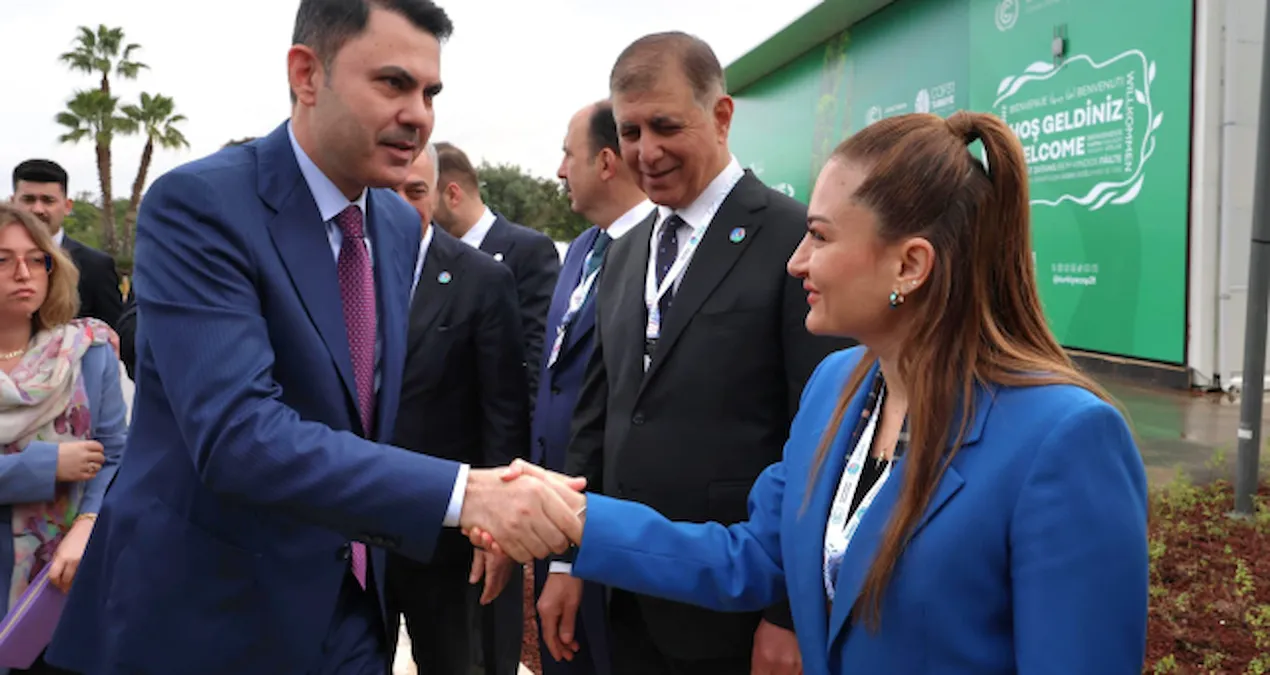

The recent developments surrounding Antalya Metropolitan Municipality Deputy Mayor Büşra Özdemir have sparked renewed speculation regarding her potential shift to the ruling Justice and Development Party (AKP). This speculation arose following a photograph circulated on social media, featuring Özdemir alongside key government figure, Minister of Environment, Urbanization and Climate Change and COP31 President, Murat Kurum. This event coincided with the United Nations Climate Change Conference of the Parties (COP31), held in Antalya, which added a significant political layer to the discussion. As political observers weigh in, the unfolding narrative raises key questions about party dynamics and local governance.
| Article Subheadings |
|---|
| 1) Context of the COP31 Amid Political Circumstances |
| 2) Social Media Impact and Public Perception |
| 3) Insider Insights on Özdemir’s Political Moves |
| 4) Reactions to Transition Claims |
| 5) Importance of the Political Climate in Antalya |
Context of the COP31 Amid Political Circumstances
The context of meeting between Deputy Mayor Büşra Özdemir and Minister Murat Kurum during the COP31 event is pivotal. The conference, recognized as a significant global platform for addressing climate change, was held in Antalya, a city whose regional governance is under scrutiny due to shifting political allegiances. As municipal leaders from various political backgrounds gather to engage in crucial dialogues regarding sustainability and climate policies, any photograph shared on social platforms can initiate a whirlwind of speculation regarding political affiliations. Understanding the historical relationship between the local government and the AKP is central to interpreting the current dynamics surrounding Özdemir.
Social Media Impact and Public Perception
The role of social media in shaping public perception cannot be underestimated in political landscapes. Büşra Özdemir took to social media following her meeting with Murat Kurum, sharing photos that led to speculation about her political future. The image of the handshake was particularly striking, as it featured not only Özdemir but also various participants highlighting a sense of camaraderie amidst the backdrop of COP31. Instant interpretations by political commentators sparked discussions around the question: “Is another metropolitan municipality switching to the AKP?” The framing of these images inevitably influences how constituents perceive their leaders, fostering narratives that can impact electoral outcomes in future municipal elections.
Insider Insights on Özdemir’s Political Moves
Political analysts have cited the importance of understanding the subtleties of Özdemir’s actions. In a column penned by political commentator Ahmet Hakan, the handling of her relationship with the AKP was analyzed. Hakan suggested that the act of taking a photo with a prominent party figure is often seen as the first step in transitioning political loyalty. Such interpretations seek to decode the underlying messages contained in seemingly innocuous social media posts. Analysts highlight that this is a calculated move—whether it is an initiation into a broader coalition or a strategic alignment for forthcoming political maneuvers depends on the prevailing political climate, public sentiment, and party strategy.
Reactions to Transition Claims
In response to persistent rumors regarding her potential move to the AKP, Büşra Özdemir has been vocal in her denials. She has articulated that her meetings with governmental ministries are centered solely on improving services for Antalya. Özdemir rejected speculation and emphasized her commitment to the city’s governance, stating, “Yes, I am meeting with ministries. We are in the COP31 process; I serve this city.” Her remarks signal a strong pushback against narratives suggesting opportunistic political shifts. This blend of public affirmation and deflection represents a common tactic among politicians attempting to navigate a sensitive political landscape while maintaining their current trajectories.
Importance of the Political Climate in Antalya
The political climate in Antalya is a microcosm of broader national electoral trends. As Turkey navigates its socio-political landscape, local governments and their leaders become crucial players in shaping future policies. Allegations of political transition, like those surrounding Büşra Özdemir, are often indicative of larger shifts within party allegiances and regional governance dynamics. The public’s reaction to these transitions can have significant repercussions for the parties involved, influencing future electoral strategies and candidate selections. Observers are keenly attuned to these developments, with many concluding that Özdemir’s future decisions could serve as a barometer for other opposition leaders considering similar paths.
| No. | Key Points |
|---|---|
| 1 | Büşra Özdemir’s recent photo with Murat Kurum has reignited discussions about her potential shift to the AKP. |
| 2 | Social media plays a significant role in how political events are perceived and discussed among constituents. |
| 3 | Political analysts interpret Özdemir’s actions as possiblities for future political maneuvers in light of shifting allegiances. |
| 4 | Özdemir has strongly denied allegations of joining the AKP, emphasizing her commitment to Antalya’s governance. |
| 5 | The political climate in Antalya serves as a reflection of larger national trends impacting local governance. |
Summary
The political speculation surrounding Büşra Özdemir serves as a snapshot of the fluid dynamics within Turkish local governance. As public figures navigate the intersection of governance and political allegiance, the implications of their actions can resonate significantly through the corridors of power. Her situation highlights the challenges faced by political leaders amid changing party landscapes, illustrating the delicate balance between public service and political affiliation. The unfolding story underscores the relevance of public perception and media narratives in shaping the political landscape as Turkey approaches its next electoral phase.
Frequently Asked Questions
Question: What is the significance of the COP31 event in Antalya?
The COP31 event is a key global conference focused on climate change, bringing together leaders from around the world to discuss and plan actions to combat environmental challenges. Holding it in Antalya highlights the city’s role in international conversations about sustainability.
Question: Why are political shifts important in local governance?
Political shifts can significantly impact local governance by altering the leadership dynamics, policy priorities, and party strategies. Such transitions can reshape how resources are allocated and how effectively local issues are addressed.
Question: How does social media influence political narratives?
Social media serves as a platform for real-time communication, enabling politicians to share their messages while allowing the public to engage with and interpret those messages. This interaction can influence opinions, shape public perception, and create a narrative surrounding political events.
