

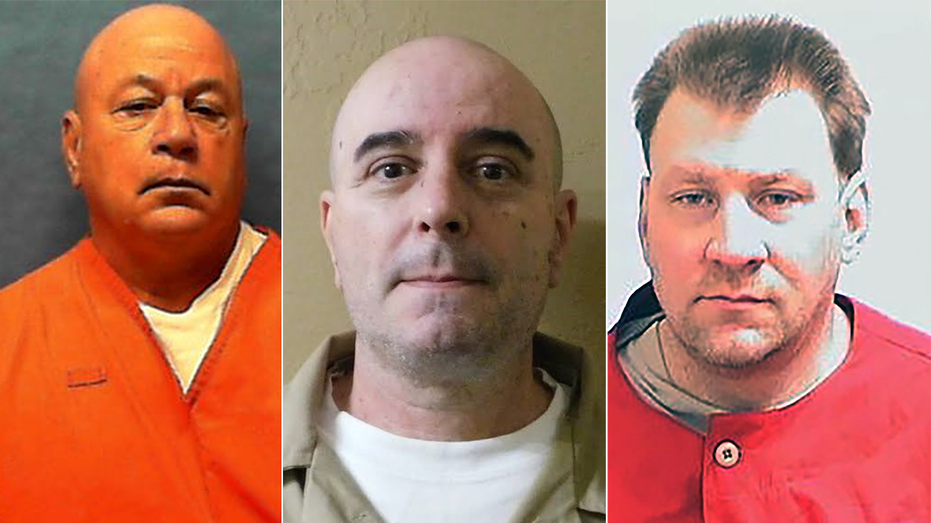

Indiana, Florida and Alabama carried out executions on Thursday, marking the second day this year on which three US states put inmates to death. The executions involved separate murders committed between 1991 and 2010 and were conducted by lethal injection. The events came amid renewed scrutiny of execution procedures and a broader national debate over capital punishment. California also announced plans to pursue commutations for all 548 people on its death row.
The three executions occurred as states continued to differ sharply over the use of the death penalty. Indiana executed Jeffrey Weisheit early in the day, Florida later put Jesse Guardado to death, and Alabama concluded the sequence with the execution of Michael Taylor.
| 1) | Indiana executes Jeffrey Weisheit for the deaths of two children |
|---|---|
| 2) | Florida reaches its annual execution record |
| 3) | Alabama carries out Michael Taylor’s sentence |
| 4) | Executions renew debate over lethal injection and capital punishment |
| 5) | California proposes sweeping death sentence commutations |
Indiana executes Jeffrey Weisheit for the deaths of two children
Indiana executed Jeffrey Weisheit, 50, at 12:45 a.m. at Indiana State Prison in Michigan City. He was sentenced to death for setting a 2010 house fire that killed his girlfriend’s children, aged eight and five, as the couple’s relationship deteriorated.
Weisheit’s attorneys sought additional brain scans, citing head injuries and mental health concerns. They also challenged Indiana’s planned use of execution drugs obtained from a pharmacy facing a disciplinary hearing. Republican Gov. Mike Braun rejected the requests and declined to commute the sentence. Afterward, he said repeated state and federal reviews had not overturned the conviction or sentence.
Florida reaches its annual execution record
Florida executed Jesse Guardado, 64, at 6:13 p.m. by lethal injection at Florida State Prison near Starke. Guardado had confessed and pleaded guilty to fatally stabbing Jackie Malone, 75, in her home in 2004.
Prosecutors said Guardado stole jewelry, cash and other property after the killing to support his drug addiction. The execution brought Florida’s total for the year to 19, matching the state record set the previous year. The state carried out 19 executions in 2025, more than during any other year since Florida reinstated the death penalty in 1976.
Alabama carries out Michael Taylor’s sentence
Alabama executed Michael Taylor, 54, for the 1991 murders of Ivan Moore and Lucille Moore. The couple were beaten with a metal bar during a robbery at their home. Authorities later captured Taylor in Birmingham, about an hour away, while he was in possession of the victims’ Cadillac.
Taylor was executed by lethal injection after a judge rejected objections from his attorneys. He had previously requested nitrogen gas, while his lawyers asked to preserve that option. Opponents of the execution argued that Taylor was 19 at the time of the crime and lacked the maturity to understand its consequences. Republican Gov. Kay Ivey declined to commute his sentence.
“Thirty-five years ago yesterday, Ivan and Lucille Moore kindly opened their home to Michael Taylor. Mr. Taylor repaid the Moores by beating them to death with a metal bar.”
Executions renew debate over lethal injection and capital punishment
Thursday’s executions occurred during renewed scrutiny of lethal injection. In Tennessee, death row inmate Christa Pike survived two doses of pentobarbital during a failed execution attempt in late September and was taken to a hospital before returning to prison.
The triple execution was also notable because it was only the second such day in the United States this year. Oklahoma, Tennessee and Alabama carried out executions within hours of one another on August 13. Before that, the most recent day with three executions had been January 7, 2010.
California proposes sweeping death sentence commutations
On the same day, California Gov. Gavin Newsom announced plans to seek commutations of all 548 death sentences in the state, changing them to life without parole. The proposal would require a recommendation from the California Supreme Court for 382 of those cases.
Newsom, who imposed a moratorium on executions in California in 2019, said state-sanctioned killing was incompatible with the state’s values and that an imperfect legal system could not reliably carry out executions while preserving justice and human dignity.
| Number | Key Point |
|---|---|
| 1 | Indiana, Florida and Alabama each carried out an execution on Thursday. |
| 2 | Florida’s total reached 19 executions for the year. |
| 3 | The executions used lethal injection despite legal and procedural objections. |
| 4 | California proposed commutations for all 548 people on death row. |
Summary
The three executions underscored the continuing use of capital punishment in some states and the growing disagreement over its methods and legal foundations. While Indiana, Florida and Alabama proceeded with sentences upheld through appeals, California moved toward reducing its death row population. The developments illustrated the sharply contrasting approaches to the death penalty across the United States.
Frequently Asked Questions
Why was Thursday’s execution schedule unusual?
Three states executed inmates on the same day, an event that had occurred only once earlier in 2026 and had not occurred since January 2010 before this year.
Who was executed in the three states?
Indiana executed Jeffrey Weisheit, Florida executed Jesse Guardado, and Alabama executed Michael Taylor.
What did California announce?
California Gov. Gavin Newsom announced plans to seek commutations of all 548 death sentences to life without parole, subject to required legal recommendations in some cases.
