

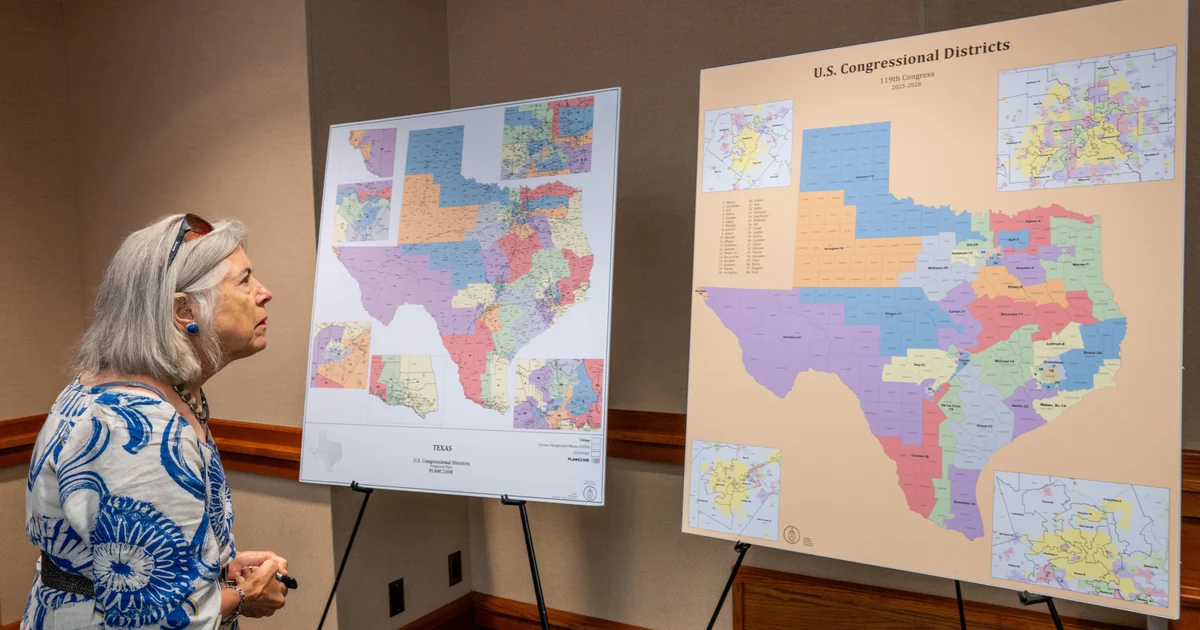

In a significant political shift, Republicans have encountered setbacks in their attempts to redraw Congressional districts mid-decade, a practice historically rare due to its contentious nature. Despite their efforts to gerrymander districts in various states aimed at reinforcing their control, preliminary results from recent elections indicate that Democrats have managed to gain a substantial advantage, potentially claiming control of up to 268 House seats. This unexpected outcome suggests that the Republican attempts may have inadvertently benefitted the Democrats, leading to what observers are terming a “dummymander.”
| Article Subheadings |
|---|
| 1) Overview of Republicans’ Redistricting Efforts |
| 2) State-by-State Analysis of Redistricting Outcomes |
| 3) The Role of Electoral Maps in Political Strategy |
| 4) Consequences of the 2024 Elections on Future Redistricting |
| 5) Implications for National Politics and Voter Representation |
Overview of Republicans’ Redistricting Efforts
The strategic move to redraw Congressional district lines by Republicans was largely influenced by pressure from former President Donald Trump, who encouraged state lawmakers, especially in Texas, to take action to gain additional seats for the GOP. This unprecedented mid-decade redistricting process, typically avoided due to its political implications, aimed to bolster Republican representation in a landscape that had become increasingly competitive.
Despite the Republican strategy, early results reveal a contrasting narrative. The Republicans sought to target and adjust multiple districts across states such as Texas, Ohio, North Carolina, and more, capitalizing on perceived gains. However, the Democrats’ effective campaigning, coupled with Republican miscalculations regarding voter sentiment, has led many of these districts to flip in favor of Democratic candidates instead. This adds to a growing concern among Republicans that their efforts may have backfired, inadvertently creating districts that favored their political rivals.
State-by-State Analysis of Redistricting Outcomes
Beginning with Texas, Republicans initially controlled 24 Congressional seats. With an aggressive redistricting strategy aimed at winning five additional seats, they emphasized gains in South Texas. However, as preliminary results emerged, Republicans maintained 24 seats while Democrats increased their representation to 14, indicating a clear instance of a dummymander.
In Ohio, a commission primarily composed of Republicans devised plans intended to net two more seats, specifically targeting Democratic incumbents like Marcy Kaptur. The outcome was significantly different; Democrats claimed at least seven seats, while Republicans managed only five, reinforcing the dummymander narrative.
North Carolina’s situation mirrored these trends. Republicans controlled ten seats heading into the election, yet the Democrats secured significant victories, with several undecided races leaning favorably for the Democratic candidates, suggesting another potential dummymander. In Louisiana, after a Supreme Court ruling regarding compliance with the Voting Rights Act, Republicans aimed to modify districts favoring racial representation but ended up winning only three seats while Democrats secured one, with pivotal district outcomes still undecided.
The situation in Alabama and Tennessee showcased similar patterns where Republican efforts to eliminate Democratic strongholds resulted in little or no net gain. In Alabama, incumbents in majority-Black districts successfully retained their positions, while in Tennessee, Democrats could secure at least one seat against Republican redistricting attempts.
The Role of Electoral Maps in Political Strategy
The redistricting process fundamentally plays a crucial role in political power dynamics, particularly within the context of the House of Representatives. Maps drawn favorably for one party can dramatically alter the chances of electoral success in future elections. The practice of gerrymandering—drawing district lines to benefit a specific party—has long been a contentious strategy in American politics, often criticized for undermining fair representation.
Historically, the implications of redistricting have led to long-lasting effects, determining the outcomes of not just the immediate elections but also shaping political landscapes for years thereafter. Given the recent outcomes post-redistricting in many states, it is evident that shifts in power may arise from miscalculations in political strategy as seen with the Republican efforts that have backfired.
Consequences of the 2024 Elections on Future Redistricting
The results of the recent elections are anticipated to have significant implications for the 2024 electoral landscape and future redistricting strategies. With Democrats potentially controlling a larger share of House seats, they may push for their own redistricting efforts aimed at solidifying their electoral gains.
Political analysts emphasize that the outcomes of these elections will likely shape the debate over gerrymandering laws and practices at both state and national levels. Dummymandering as a phenomenon raises important questions about the viability and justifications for mid-decade redistricting, particularly following a period where Republican strategies failed to yield expected results.
Implications for National Politics and Voter Representation
The overarching implications of the results from this election extend far beyond mere seat counts in the House. They signal a potential shift in voter sentiment and priorities, especially in battleground states where both parties traditionally vie for control. Furthermore, the diminished efficacy of gerrymandering could lead to increased calls for electoral reforms aimed at ensuring fair representation.
As the political landscape continues to evolve, understanding these shifts in power will be crucial for political parties as they strategize for future elections. There is a growing recognition that cohesive voter outreach combined with fair districting practices might provide more sustainable paths to political success rather than through contentious redistricting maneuvers that risk public backlash.
| No. | Key Points |
|---|---|
| 1 | Republicans aimed to secure control through extensive redistricting efforts across multiple states. |
| 2 | Despite their strategies, Democrats have gained significant seats, suggesting a considerable electoral shift. |
| 3 | The term “dummymander” has emerged to describe instances where gerrymandering backfires against the intended party. |
| 4 | State-specific analyses reveal the varying effectiveness of redistricting efforts and outcomes. |
| 5 | Future redistricting discussions are likely to be influenced by these recent electoral outcomes, calling for potential reforms. |
Summary
The recent electoral results illustrate a significant shift in the political landscape, revealing that aggressive redistricting efforts by Republicans to manipulate Congressional district maps have not only backfired but led to gains for Democrats. This situation raises essential questions about the legitimacy and effectiveness of gerrymandering in shaping future elections. As states analyze these outcomes, potential reforms may seek to promote fairer representation and electoral integrity.
Frequently Asked Questions
Question: What is gerrymandering?
Gerrymandering is the practice of drawing electoral district boundaries in a way that gives one political party an advantage over others, often resulting in distorted representation.
Question: How can redistricting affect election outcomes?
Redistricting can significantly influence election outcomes by determining the voter demographics within each district, thereby affecting which party has the potential to win in elections based on the lines drawn.
Question: What constitutes a “dummymander”?
A “dummymander” refers to a situation in which a party attempts to gerrymander districts but ultimately ends up benefiting the opposing party instead.
