

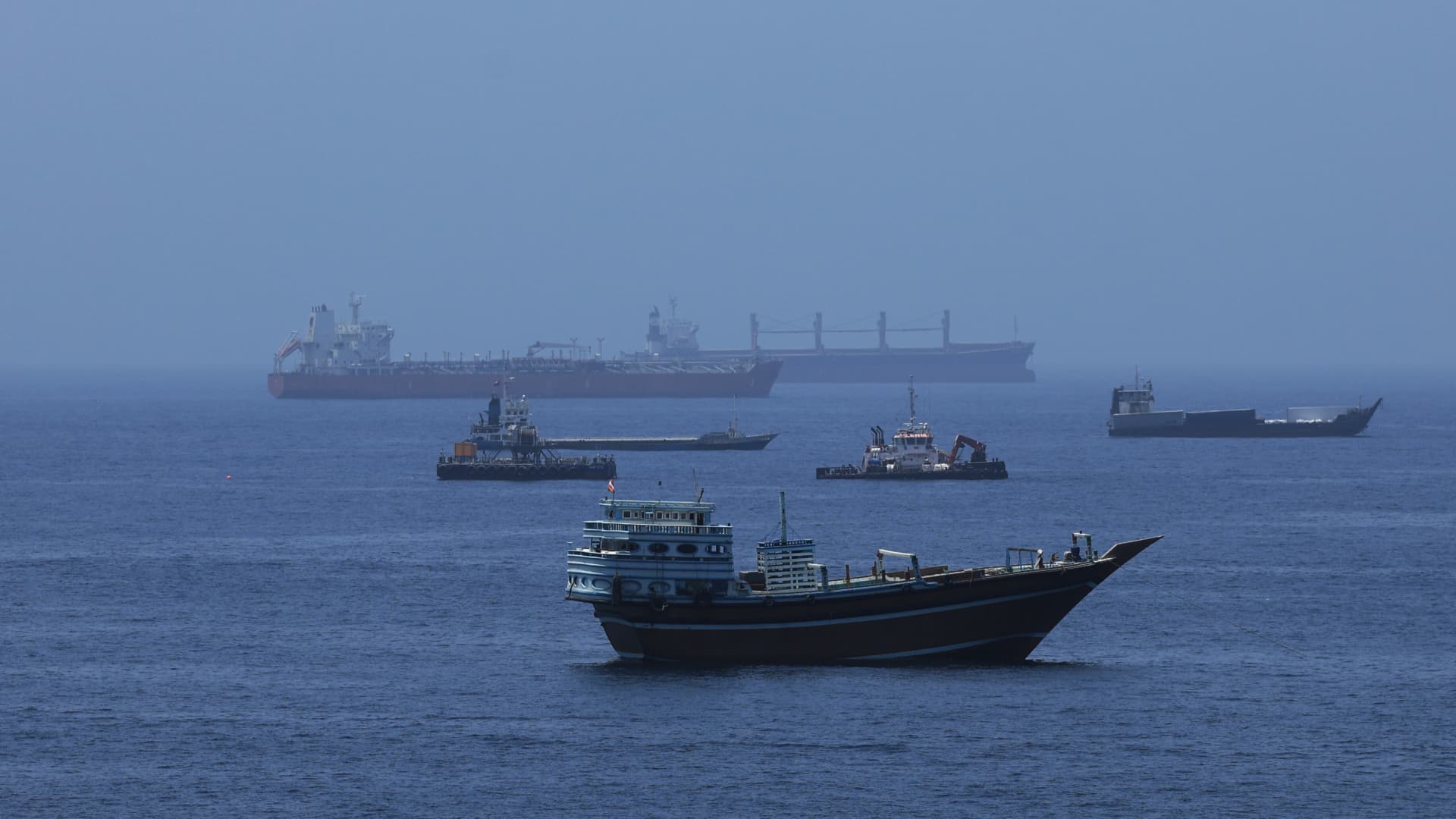

Oil prices are experiencing fluctuations as hopes for a swift resolution regarding the reopening of the Strait of Hormuz diminish. Analysts have raised concerns about underlying market signals that could lead to future price hikes. The ongoing uncertainty in negotiations, coupled with geopolitical tensions, adds complexity to the energy market landscape.
| Article Subheadings |
|---|
| 1) Current State of Oil Prices |
| 2) Iran-U.S. Tensions and Negotiations |
| 3) Analysts’ Predictions on Price Movements |
| 4) Factors Influencing Market Stability |
| 5) Long-Term Outlook for the Energy Market |
Current State of Oil Prices
Brent crude futures recently closed at approximately $88 per barrel, marking a significant decrease from the previous month’s surge above $100. This change has led to a cautious sentiment among traders, who had hoped for a more stable outlook. The decrease corresponds with the dwindling optimism surrounding negotiations to reopen the vital Strait of Hormuz, a strategic chokepoint for global oil transportation.
The market data reveals that while Brent crude fell by over 7% following indications from U.S. officials about potential agreements with Iran, the anticipated resolution has not yet materialized. Experts emphasize that the disconnect between current prices and historical peaks may not endure over time as underlying issues continue to evolve.
Iran-U.S. Tensions and Negotiations
Tensions between Iran and the United States remain a significant factor in the current state of oil prices. The U.S. government has signaled a shift in strategy regarding Iran, moving towards economic pressure rather than immediate military action. President Donald Trump hinted at this new approach, stating that the administration is “low-keying it” regarding potential military strikes.
On the Iranian side, officials assert that Washington must fulfill several conditions before reopening the Strait. This deadlock in negotiations has heightened market uncertainties and could lead to a further reassessment of oil prices. Analysts fear that as diplomatic efforts stall, trader expectations for a return to normalcy may erode, leading to higher prices as the prospects of prolonged supply disruptions become likelier.
Analysts’ Predictions on Price Movements
Analysts are divided on the future trajectory of oil prices. Many market participants are projecting that if negotiations remain stagnant, oil prices could spiral upward, potentially reaching levels between $120 and $140 per barrel. This forecast hinges on the notion of an impending “tipping point,” a threshold beyond which market inventories may be unable to meet consumer demand effectively.
Modupe Adegbembo, an economist at Jefferies, mentioned in a recent analysis that traders currently display confidence in reaching a resolution, even if it may not fully alleviate existing tensions. He cautions that if stagnation persists beyond the weekend, the bullish sentiment may rapidly dissipate, resulting in higher oil prices if supply constraints become evident.
Factors Influencing Market Stability
In addition to geopolitical tensions, several market factors contribute to the overall stability of oil prices. Alternative export routes bypassing the Strait of Hormuz and fluctuating demand for crude oil are crucial considerations. Amrita Sen, founder of Energy Aspects, emphasizes that China’s recent cutbacks in oil imports have temporarily balanced the market, yet a return to increased imports could destabilize this equilibrium.
Moreover, traders appear quick to act on hints of potential normalization in shipping flows, often overlooking persistent supply constraints. Continued instability from regional conflicts, notably the Houthi strikes on Saudi infrastructure, is another complicating factor threatening market stability.
Long-Term Outlook for the Energy Market
Looking ahead, the energy market’s long-term outlook remains uncertain. The ongoing fluctuations in oil prices underscore the fragility of the current market setup, prompting traders to reassess their positions consistently. Many analysts believe that should the situation in the Strait of Hormuz remain unresolved for an extended period, prices are likely to trend higher as market participants adjust to persistent supply constraints.
As the energy sector braces for potential shocks, market observers will closely monitor developments in both diplomatic negotiations and larger economic factors. Should an agreement materialize, there exists the possibility for a significant shift in price dynamics; conversely, continued stasis may yield a more volatile marketplace that could escalate beyond immediate forecasting capabilities.
| No. | Key Points |
|---|---|
| 1 | Brent crude prices recently dipped to $88 per barrel amid concerns over Strait of Hormuz negotiations. |
| 2 | The U.S. administration is focusing on economic pressure rather than military action regarding Iran. |
| 3 | Analysts predict potential price increases to $120-140 per barrel if negotiations stall. |
| 4 | Market confidence may diminish if stagnation in negotiations continues. |
| 5 | Long-term market stability is threatened by geopolitical tensions and alternative export routes. |
Summary
The current landscape surrounding oil prices is marked by uncertainty and shifting geopolitical dynamics. As negotiations concerning the Strait of Hormuz remain unresolved, prices are likely to experience volatility. Analysts provide a mix of predictions, highlighting the potential for significant price increases if the situation does not improve. Observers will need to closely track ongoing developments in both diplomatic efforts and market fundamentals to navigate the complexities of the energy sector.
Frequently Asked Questions
Question: What is the significance of the Strait of Hormuz for oil transportation?
The Strait of Hormuz is a critical chokepoint through which a significant portion of the world’s oil supply is transported. Any disruption can lead to substantial increases in oil prices globally.
Question: What factors are currently impacting oil prices?
Oil prices are influenced by geopolitical tensions, negotiations between Iran and the U.S., alternative export routes, and the demand-supply dynamics in various markets.
Question: How do analysts predict future oil price movements?
Analysts use a combination of market indicators, geopolitical developments, and historical price data to predict future movements, often considering potential scenarios like prolonged supply disruptions.
