

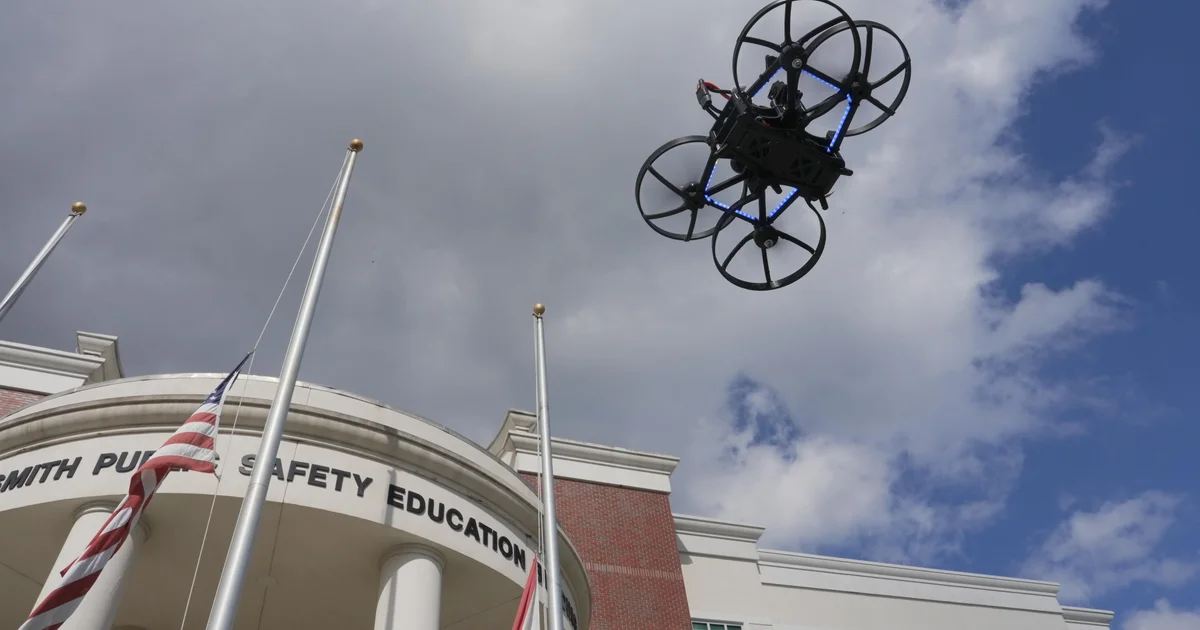

As schools gear up for the new academic year, several institutions across Colorado, Florida, and Georgia are implementing an innovative security measure: drones equipped with advanced features designed to combat active shooter situations. These drones, developed by Mithril Defense, aim to significantly enhance safety protocols within schools, allowing for rapid response times and the ability to neutralize threats effectively. With the rise in school shootings, these measures represent a pivotal step in ensuring student safety and security.
| Article Subheadings |
|---|
| 1) Introduction of Drone Technology |
| 2) Overview of School Shootings |
| 3) Funding and Implementation of Drones |
| 4) Ethical Concerns and Public Reaction |
| 5) Future of Drone Security in Schools |
Introduction of Drone Technology
Several schools across three states are set to deploy drones as part of their security measures for the upcoming academic year. These drones are equipped with pepper spray, strobe lights, and other features aimed at quickly neutralizing threats in the event of an active shooting. According to Mithril Defense, the manufacturer, these drones can identify an active shooter within 15 seconds, providing critical support that may save lives. This initiative is part of a broader movement to enhance safety protocols in schools, responding to increasing concerns about violence in educational settings.
The use of drone technology in schools signifies a significant shift in how institutions view security. Traditionally reliant on human resources for safety, schools are now looking towards technology to augment emergency responses. Mithril Defense’s CEO, Justin Marston, emphasized that their system is designed to respond faster than human intervention, claiming the drones can operate at speeds up to 50 miles per hour. With most school shootings lasting only two to three minutes, the ability to deploy a drone swiftly can mean the difference between life and death.
Overview of School Shootings
Data from the K-12 School Shooting Database indicates that school shootings have reached alarming levels in recent years, peaking at 352 incidents in 2023. This stark statistic underscores the urgency for enhanced security measures in educational environments, which have historically struggled to ensure student safety. In the 1970s and 1980s, school shootings were relatively uncommon, averaging fewer than 30 per year, but this figure has escalated dramatically in recent decades.
The current landscape of school shootings raises pressing questions about how institutions can effectively safeguard students. School districts across the United States are increasingly allocating resources—approximately $4 billion annually—to fortify their campuses against potential threats. The introduction of drone technology represents a new layer of security that could drastically shift the current paradigms surrounding school safety.
Funding and Implementation of Drones
Funding for the deployment of drones in the selected school districts in Georgia and Florida is being provided by state governments. Mithril’s Campus Guardian Angel drones are estimated to cost about $20,000 annually per school, which is significantly less than hiring a full-time security officer. This cost-effectiveness makes the implementation more appealing to school administrations that are juggling tight budgets while aiming to enhance security measures.
In Colorado, however, the situation presents a different challenge. The John Adams Academy, a public charter school participating in the testing of these drones, is relying on private funding after its initial support from county authorities fell through. The financial landscape surrounding these security measures reveals both the challenges and opportunities that exist as schools try to navigate their options for student safety.
Ethical Concerns and Public Reaction
The introduction of drones equipped with pepper spray has sparked concerns among parents and community members about the potential risks to students. Jennifer Iversen, a parent at the John Adams Academy, raised ethical questions concerning the use of drones that could potentially harm children if deployed incorrectly. Her concerns are echoed by other community members who worry about the implications of arming drones for student protection.
Opponents of drone deployment argue that simply adding more technology does not address the root causes of violence. Experts like Jennifer DePaoli, a senior researcher at the Learning Policy Institute, emphasize the need for comprehensive mental health support and positive school environments as more effective long-term strategies for preventing violence. The discussion around technology in schools continues to evolve as stakeholders weigh the benefits against potential drawbacks.
Future of Drone Security in Schools
As schools continue to explore and implement drone technology, the future of this security measure remains a topic of debate. The company behind the drones, Mithril Defense, anticipates that as these systems are demonstrated and their effectiveness showcased, acceptance will grow among administrators and parents alike. Marston remarked that demonstrating the capabilities of the drones often convinces people of their value, likening the experience to the initial reception of electricity.
Moreover, other states are beginning to examine the potential for drone programs in educational institutions. Louisiana recently passed legislation to fund a pilot program that will test drone usage in four schools. As further advancements in technology arise, the integration of drones into school security may indeed become a standard practice, if accompanied by robust frameworks addressing ethical concerns and efficacy.
| No. | Key Points |
|---|---|
| 1 | Drones equipped with deterrents are being implemented in schools in three states as a response to rising school shootings. |
| 2 | The rapid deployment capability of these drones is seen as essential for responding to immediate security threats. |
| 3 | Funding for the drones varies by state, with some relying on private donations while others are state-funded. |
| 4 | Community concerns are raised about the ethical implications of deploying armed drones in school settings. |
| 5 | The future of drone security in schools is uncertain but could become more prevalent if demonstrated effectively. |
Summary
The implementation of drones equipped with deterrents marks a notable shift in school security measures amidst rising concerns over school shootings. While the technology promises rapid deployment capabilities that could potentially save lives, it also raises ethical questions that must be addressed. As districts across the country weigh the pros and cons, the future may see an increased role for advanced technologies in safeguarding students, provided stakeholders can agree on effective and responsible implementations.
Frequently Asked Questions
Question: What are the main features of the drones being implemented in schools?
The drones are equipped with pepper spray, strobe lights, and sirens, designed to deter active shooters and enhance response times during emergencies.
Question: How do these drones differ from traditional security measures in schools?
Drones can be deployed rapidly and cover areas quickly, providing immediate support in active shooter situations compared to standard security personnel who may take longer to respond.
Question: What are some of the concerns raised by parents regarding drone use in schools?
Parents have expressed concerns about the potential for drones to inadvertently harm children, particularly relating to the use of pepper spray, and have raised questions about the ethical implications of such technology in educational settings.
