

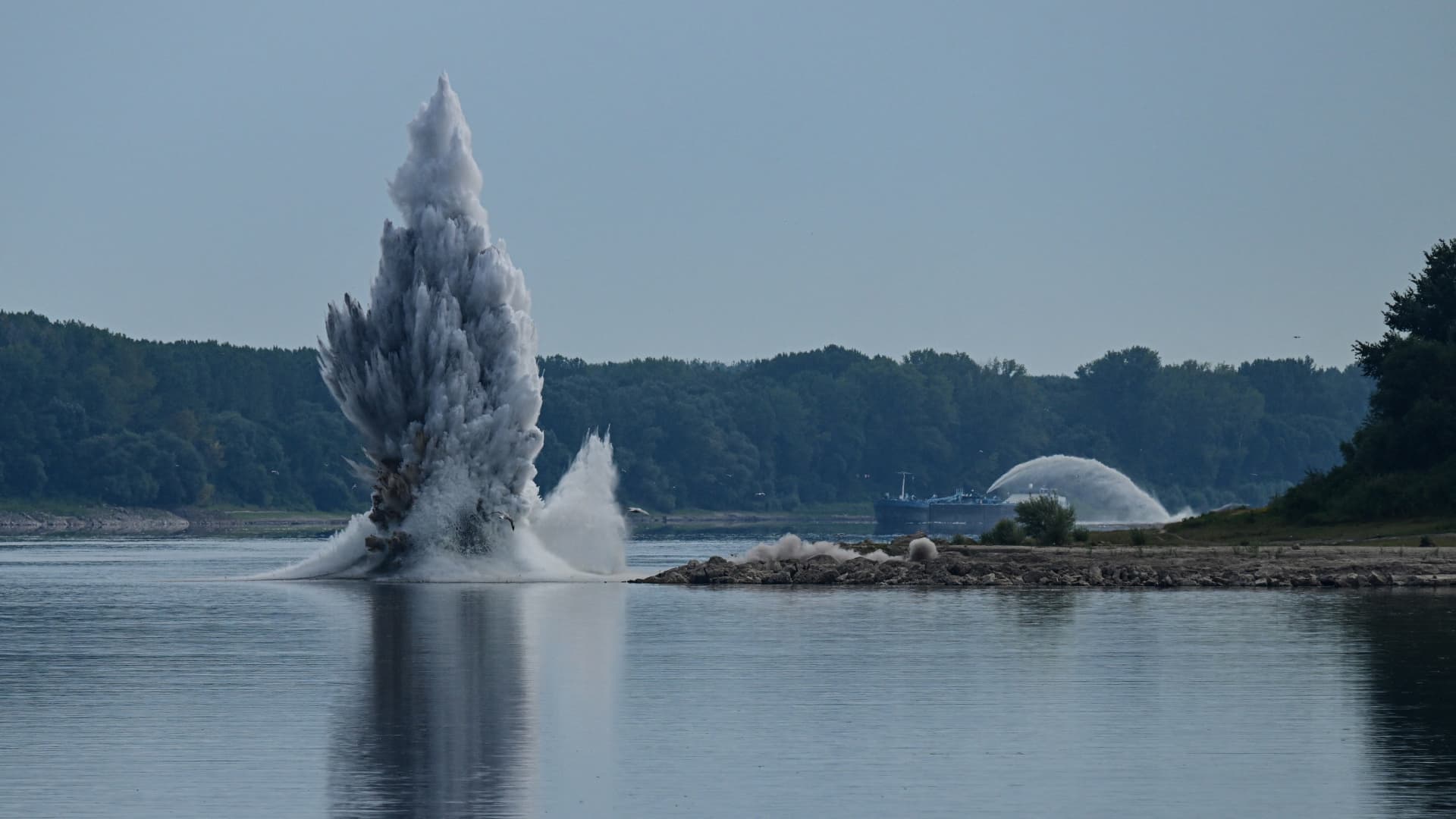

The severe drought sweeping across Europe has resulted in dangerously low water levels in significant waterways, notably the Rhine and Danube rivers. These changes are posing acute risks to economic growth, prompting drastic measures from governments. In Romania, for instance, authorities are taking extraordinary steps, including underwater explosions to enhance water flow for critical nuclear power plants. The repercussions of low water levels extend far beyond immediate navigation issues, threatening power generation and agricultural transport across the region.
| Article Subheadings |
|---|
| 1) The Effects of Low Water Levels on Europe |
| 2) Navigational Challenges in Germany |
| 3) Economic Implications for Freight Services |
| 4) Climate Change: A Recurring Challenge |
| 5) Looking Forward: Future Risks and Adaptations |
The Effects of Low Water Levels on Europe
The intensifying drought conditions in Europe have ignited urgent discussions about the continent’s water scarcity crisis. The Danube and the Rhine, two of Europe’s most vital waterways, are experiencing their lowest water levels in decades, adversely affecting multiple sectors. The Rhine River, in particular, is a critical artery for transportation and commerce, facilitating the flow of goods from various countries in Western Europe. As water levels drop, nations are confronted with the essential question of how to balance economic needs with environmental sustainability.
Romania’s recent actions exemplify the lengths that countries are willing to go to mitigate the impact of low water levels. The Romanian government initiated controlled detonations in the Danube to deepen the riverbed and improve water flow toward the Cernavoda Nuclear Power Plant. These extreme measures underscore just how critical water supply is to energy generation and overall economic stability in the region.
Additionally, countries like Hungary and Serbia face similar challenges. Hungary’s Paks Nuclear Plant, which generates approximately 40% of its electricity, is at risk due to reduced water levels, while Serbia has had to scale back on hydropower production, exacerbating energy insecurities. The interconnectedness of these waterways illustrates that the repercussions of climate events are rarely confined to national borders; they extend further, affecting cross-border trade and collaboration.
Navigational Challenges in Germany
As reports indicate, the water level at a crucial choke point of the Rhine River, located in Kaub, has plummeted to a record low of only 24cm, significantly below the 78cm threshold deemed necessary for safe navigation. This occurrence is particularly alarming for a country like Germany, whose economy heavily relies on efficient transportation systems for its industries. The Rhine is not just a river; it is considered the lifeblood of Germany’s manufacturing and export capabilities.
Officials have noted that while some navigation remains possible, the cargo capacity of barges is reduced, leading to increased freight costs. This situation is complicated further by low-water surcharges, which can rise sharply.
“Major rivers like the Rhine and Danube are critical trade corridors and sources of water for industry and energy generation,”
observes Liz Saccoccia, the water security lead at a prominent environmental organization. This expert opinion reflects the broader consensus regarding the vital role these waterways play.
Consequently, businesses are forced to rethink their logistics strategies. Transporting goods by rail or road may become necessary, but this shift is not without its challenges, as rising fuel prices and inflation can nullify operational cost savings. The overall disruption impacts supply chains not just in Germany but throughout Europe.
Economic Implications for Freight Services
The economic fallout from low water levels can be staggering. Economists estimate that the implications for the German GDP could be a downturn of up to 0.2% in the forthcoming quarter due to these navigational disruptions. Adding to this, experts believe that the value lost during this period could be estimated between €1 to €2 billion, significantly impacting Germany’s economic landscape.
When vital delivery systems falter, the business community must adapt quickly to the crisis. Goods, once easily transported via barges along the Rhine, may experience delays, resulting in longer lead times for businesses and ultimately impacting consumers. Many industries that rely heavily on just-in-time manufacturing may face critical shortages, which can drive up prices.
Moreover, farmers suffering from delays in shipping their crops to market may incur losses that push them into unchartered territories of economic instability. These issues lay the groundwork for broader repercussions: rising consumer prices, increased inflation, and a potential stalling of growth.
Climate Change: A Recurring Challenge
Individuals in various sectors are becoming increasingly aware that climate change is not merely an abstract concern but a pressing reality impacting industries across Europe. Felix Schmidt, a senior economist at a respected bank, notes that companies were likely not blindsided by these extreme weather conditions; instead, they have prepared for such scenarios as a matter of survival. Many businesses have stockpiled inventory or explored alternative transport methods, including rail or road.
However, adaptations come at a cost. Freight rates have surged as demand for alternative transport methods increases, causing inflationary concerns to escalate as the costs are handed down to consumers. The challenges associated with dwindling water levels intersect with other climate-related issues, making the situation a complex puzzle requiring a multifaceted approach to resolve.
In sum, Germany’s economic growth, which saw a mere 0.2% rise in the last quarter, appears to be jeopardized by this continuing trend of dwindling water levels and extreme heat events. This ongoing climatic volatility not only impacts productivity but also places increased strain on energy supplies which are critical for sustaining economic growth.
Looking Forward: Future Risks and Adaptations
The uncertainties surrounding water levels emphasize the broader question of future preparedness against climate-induced challenges. Government officials and business leaders must recognize that adaptability and resilience in operations are no longer options but imperatives. As climate change continues to pose risks, there is an urgent need for robust infrastructure planning to mitigate adverse effects.
Plans to enhance water management systems and energy efficiency will become essential tools in preserving economic stability. Long-term investments in alternative energy sources and sustainable agricultural practices may not only aid in alleviating immediate risks but also help in fostering a resilient economy better equipped for future climatic challenges.
As tumultuous weather patterns grow more commonplace, industries and governments must work collaboratively to navigate the myriad challenges posed by depleted water supplies, ensuring economic resilience for future generations.
| No. | Key Points |
|---|---|
| 1 | Severe drought conditions in Europe are causing low water levels in key rivers. |
| 2 | Romania has initiated underwater explosions to improve river flow for a nuclear power plant. |
| 3 | The Rhine’s water levels have reached their lowest in nearly 150 years, risking economic stability. |
| 4 | Economists project a potential downturn of up to 0.2% in German GDP due to navigational disruptions. |
| 5 | Adaptations to climate change are imperative for sustaining economic growth in affected sectors. |
Summary
The ongoing drought in Europe serves as a stark reminder of the intersection between climate change and economic stability. Both national and regional authorities are grappling with the consequences of drastically low water levels that have far-reaching effects on agriculture, energy generation, and transport. The declines in navigational capacity raise numerous questions about future planning and preparedness, ultimately emphasizing the urgent need for proactive measures in mitigating climate risks to ensure sustainable economic growth.
Frequently Asked Questions
Question: Why is the Rhine River significant for Europe’s economy?
The Rhine River serves as a crucial trade corridor, facilitating the transport of goods and resources vital to the economies of many European countries, notably Germany.
Question: What measures have countries taken in response to low water levels?
Countries such as Romania have taken extreme measures like controlled underwater detonations to improve water flow for significant infrastructures, particularly nuclear power plants.
Question: How does climate change affect water levels in Europe?
Climate change leads to more frequent droughts and altered weather patterns, resulting in lower water levels across vital waterways, affecting trade, agriculture, and energy production.
