

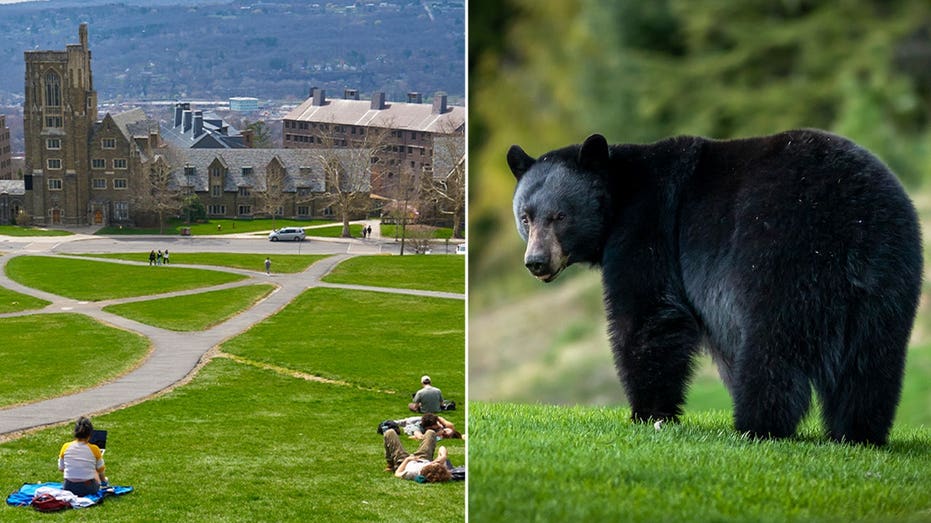

Cornell University has adopted a rule prohibiting the processing of wild game in community kitchens after two students prepared a black bear carcass in a campus dormitory in 2025. The students brought the animal to Ganędagǫ Hall after plans to use a private residence fell through. The incident drew backlash online and on campus, but a state inspection found no code violations in the kitchen. The university later confirmed that the new policy was a direct response to the episode.
The rule states that processing wild or game animals in community kitchens is strictly prohibited. The policy establishes a clear restriction for shared campus food-preparation spaces, regardless of whether the activity was previously addressed by other university regulations.
| Article Subheadings | |
|---|---|
| 1) | Cornell responds to a 2025 dormitory incident |
| 2) | How the bear was brought to campus |
| 3) | Student account and campus reaction |
| 4) | State inspection finds no code violations |
| 5) | What the new kitchen policy changes |
Cornell responds to a 2025 dormitory incident
The policy follows a 2025 incident at Cornell University in Ithaca, New York, involving two students and a black bear carcass. The students brought the carcass into the kitchen of Ganędagǫ Hall and used the shared facility to prepare the animal. Images and discussion of the activity spread widely, generating criticism from members of the campus community and the broader public.
Cornell subsequently added language specifically addressing wild game processing in community kitchens. The university confirmed that the incident was the reason for the policy change, making the measure a direct response rather than a general update unrelated to the bear episode.
How the bear was brought to campus
According to an account later provided by Aaron Chin, one of the students involved, he and a fellow Cornell student had killed the bear while hunting. They initially intended to transport it from hunting grounds located about two hours from campus to a friend’s home, where they planned to prepare the meat.
That plan changed after the friend experienced an emergency and could no longer make the residence available. Chin said he and his hunting partner then brought the animal to campus. The preparation took place in a dormitory kitchen, a shared space used by residents rather than a private food-processing facility.
Student account and campus reaction
Chin later identified himself publicly as one of the students who processed the bear. He said the pair had reviewed campus rules before bringing the carcass to Cornell and believed they were complying with existing requirements.
“We were really diligent in reading all of the rules and regulations. We made sure we did everything by the book because we knew we were going to be under scrutiny.”
The incident nevertheless prompted swift criticism on social media and on campus. The reaction focused on the use of a communal dormitory kitchen to process a large wild animal, as well as questions about sanitation, shared facilities and the suitability of the activity in a residential setting.
State inspection finds no code violations
The controversy led state regulators to examine the kitchen where the butchering occurred. An inspector from the New York Department of Environmental Conservation visited the facility after the incident and reviewed the circumstances surrounding the processing.
The agency found no code violations during its inspection. That finding did not prevent Cornell from changing its own rules. The university’s new restriction addresses conduct in campus community kitchens and gives residents a specific prohibition that was not previously stated in the same terms.
What the new kitchen policy changes
The updated policy says that processing wild or game animals in community kitchens is strictly prohibited. The language applies to shared school kitchen facilities and covers the preparation of animals such as the black bear involved in the 2025 incident.
The change provides a straightforward standard for students, housing staff and university administrators. It also separates campus policy from the question of whether state or local authorities identify a separate legal or health-code violation. Cornell has not indicated that the new rule changes hunting regulations or governs preparation conducted in private residences.
| Number | Key Point |
|---|---|
| 1 | Cornell banned wild game processing in community kitchens. |
| 2 | The rule followed a 2025 incident involving a black bear in Ganędagǫ Hall. |
| 3 | Two students brought the bear to campus after another preparation site became unavailable. |
| 4 | A state inspection found no code violations in the kitchen. |
| 5 | The policy creates an explicit campus restriction for shared food-preparation spaces. |
Summary
Cornell’s ban is a targeted policy response to an unusual 2025 incident in which two students processed a black bear in a dormitory kitchen. Although a state inspection found no code violations, the university chose to establish an explicit prohibition for community kitchens. The rule now gives students and administrators a clear standard against processing wild game in shared campus facilities.
Frequently Asked Questions
What prompted Cornell to adopt the ban?
The university adopted the ban after two students brought a black bear carcass into a kitchen at Ganędagǫ Hall and processed it there in 2025.
Who was involved in the bear processing?
Aaron Chin later identified himself as one of the two Cornell students involved. He said the other participant was a fellow student and hunting partner.
Did state regulators find violations?
No. An inspector from the New York Department of Environmental Conservation visited the kitchen and found no code violations.
What does the new rule prohibit?
It prohibits the processing of wild or game animals in Cornell’s community kitchens.
