

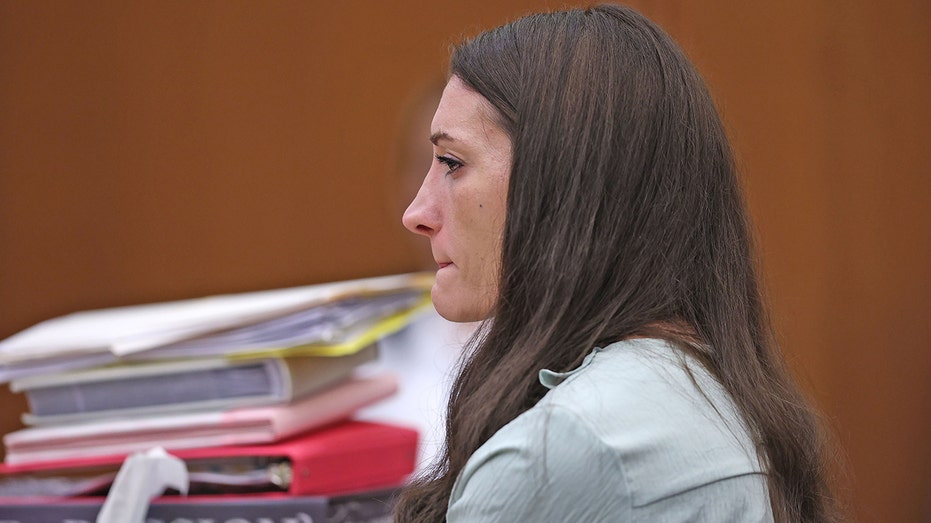

Lindsay Clancy has secured a limited procedural victory after her challenge to a judge’s double-jeopardy ruling was referred to the Massachusetts Supreme Judicial Court. The court’s full bench is expected to hear oral arguments in January, before jury selection for Clancy’s retrial is scheduled to begin on March 29. Legal experts said the appeal could have consequences beyond Clancy’s case, particularly for how courts handle disputes involving deliberating jurors.
Clancy is accused of killing her three children at the family’s Duxbury, Massachusetts, home in January 2023. Her first trial ended with a hung jury after a week of deliberations, and her defense argues that the trial judge should have dismissed and replaced a juror who was accused of failing to apply the reasonable-doubt standard.
| 1) | Appeal moves to the full Supreme Judicial Court |
| 2) | Why the first trial ended without a verdict |
| 3) | The prosecution and defense positions |
| 4) | Experts assess the potential legal impact |
| 5) | What happens before the retrial |
Appeal moves to the full Supreme Judicial Court
The appeal was filed by Clancy after Judge William Sullivan rejected her motion to dismiss the charges on double-jeopardy grounds. Justice Elizabeth Dewar referred the matter to the full Massachusetts Supreme Judicial Court on Thursday. The court set briefing deadlines for the following month and scheduled oral arguments for January.
The defense is challenging the decision to declare a mistrial after jurors could not reach a unanimous verdict. The central question is whether there was “manifest necessity” for ending the first proceeding, a standard that can permit a retrial despite double-jeopardy protections.
Why the first trial ended without a verdict
The first trial concluded on September 4 after approximately one week of jury deliberations. The jury reportedly had one holdout, Michael Desronvil, who voted against conviction while other jurors supported finding Clancy guilty.
The foreperson accused Desronvil of failing to follow the law concerning reasonable doubt and asked the court to address his conduct. Defense attorney Kevin Reddington sought to have the juror removed and replaced with an alternate. Judge Sullivan declined to do so, expressed skepticism about the accusation, and later ruled that the deadlock created a legally sufficient basis for a mistrial.
The prosecution and defense positions
At trial, the defense argued that Clancy was suffering from postpartum psychosis and should not be found criminally responsible because of mental disease or defect. The defense did not dispute that she strangled the children with exercise bands on January 24, 2023.
Prosecutors alleged that Clancy planned the killings, sent her husband, Patrick Clancy, out to run errands, and attacked the children before attempting suicide by jumping from a second-story window. The children, Cora Clancy, 5, Dawson Clancy, 3, and Callan Clancy, 8 months, were found at the Duxbury home. Patrick Clancy returned to find his wife seriously injured and the children in the basement.
Experts assess the potential legal impact
Jack Lu, a retired Massachusetts judge and legal scholar, described the referral as a small victory for the defense. He also warned that a ruling favoring the defense could complicate future trials by making it harder for judges to respond to complaints about jurors during deliberations.
“This is still difficult and unforgiving terrain,” Lu said, adding that the defense position could interfere with jury deliberations and create an unworkable approach to juror complaints.
Carol Erskine, a retired judge and child welfare advocate, said appeals reaching the full court are uncommon. She said such cases generally involve exceptional circumstances, constitutional rights, urgency, and issues that cannot wait for the ordinary appellate process.
What happens before the retrial
The Supreme Judicial Court’s January arguments will occur before jury selection is scheduled to begin on March 29. The court’s ruling could determine whether the prosecution may proceed with a second trial or whether the charges must be dismissed on double-jeopardy grounds.
Until the appellate court rules, the retrial remains part of the case’s schedule. The outcome will depend on how the justices interpret the mistrial decision, the juror complaint, and the requirement that a retrial be supported by manifest necessity.
| Number | Key Point |
|---|---|
| 1 | The appeal was referred to the full Massachusetts Supreme Judicial Court. |
| 2 | Oral arguments are scheduled for January, before the planned March 29 retrial selection. |
| 3 | The first trial ended in a hung jury after a dispute involving one holdout juror. |
| 4 | The appeal focuses on double jeopardy and whether a mistrial was necessary. |
Summary
The referral gives Clancy’s defense an opportunity to challenge the legal basis for a retrial, but it does not resolve the case. The Supreme Judicial Court must decide whether the jury deadlock and related juror dispute justified a mistrial. Its ruling could affect both the scheduled retrial and future Massachusetts cases involving deliberating jurors.
Frequently Asked Questions
What is the appeal challenging?
The appeal challenges Judge Sullivan’s denial of a motion to dismiss on double-jeopardy grounds after the first trial ended in a hung jury.
Why did the first trial end without a verdict?
Jurors were unable to reach a unanimous decision after deliberations. The defense objected to the court’s handling of a holdout juror who was accused of disregarding the reasonable-doubt standard.
When could the retrial begin?
Jury selection is scheduled to begin on March 29, although the Supreme Judicial Court’s ruling on the appeal could affect whether the retrial proceeds.
