

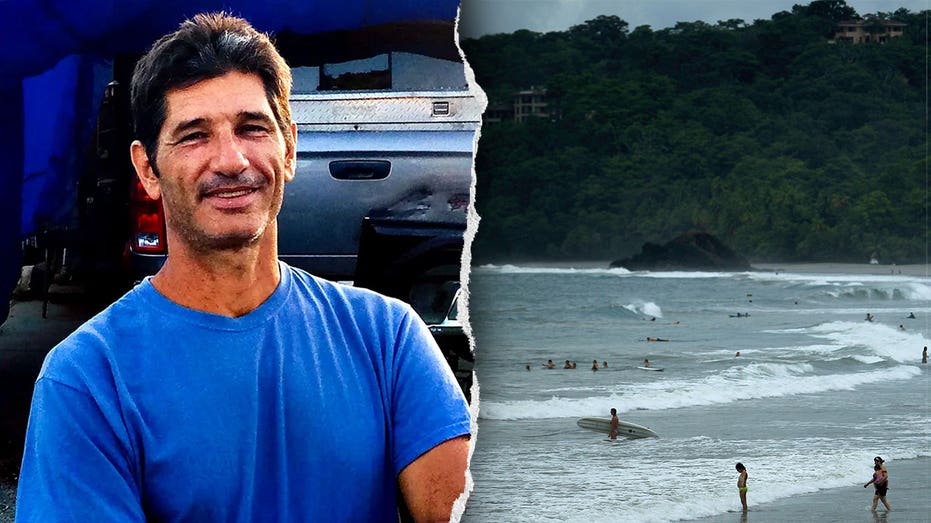

Kurt Van Dyke, a prominent California surfer, was found dead in February inside his apartment in Hone Creek, Costa Rica. Authorities initially investigated the case as a violent home invasion after Van Dyke’s girlfriend reported that armed intruders had entered the property. Nine months later, Costa Rican investigators arrested the girlfriend, identified as Arroyo, and a man identified as Gutiérrez. Van Dyke’s brother, Peter Van Dyke, said his family never lost hope that the killing would be solved.
Investigators allege that Arroyo helped armed attackers enter the apartment and that the group intended to rob Van Dyke. Authorities also believe an apparent vehicle theft was staged to support the home-invasion account. The arrests followed an investigation involving evidence gathered from the apartment, a cellphone and a vehicle allegedly connected to the crime.
Van Dyke, 66, was found beneath a bed and wrapped in a sheet, with multiple stab wounds and signs of asphyxiation, according to Costa Rican authorities. The case remains subject to review by the country’s Public Ministry, which will determine whether formal charges proceed.
Article Subheadings
| 1) | The February discovery in Hone Creek |
| 2) | Why investigators questioned the home-invasion account |
| 3) | The arrests after nine months of investigation |
| 4) | A family’s continued pursuit of justice |
| 5) | What happens next in the Costa Rican case |
The February discovery in Hone Creek
Kurt Van Dyke was found dead on Feb. 14, 2026, in his apartment in Hone Creek, a town near Cahuita in Costa Rica’s Limón province. He was 66 and was known in Santa Cruz, California, and within Costa Rica’s surfing community. Authorities reported that he had suffered several stab wounds and signs of asphyxiation.
Investigators found Van Dyke beneath a bed and wrapped in a sheet. His girlfriend told police that armed intruders had entered the apartment, restrained her and taken valuable property. Authorities initially treated the death as a possible home invasion and robbery.
Why investigators questioned the home-invasion account
The investigation continued as authorities examined whether the reported robbery fully explained what happened. Police now allege that Arroyo helped armed attackers gain access to the apartment rather than being only a victim of the incident.
Authorities believe the suspected group planned to steal bank card codes connected with a hotel Van Dyke owned in Costa Rica. Investigators also allege that Arroyo’s vehicle theft was staged to make the episode appear to be a robbery. These allegations have not been resolved in court.
The arrests after nine months of investigation
On Nov. 12, Costa Rica’s Judicial Investigation Agency arrested Arroyo, 31, and Gutiérrez, 34. The arrests came roughly nine months after Van Dyke’s death, following an investigation that authorities said required them to develop and strengthen the evidence.
During searches connected with the arrests, investigators seized a cellphone, a vehicle allegedly used in the crime and other relevant items. Officials said Arroyo and Gutiérrez were referred to the Public Ministry, which will decide whether formal charges should be filed.
A family’s continued pursuit of justice
Peter Van Dyke said his brother was a generous and kind person. He said he had not known that Kurt Van Dyke was dating Arroyo and had never met her. He remained in contact with Van Dyke’s former wife, while Van Dyke’s children regularly visited him.
According to Peter Van Dyke, his nephew maintained contact with local authorities throughout the investigation. Investigators told the family that they believed they had a strong case but needed to build it and complete the judicial process before making arrests.
What happens next in the Costa Rican case
The arrests do not establish guilt. The Public Ministry must assess the evidence collected by investigators and determine whether Arroyo and Gutiérrez will face charges. Any subsequent proceedings will address the allegations that they helped organize or carry out a robbery that resulted in Van Dyke’s death.
The central issues include the alleged entry plan, the reported vehicle theft, the items seized during the raids and the theory about bank card codes. Until prosecutors and the courts take further action, the suspects remain accused rather than convicted.
Key Points
| Number | Key Point |
|---|---|
| 1 | Kurt Van Dyke was found dead in his Hone Creek apartment on Feb. 14, 2026. |
| 2 | Authorities initially investigated the death as an armed home invasion. |
| 3 | Arroyo and Gutiérrez were arrested on Nov. 12 after a nine-month investigation. |
| 4 | Investigators allege the suspects planned a robbery and sought bank card codes. |
| 5 | Costa Rica’s Public Ministry will decide whether formal charges proceed. |
Summary
The arrests mark a major development in the investigation into Kurt Van Dyke‘s death, but the allegations must still be evaluated through Costa Rica’s legal process. Investigators say the original home-invasion account concealed a planned robbery involving people known to Van Dyke. The Public Ministry’s review will determine the next stage of the case.
Frequently Asked Questions
Who was Kurt Van Dyke?
Kurt Van Dyke was a 66-year-old California surfer who was also part of Costa Rica’s surfing community. He owned a hotel in the country and lived in Hone Creek, where he was found dead.
When were the suspects arrested?
Arroyo and Gutiérrez were arrested on Nov. 12, 2026, approximately nine months after Van Dyke was found dead.
What do investigators allege?
Authorities allege that Arroyo helped armed attackers enter the apartment and that she and Gutiérrez planned a robbery involving bank card codes linked to Van Dyke’s hotel. They also believe a vehicle theft was staged.
What happens next?
The suspects were referred to Costa Rica’s Public Ministry. That agency will review the evidence and decide whether formal charges should be filed. The arrests are allegations and do not establish guilt.
