

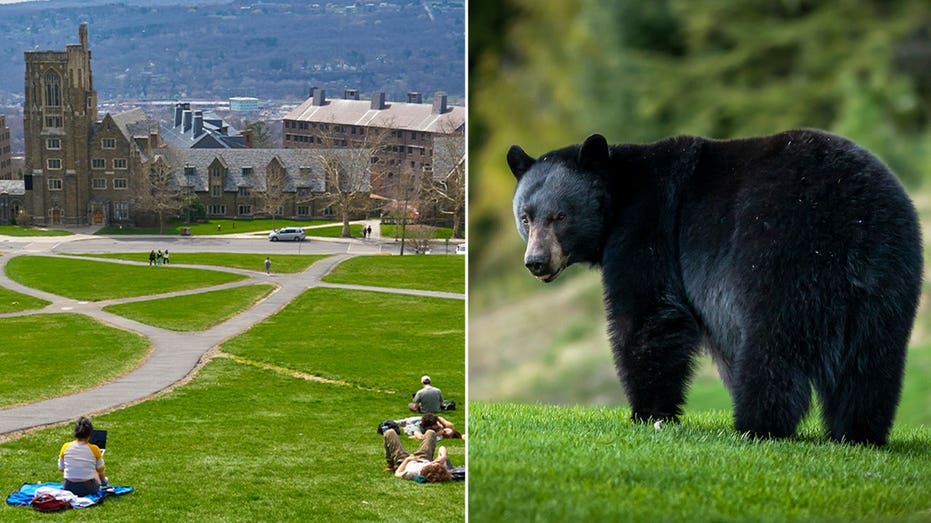

Cornell University has prohibited the processing of wild game in community kitchens after two students butchered a black bear in a campus dormitory kitchen in 2025. The policy change directly addresses the incident at Ganędagǫ Hall, which triggered criticism on campus and across social media. State regulators later inspected the kitchen and found no code violations, according to a news report. The university’s new rule now explicitly bars similar activity in shared school facilities.
| 1) | Cornell responds to the dormitory kitchen incident |
| 2) | Students brought a black bear to campus for preparation |
| 3) | The incident drew public backlash and regulatory scrutiny |
| 4) | A student described the planning behind the butchering |
| 5) | The new rule clarifies what is prohibited on campus |
Cornell responds to the dormitory kitchen incident
Cornell added a rule stating that “processing wild/game animals in community kitchens is strictly prohibited.” The policy follows a 2025 incident in which two students used a kitchen in Ganędagǫ Hall to prepare a black bear carcass. The university confirmed to a student newspaper that the rule was introduced in direct response to what happened in the residence hall.
The measure applies to shared kitchens on campus and is intended to establish a clear restriction on processing wild animals in spaces used by students. The policy was adopted after the incident generated controversy over food preparation, sanitation, residence-hall rules and the use of university facilities.
Students brought a black bear to campus for preparation
The students had killed the black bear while hunting and transported its carcass from hunting grounds roughly two hours from Cornell. Their stated plan was to take the animal to a friend’s home, where it could be prepared. That plan changed after the friend experienced an emergency and could no longer provide access to the house.
The students then brought the bear to Ganędagǫ Hall in Ithaca, New York, and carved it in a dormitory kitchen. The episode became widely known after images and discussion circulated online. The university’s subsequent rule specifically addresses the type of activity involved rather than changing the facts of the 2025 event.
The incident drew public backlash and regulatory scrutiny
The dormitory butchering prompted swift criticism from people on social media and within the Cornell community. The reaction led state regulators to examine whether the activity had violated applicable rules. An inspector from the New York Department of Environmental Conservation visited the kitchen where the bear was processed.
The inspection found no code violations, according to a published news report. That finding did not prevent Cornell from adopting a stricter internal policy. The university’s action reflects its authority to set rules for community facilities even when an external inspection does not identify a regulatory violation.
A student described the planning behind the butchering
Aaron Chin, one of the students involved, later identified himself as one of the people who butchered the bear during an appearance on a podcast. He said he and another Cornell student who hunted with him had initially intended to prepare the animal at a friend’s home.
Chin said the pair reviewed campus rules before bringing the meat to Cornell and believed they were complying with the requirements then in place.
“We were really diligent in reading all of the rules [and] regulations. We made sure we did everything by the book because we knew we were going to be under scrutiny.”
The new policy indicates that the absence of an explicit prohibition did not resolve the university’s concerns about using shared kitchens to process wild game.
The new rule clarifies what is prohibited on campus
Cornell’s updated language creates a direct and readily understandable ban on processing wild or game animals in community kitchens. It covers the preparation activity that led to the bear incident and gives students clearer guidance for future use of shared cooking spaces.
The policy also separates campus conduct rules from state inspection results. Although regulators found no code violation in the kitchen, Cornell determined that a specific institutional restriction was needed. The university and Chin were contacted for additional comment.
| No. | Key Point |
|---|---|
| 1 | Cornell banned wild-game processing in community kitchens. |
| 2 | The policy followed a 2025 black bear butchering incident at Ganędagǫ Hall. |
| 3 | Two students transported the bear from hunting grounds to campus. |
| 4 | A state inspection found no code violations in the kitchen. |
| 5 | The rule provides an explicit campus restriction for shared facilities. |
Summary
Cornell’s new ban was adopted after a highly publicized 2025 incident involving the preparation of a black bear in a dormitory kitchen. While state regulators found no code violations during an inspection, the university established an explicit prohibition on processing wild game in community kitchens. The policy is intended to prevent similar disputes and clarify expectations for students using shared campus facilities.
Frequently Asked Questions
What did Cornell ban?
Cornell banned the processing of wild or game animals in community kitchens on campus.
Why was the policy introduced?
The university said the rule directly responded to a 2025 incident in which two students butchered a black bear in a kitchen at Ganędagǫ Hall.
Did regulators find a violation?
An inspector from the New York Department of Environmental Conservation reportedly found no code violations during an inspection of the kitchen.
