

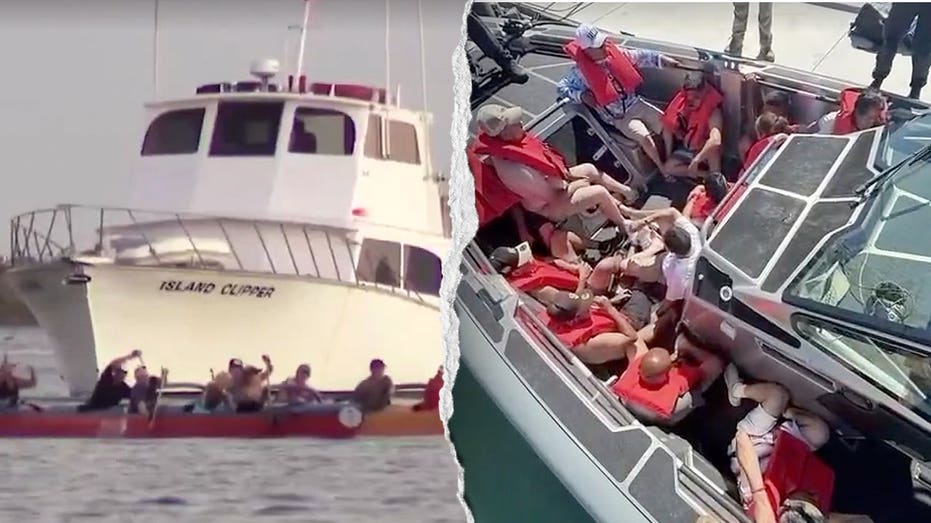

Federal agents intercepted a vessel carrying 14 suspected migrants south of Newport Beach, California, before it reached the harbor. The group included 11 men, two women and an accompanied juvenile, and all identified themselves as Mexican nationals. Authorities transported the passengers and boat to a U.S. Coast Guard dock before turning the group over to Border Patrol for processing. The interception follows several reported migrant boat incidents near the coastal community.
The U.S. Customs and Border Protection Air and Marine Operations crew stopped the vessel at about 1:30 p.m. on Friday, October 3. One person was evaluated for possible dehydration and seasickness, but emergency medical personnel determined the individual was stable and cleared them.
| 1) | Interception south of Newport Beach |
| 2) | Passengers transferred for processing |
| 3) | Pattern of maritime migration incidents |
| 4) | Proposed surveillance near Newport Harbor |
| 5) | Federal warning about dangerous sea crossings |
Interception south of Newport Beach
CBP Air and Marine Operations intercepted the boat in waters south of Newport Beach at approximately 1:30 p.m. on October 3. The federal crew stopped the vessel before it could unload passengers in or around Newport Harbor, a community known for its high-value coastal neighborhoods and busy recreational waterways. The operation involved identifying the vessel, taking control of it and bringing those aboard to a secure landing point.
The incident is part of federal efforts to detect suspected maritime entries along the Southern California coast. Authorities seized the boat after the interception and moved it, along with the passengers, to a Coast Guard dock in Newport Beach.
Passengers transferred for processing
The 14 people aboard consisted of 11 men, two women and an accompanied boy. Each person identified themselves as a Mexican national, according to CBP. After the boat reached the Coast Guard dock, all 14 were turned over to U.S. Border Patrol for processing.
One passenger was assessed for possible dehydration and seasickness. Emergency medical personnel found the person stable and cleared them, and no further medical condition was reported. The available information does not specify the eventual immigration disposition of any passenger.
Pattern of maritime migration incidents
The interception follows multiple reports of suspected migrant boats operating near Newport Beach. Surveillance video obtained last month showed another vessel entering Newport Harbor, after which at least a dozen people reportedly disembarked and dispersed into the community.
In a separate incident the previous month, 37 migrants were rescued offshore after reportedly spending two days without food, water or fuel. Cellphone video from an incident about two years earlier showed more than 20 suspected migrants leaving a panga boat in Newport Harbor and moving toward waiting vans. The incidents have increased local concern about how vessels approach the harbor and how passengers reach shore.
Proposed surveillance near Newport Harbor
Erik Weigand, a Newport Beach City Council member, has urged discussion of additional surveillance near the harbor entrance. He has proposed two cameras using existing infrastructure around the jetties or seawall to monitor boats entering and leaving the area around the clock.
Weigand said the cameras could provide an early warning when suspicious vessels approach and give law enforcement more time to respond before passengers reach land.
“I think having technology is a good thing. If we can have eyes and ears on something that looks suspicious, we could send up a drone,” Weigand said.
He also said authorities may not know who is aboard approaching vessels or what they might be carrying. His comments included possible concerns about drug smuggling and other unlawful activity, but no such activity was reported in connection with the October 3 interception.
Federal warning about dangerous sea crossings
CBP warned that maritime migration can expose passengers to serious danger, particularly when boats lack sufficient food, water, fuel or safety equipment. The agency said people should not undertake dangerous journeys and stated that the United States border would remain closed to illegal migration by sea, air and land.
The Newport Beach operation illustrates how federal authorities are using maritime patrols to intercept suspected unauthorized entries before vessels reach shore. It also highlights the continuing coordination among CBP, the Coast Guard and Border Patrol during vessel seizures, medical checks and immigration processing.
| Number | Key Point |
|---|---|
| 1 | Fourteen suspected migrants were intercepted south of Newport Beach on October 3. |
| 2 | The group included 11 men, two women and an accompanied juvenile. |
| 3 | All 14 identified themselves as Mexican nationals and were transferred to Border Patrol. |
| 4 | One person was treated for possible dehydration and seasickness and was cleared as stable. |
| 5 | Local officials are considering cameras near Newport Harbor amid repeated boat incidents. |
Summary
Federal authorities intercepted a boat carrying 14 suspected migrants before it reached Newport Harbor and transferred the group to Border Patrol for processing. The operation occurred amid several reported maritime migration incidents in the area. Local officials are considering expanded surveillance, while CBP continues to warn that sea crossings can be dangerous.
Frequently Asked Questions
When was the boat intercepted?
CBP intercepted the vessel at about 1:30 p.m. on Friday, October 3, south of Newport Beach.
How many people were aboard?
There were 14 people aboard: 11 men, two women and an accompanied boy.
What happened after the interception?
Authorities transported the passengers and vessel to a U.S. Coast Guard dock. The passengers were then turned over to Border Patrol for processing, and the boat was seized.
