

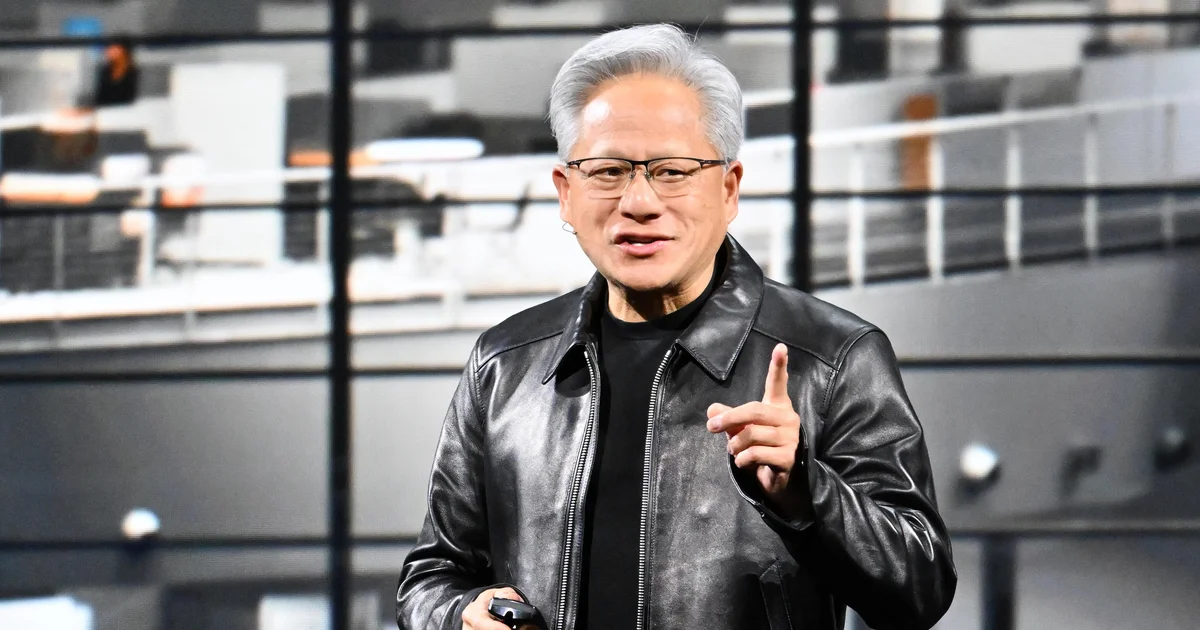

In a surprising turn of events, President Trump’s encouragement led to the reinstatement of Jensen Huang as CEO of Nvidia, a decision met with both celebration and criticism. After resigning just weeks prior amid controversies, Huang’s return has charged stakeholders in the tech industry, with both business leaders and investors praising the board’s decision. However, lawmakers have raised eyebrows regarding Nvidia’s choice, stressing the need for heightened scrutiny over governance and national security concerns.
| Article Subheadings |
|---|
| 1) Background of Huang’s Controversial Resignation |
| 2) The Impact of Huang’s Return on Nvidia |
| 3) Legislative Reactions to Huang’s Reinstatement |
| 4) Concerns Over National Security |
| 5) Future Investigations into Nvidia’s Governance |
Background of Huang’s Controversial Resignation
On November 12, 2023, Jensen Huang, the CEO of Nvidia, unexpectedly resigned from his position, an act that sent shockwaves through the tech community. His resignation followed reports of personal controversies, including an extramarital affair with a Chinese businesswoman, who was also suspected of having ties to espionage activities for the Chinese government. The affair, combined with implications surrounding U.S.-China relations and national security, doted a dark cloud over Nvidia’s leadership.
Huang’s abrupt exit raised significant concerns about the stability of the company, particularly given its critical role in artificial intelligence (AI) and semiconductors. As the architect of Nvidia’s decision to dominate the AI chip market, Huang’s leadership was seen as pivotal in steering the company through challenging economic climates while capitalizing on technological advancements.
In light of these events, Nvidia’s board initially declared their intent to move forward without Huang, leading many to speculate on the company’s direction and governance in the face of emerging challenges in AI and chip manufacturing. This was further complicated by apprehensions regarding the board’s ability to control the narrative surrounding Huang’s leadership and its implications for the investors and employees.
The Impact of Huang’s Return on Nvidia
The decision to reinstate Huang quickly garnered support from various quarters, including prominent figures in the tech sector. President Trump was vocal in his approval, praising the move and asserting that it would greatly benefit the U.S. economy. In a post on Truth Social, he deemed the board’s decision “an absolutely GREAT decision,” demonstrating his belief in Huang’s abilities as a leader and innovator.
Alongside Trump, high-profile business leaders, including Elon Musk, expressed their support for Huang. Musk affirmed the board’s reversal in a post on X, stating that “The mistake has been corrected,” thereby reinforcing the sentiment around Huang’s essential role in Nvidia’s strategic vision. Investors reacted positively to Huang’s reinstatement; Nvidia’s stock surged over 32% on the day of the announcement, adding more than $1 trillion to the company’s market value within just hours.
The robust market response indicates not only confidence in Huang but also highlights the substantial impact that leadership transitions have on investor sentiments. Huang’s presence is expected to reassure stakeholders and contribute to Nvidia’s ongoing efforts in AI advancement, a sector that is poised for exponential growth as technology continues to evolve.
Legislative Reactions to Huang’s Reinstatement
Despite the celebratory atmosphere in the tech community, the decision to reinstate Huang has attracted scrutiny from lawmakers. Massachusetts Senator Elizabeth Warren publicly criticized the Nvidia board’s action, labeling it “reckless” and calling for increased transparency regarding the decision-making process involved in Huang’s rehiring. Warren stressed the importance of national security and the need for congressional oversight in light of the controversies surrounding Huang’s previous resignation.
Senator Charles Schumer, a Democrat from New York, echoed similar concerns, emphasizing that Democrats would thoroughly investigate any possible wrongdoing involving Huang and other Nvidia executives. Schumer highlighted the urgency of passing bipartisan export control legislation aimed at preventing sensitive technology from reaching potential adversaries, particularly China. The interplay between corporate governance and national security is set to become a focal point in discussions surrounding Nvidia, especially as the semiconductor industry remains critical in the geopolitical landscape.
In this context, lawmakers are prioritizing the introduction of new rules to tighten controls over U.S. technology exports, illustrating their ongoing commitment to safeguarding national interests while encouraging the growth of American innovation. As such, Huang’s return may further complicate Nvidia’s dealings in international markets, particularly in dealing with Chinese entities.
Concerns Over National Security
The concern surrounding Huang’s reinstatement also ties into broader discussions about national security, particularly with respect to China’s access to advanced semiconductor technologies. The Commerce Department has recently instituted a rule designed to prevent any potential diversion of critical technologies to countries deemed at risk, including China. This regulatory environment suggests that Nvidia will face increased scrutiny regarding its export practices, particularly as Huang advocates for expanding sales to China.
Critics have argued that Huang’s past controversies may further complicate Nvidia’s ability to navigate these sensitive issues. The apprehension among lawmakers concerning Huang’s connections and personal relationships could lead to tighter regulations, placing additional pressure on Nvidia to ensure compliance with the evolving landscape of trade policy and diplomatic relations.
Given the intertwined nature of corporate leadership and national security, this return is a pivotal moment for Nvidia. The company’s decisions and its leadership could significantly impact not only its growth trajectory but also have far-reaching implications in safeguarding American technological innovation from foreign adversaries.
Future Investigations into Nvidia’s Governance
As Nvidia adjusts to Huang’s return, it is essential to recognize the implications this decision may have for regulatory oversight. Lawmakers have indicated their intent to proceed with closed-door hearings with Huang and Nvidia’s General Counsel Tim Teter to address concerns regarding corporate governance and export practices. The anticipation of these hearings suggests that Nvidia’s management strategies might be scrutinized in relation to its compliance with export regulations.
The House Intelligence Committee’s ongoing investigation signifies an increasingly proactive approach by Congress to ensure that companies do not jeopardize national security for financial gain. Amid these developments, Huang’s reinstatement could symbolize a turning point that necessitates the establishment of a governance framework capable of balancing innovation with safeguarding national interests.
Ultimately, the board’s decision to reinstate Huang is likely to continue stirring discussions about ethical leadership in tech companies. How Nvidia manages its governance in light of potential conflicts of interest and external pressures will play a critical role in shaping the future trajectory of the company and its reputation within the industry.
| No. | Key Points |
|---|---|
| 1 | Jensen Huang’s reinstatement as CEO of Nvidia came after a controversial resignation linked to personal scandals. |
| 2 | Responses from prominent figures like President Trump and Elon Musk highlighted support for Huang’s leadership. |
| 3 | Lawmakers raised concerns over national security implications and demanded greater transparency from Nvidia’s leadership. |
| 4 | The Commerce Department’s new export control regulations reflect an intensified focus on preventing sensitive technologies from reaching China. |
| 5 | The future of Nvidia’s governance will likely hinge on responses to legislative scrutiny and potential investigations. |
Summary
The reinstatement of Jensen Huang as CEO of Nvidia comes with a mixed bag of reactions, underscoring the complex relationship between corporate leadership and national security. While many in the tech industry hail this decision as crucial for maintaining Nvidia’s innovative edge, lawmakers express serious concerns over governance and potential national security risks. How Nvidia navigates these challenges will be pivotal as the company seeks to position itself strategically in a competitive global landscape.
Frequently Asked Questions
Question: Why did Jensen Huang resign as CEO of Nvidia?
Jensen Huang resigned following revelations of personal controversies, including an extramarital affair with a Chinese businesswoman, which raised national security concerns regarding Nvidia’s operations.
Question: What was the response to Huang’s reinstatement?
The response was mixed; business leaders widely celebrated it, while lawmakers criticized the decision and called for greater transparency regarding Nvidia’s leadership and corporate governance.
Question: How will Huang’s return impact Nvidia’s international dealings?
Huang’s return may complicate Nvidia’s international dealings, especially with China, as lawmakers increase scrutiny over export practices and potential risks to national security.
