

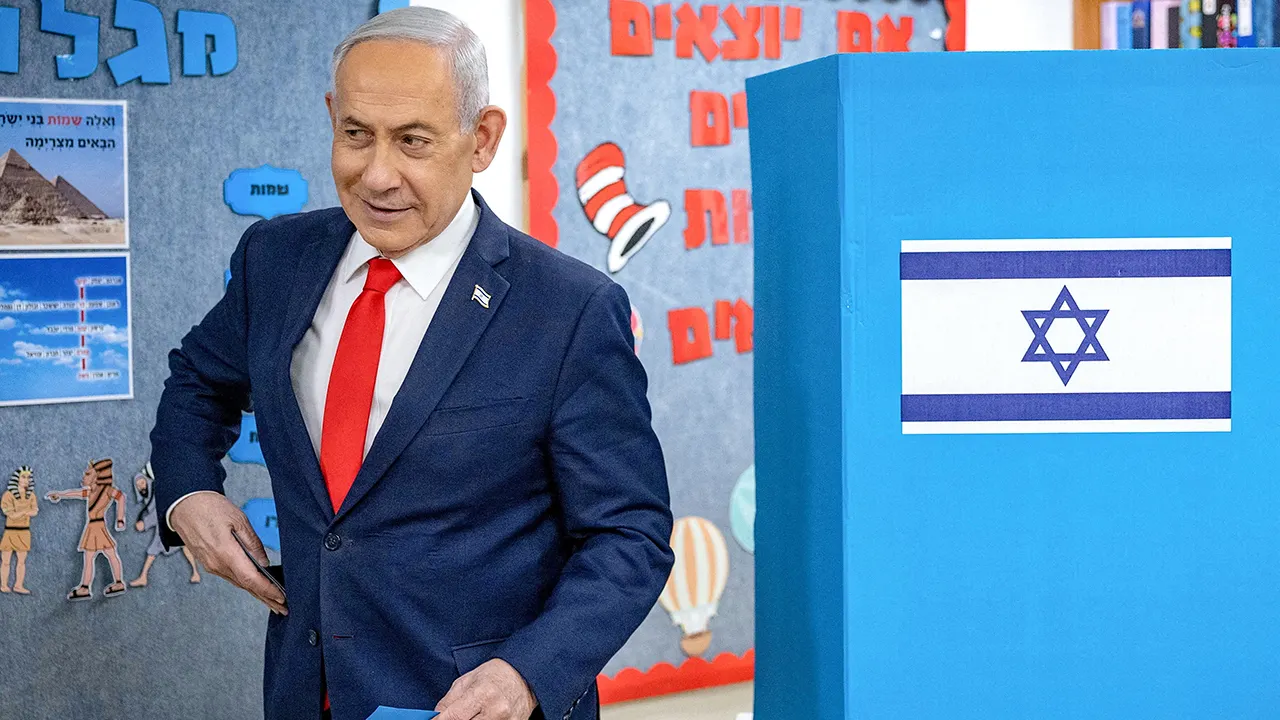

In the wake of Israel’s latest national election, preliminary exit polls signal Prime Minister Benjamin Netanyahu inching closer to a majority, albeit still falling short of a secure parliamentary coalition. This election, marked by a historic voter turnout of 77.7%, has pitted Netanyahu against former military chief Gadi Eisenkot, who is emerging as a significant challenger. The current political landscape raises the possibility of a deadlock, as neither side appears to secure a definitive path to forming a stable government, raising questions about leadership and future governance in Israel.
| Article Subheadings |
|---|
| 1) Election Context and Background |
| 2) Voter Turnout and Public Sentiment |
| 3) Key Election Results and Implications |
| 4) Challenges Ahead for Potential Leaders |
| 5) Conclusion and Future Prospects |
Election Context and Background
The recent elections in Israel represent a pivotal moment within the country’s evolving democratic landscape. Occurring on October 27, 2026, this election was the first national vote following a series of troubling events, including the deadly Hamas attack on October 7, 2023, which resulted in the deaths and abductions of numerous Israeli citizens. In this context, Prime Minister Benjamin Netanyahu faced intensified scrutiny over his leadership and the security policies of his government. His long-standing political career and experience positioned him as a seasoned candidate in a challenging political environment.
Facing him is Gadi Eisenkot, the former chief of the Israeli Defense Forces (IDF), who has positioned himself as a fresh alternative, appealing to voters disillusioned with the current administration. Eisenkot leads the Yashar party, capitalizing on frustrations over Netanyahu’s past security failures and the ongoing conflict with Hamas. As the political landscape continues to coincide with a backdrop of regional tensions, this election is characterized by high stakes that could redefine not only domestic policy but also Israel’s interactions on the international stage.
Voter Turnout and Public Sentiment
The 2026 national election saw an unprecedented voter turnout rate of 77.7%, a remarkable statistic that echoes a significant engagement in the democratic process, especially given the traumatic and politically charged backdrop of recent events. This surge in participation is the highest recorded since 1999, indicating a strong public desire for change or reaffirmation of current leadership. Election officials noted the energetic atmosphere at polling stations across the country, with many voters expressing a sense of urgency to make their voices heard, underscoring the national sentiment regarding leadership and governance.
Reports from various polling locations highlighted long lines, a clear indication of the public’s engagement and the weight of the election’s implications. Election officials implemented procedures to accommodate the influx of voters, ensuring that anyone in line before the deadline of 10 p.m. would have the opportunity to cast their votes. This commitment to voter accessibility reflects the determination of the Israeli public to participate actively in this watershed moment.
Key Election Results and Implications
The exit polls indicate a viable but fragile outcome for Netanyahu’s Likud party, projecting around 53 seats to his coalition, while the opposition led by Eisenkot is anticipated to secure approximately 49 seats, along with 19 seats attributed to Arab parties. Despite Likud positioning itself as the largest party within the Knesset, the combined strength of the opposition and Arab factions collectively amounts to a majority of 68 seats. This coalition could pose a substantial challenge to Netanyahu’s governing efforts, as Eisenkot could claim significant political influence if able to establish a required coalition with Arab representatives, which has traditionally been met with resistance from right-leaning parties.
During his speech on election night, Netanyahu adopted a defiant stance, emphasizing the need for a strong right-wing government and explicitly calling for a rejection of reliance on Arab parties, whom he accused of opposing Israel’s right to exist. The contrasting tones between Netanyahu and Eisenkot reveal a divided public opinion and a power struggle that may lead to intricate negotiations in the weeks ahead to form a stable coalition government.
Challenges Ahead for Potential Leaders
The forthcoming political landscape presents formidable challenges for both Netanyahu and Eisenkot. For Netanyahu, the obligation to form a government exists even in the absence of a clear majority, demanding adroit maneuvering amidst political negotiations. He has expressed optimism about the potential to assemble a governing coalition, despite ongoing pressure from the opposition. This uncertainty could lead to a protracted period of negotiations, thrusting the Israeli electorate once more into tense political discourse.
For Eisenkot, the current political climate provides a unique opportunity, but challenges will arise in attempting to unite a fragmented opposition and garner the necessary parliamentary support. Should he succeed in gaining recommendations from 61 lawmakers, including Arab parties, Eisenkot could potentially receive the first mandate from President Isaac Herzog to form a government. However, even that would not guarantee the stability needed to enact significant policy changes. The prospect of a divided government could result in continued political stalemate and indecisiveness surrounding crucial national matters.
Conclusion and Future Prospects
As Israel finds itself potentially facing weeks of negotiations, the question of who will govern remains at the forefront of the national conscience. The election has underscored a public yearning for decisive leadership in the aftermath of crises and ongoing security concerns. The results signify an electorate engaged in matters of governance, anxious for clarity and resolution.
Looking ahead, the implications of this election extend beyond immediate political affiliations. The configuration of the next government will determine not only domestic policies but interactions on the global stage, particularly concerning relations with Iran and other regional players. As the final ballot counts are tallied and complexities of coalition building commence, Israel stands at a crossroads. This election, consequential and laden with expectations, could shape its political future for years to come.
| No. | Key Points |
|---|---|
| 1 | Netanyahu’s Likud party projected around 53 seats. |
| 2 | Eisenkot’s opposition gaining approximately 68 seats in total with Arab parties. |
| 3 | Historic voter turnout of 77.7% reflects public engagement. |
| 4 | Continued pressure on Netanyahu regarding leadership accountability. |
| 5 | Political negotiations may prolong uncertainty over the new government structure. |
Summary
The recent election serves as a crucial indicator of Israelis’ collective sentiment toward leadership amid haunting memories of regional conflict. With Netanyahu remaining a prominent figure and Eisenkot presenting a formidable challenge, the resulting power struggle could have lasting implications that extend far beyond domestic policies. As coalition negotiations unfold, the decision-making processes will play an essential role in addressing security concerns, maintaining international relations, and navigating the complexities of governance in a divided political landscape.
Frequently Asked Questions
Question: What were the main issues influencing voter behavior in the election?
The main issues influencing voter behavior included security concerns stemming from the October 7 massacre by Hamas, governance efficiency, and an overall desire for change, particularly with regard to accountability for previous leadership actions.
Question: How is the Israeli parliamentary system structured?
Israel operates under a parliamentary system where citizens vote for parties rather than direct leaders. The parliament, known as the Knesset, has 120 seats, and parties must cross a threshold of 3.25% of the votes to gain representation.
Question: What happens if no clear winner emerges from coalition negotiations?
If no clear winner emerges, the Israeli President may consult party leaders to determine which candidate has the best chance of forming a government, an often complex and protracted process that could lead to further political instability.
