

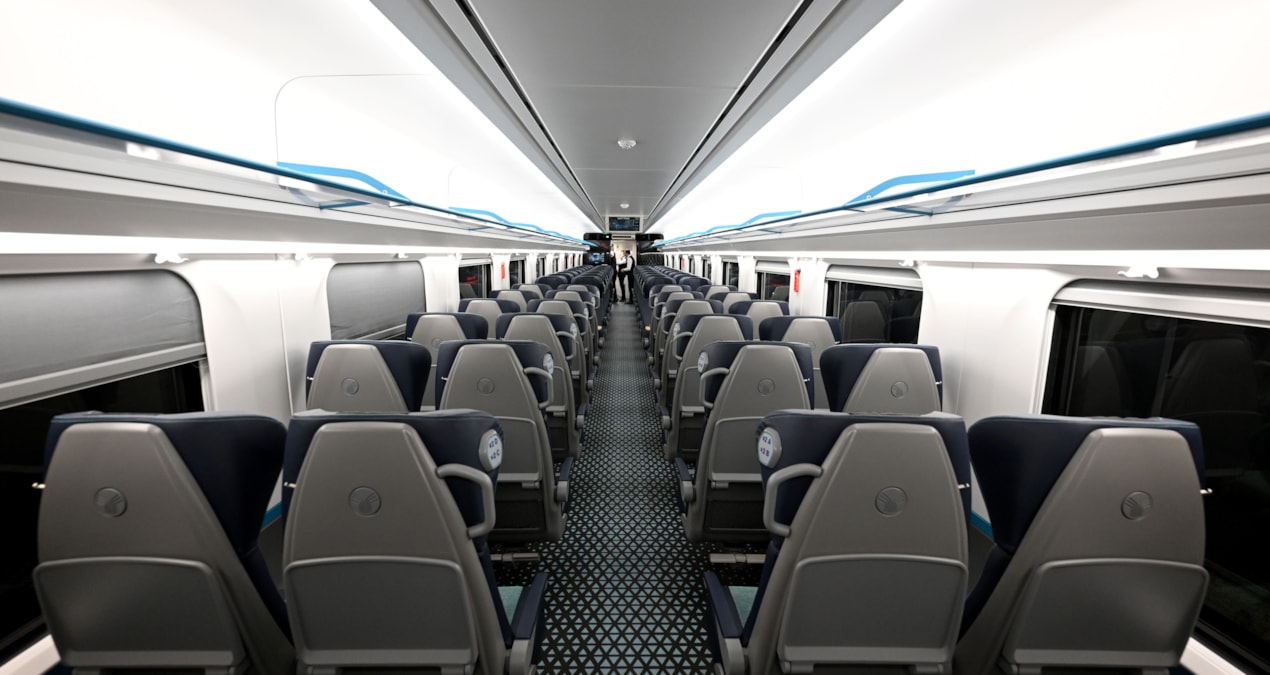

In a significant advancement for Turkey’s transportation sector, Minister of Transport and Infrastructure Abdulkadir Uraloğlu recently conducted a test drive of the national high-speed train developed by TÜRASAŞ on the Ankara-Kırıkkale route. This initiative aims not only to enhance domestic train production but also to position Turkey among the global leaders in high-speed rail technology. Uraloğlu highlighted the importance of local production, stating that the project reflects a commitment to developing both the infrastructure and the technology necessary for modern railway systems.
| Article Subheadings |
|---|
| 1) Overview of the High-Speed Train Project |
| 2) Achievements in Domestic Production |
| 3) Safety and Environmental Considerations |
| 4) Future Plans for the National Train System |
| 5) Insights from the Test Drive Experience |
Overview of the High-Speed Train Project
The national high-speed train project in Turkey represents a pivotal step in the nation’s long-term transportation strategy. Launched by TÜRASAŞ, the aim is to create a domestically produced high-speed rail system connecting Ankara, Kırıkkale, Yozgat, and Sivas, significantly reducing travel time and enhancing passenger convenience. The project aligns with global trends in transport infrastructure development, where nations are investing heavily in efficient public transportation systems to stimulate economic growth and reduce traffic congestion.
The test drive conducted by Uraloğlu not only showcased the advanced capabilities of the train but also served as a precursor to its operational deployment expected in early next year. This initiative has sparked notable interest, reflecting a growing public awareness regarding sustainable travel options and the potential benefits offered by high-speed rail systems.
As a part of Turkey’s Vision 2023 project, which aims for significant advancements in various sectors including transportation, this high-speed train project underlines the governmental commitment to enhancing connectivity across major urban centers in Turkey.
Achievements in Domestic Production
Turkey’s high-speed train project is particularly significant considering its emphasis on local manufacturing. According to Uraloğlu, about 65 percent of the train’s components are sourced locally, illustrating an impressive capability for in-country production. The establishment of three manufacturing plants in Sakarya, Eskişehir, and Sivas has been a crucial part of Turkey’s goal to self-sustain its railway system. This move towards self-sufficiency not only contributes to national pride but also boosts local economies by creating jobs and investing in domestic industries.
Uraloğlu noted, “Our local, national high-speed train is on the Ankara-Kırıkkale roads and rails.” The integration of local expertise and technology has allowed for rapid advancements in design and functionality, placing Turkey in a position of competitiveness on the global stage for rail transportation. Moreover, with the factory in Sakarya expected to be operational by the end of the year, mass production can begin, paving the way for future innovation and expansion.
The identified cooperation with industry giants like ASELSAN and TÜBİTAK further underscores the strategic partnerships that are vital for continual improvement and innovation in railway technologies.
Safety and Environmental Considerations
Safety has been a paramount concern throughout the test drive and manufacturing process. Uraloğlu emphasized that deficiencies identified during preliminary tests have been addressed in ongoing production cycles. This commitment to safety is critical as the Turkish government aims to ensure that the new high-speed trains conform to international safety standards before they begin commercial operations.
In addition to passenger safety, the environmental impact of high-speed rail becomes increasingly relevant. The Minister outlined the ecological benefits associated with rail travel, particularly in terms of carbon emissions reduction.
“The most powerful means of transportation that we can reduce and eliminate carbon emissions are railways”
. The shift toward electric train systems represents not only a move towards cleaner energy usage but also a commitment to meeting international climate goals.
As electric trains become integral to reducing dependency on fossil fuels, Uraloğlu acknowledged that more efforts are necessary in the transition within road transportation. However, the strides made in rail travel affirm Turkey’s dedication to environmentally friendly transport solutions.
Future Plans for the National Train System
The future of Turkey’s high-speed rail system appears bright, with plans outlined for expanded operations and routes. Uraloğlu mentioned that testing will continue until the end of the year, aiming for certification within a few months that will facilitate the trains’ entry into regular passenger service expected in the first quarter of next year.
For operational efficiency, the Çerkezköy-Kapıkule High-Speed Train Line will be the initial focus for these new high-speed train sets, although Uraloğlu also assured readers that existing trains will continue operating across various routes, maintaining seamless connectivity throughout national rail services.
The announced high-speed train factory is expected to catalyze further developments, with plans for implementation of advanced railway technologies making it a hub for innovation in high-speed transportation systems. This will allow Turkey to not just improve its transport infrastructure, but also serve as a model for neighboring countries keen on upgrading their rail systems.
Insights from the Test Drive Experience
The test drive undertaken by Minister Uraloğlu served not only as a demonstration of functional capabilities but also provided first-hand insights into the operational experience of the train. During the test, the high-speed train achieved an impressive performance of approximately 250 kilometers per hour, exceeding the 225 kilometers per hour target, indicating that the engineering teams have successfully created a robust and responsive system.
Experiencing the ride firsthand, Uraloğlu reported a comfortable and quiet environment, which is crucial for modern rail travel where passengers often value the ability to work or use personal devices during journeys. He remarked that such advancements create spaces where individuals can engage in other productive activities, ultimately redefining travel as a productive time rather than a mere transition between locations.
Moreover, knowledge gained during the drive will likely feed back into ongoing developments and testing phases, ensuring that Turkey maintains a competitive edge in train technology that meets both the expectations of contemporary passengers and strict international benchmarks.
| No. | Key Points |
|---|---|
| 1 | Turkey’s national high-speed train developed by TÜRASAŞ is set to enhance intercity travel. |
| 2 | The project emphasizes local production with around 65% of components sourced domestically. |
| 3 | Safety concerns addressed through rigorous testing and monitoring procedures. |
| 4 | Future operations planned to begin within the first quarter of the upcoming year. |
| 5 | Environmental impact emphasized through reduced carbon emissions in rail transport. |
Summary
The test drive of Turkey’s national high-speed train marks a significant milestone in the country’s journey toward modernizing its transportation infrastructure. With a strong emphasis on local manufacturing, safety, and environmental sustainability, this initiative reflects both current and future ambitions in enhancing connectivity, efficiency, and overall travel experience. Expectations are high for the operational launch by early next year, as this project potentially sets a benchmark for not only domestic advancements but also regional railway developments.
Frequently Asked Questions
Question: What is the main purpose of the national high-speed train project in Turkey?
The main purpose of the national high-speed train project is to enhance intercity travel by creating a domestically produced train system that connects key urban centers, thereby improving efficiency and reducing travel time.
Question: What percentage of the train’s components are produced locally?
Approximately 65 percent of the train’s components are manufactured in Turkey, showcasing the project’s emphasis on local production and self-sufficiency.
Question: When is the expected launch of the high-speed train services?
Launch of the high-speed train services is expected to occur in the first quarter of the next year, following ongoing testing and certification procedures.
