

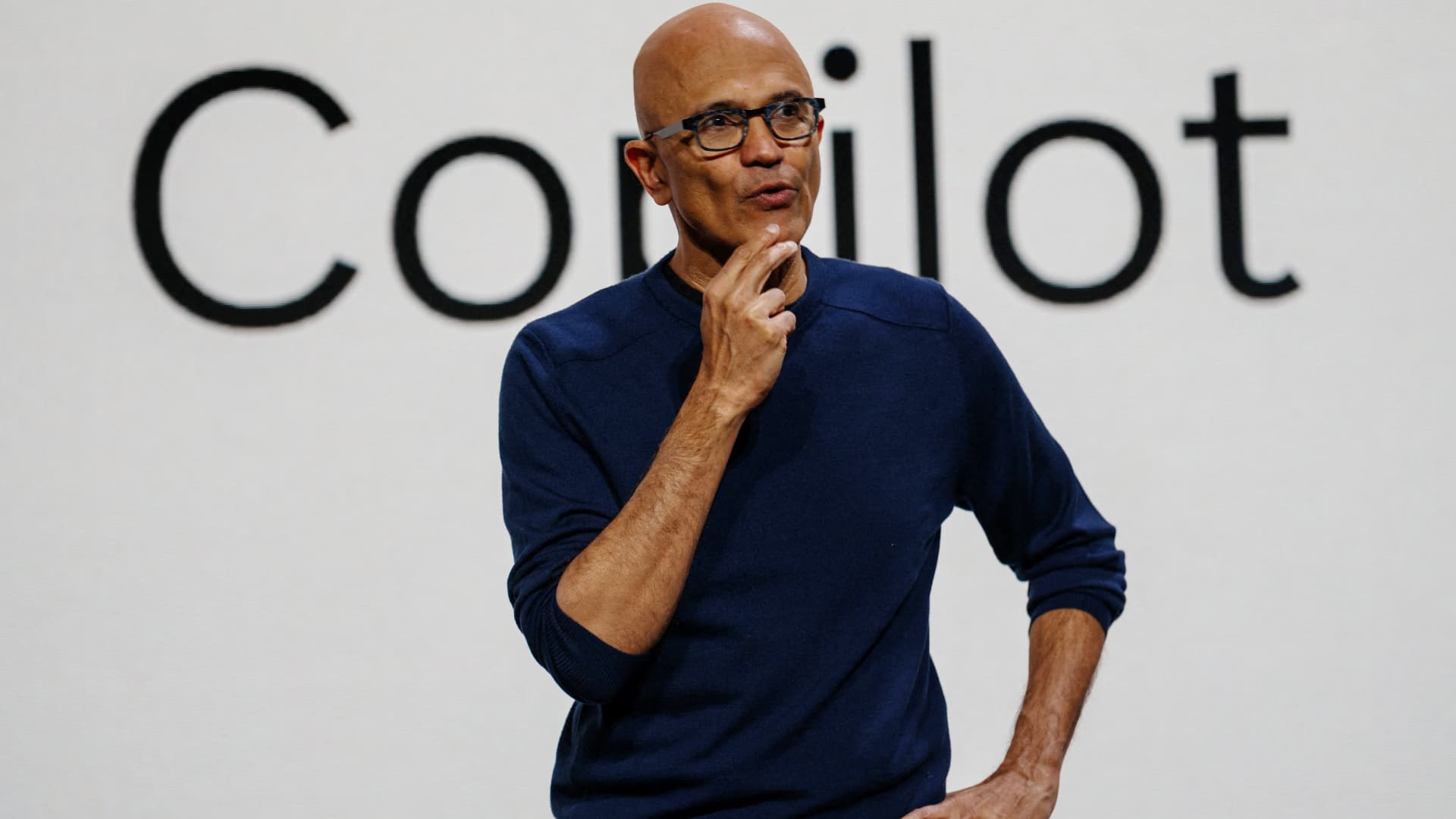

Microsoft Corporation announced impressive financial results for its fiscal first quarter, leading to a 4% surge in its stock during after-hours trading. The tech giant reported a 19% year-over-year revenue growth, primarily fueled by a remarkable 48% expansion in its Azure cloud infrastructure sector. This performance has exceeded analysts’ expectations, prompting optimism about Microsoft’s capability to meet increased demand for cloud services and artificial intelligence infrastructure.
| Article Subheadings |
|---|
| 1) Microsoft’s Financial Highlights |
| 2) Azure Cloud Growth and Future Projections |
| 3) Shifts in Capital Expenditures |
| 4) Changes in Organizational Structure |
| 5) Outlook Amidst Competitive Environment |
Microsoft’s Financial Highlights
Microsoft’s quarterly financial report revealed significant positive trends, with earnings surpassing expectations. The adjusted earnings per share stood at $4.89, better than the anticipated $4.73, while the company’s revenue reached $92.28 billion against a forecast of $90.69 billion. This consistent growth has been attributed to both strong consumer and enterprise demand across its varied product lines, particularly in cloud computing.
The company’s net income also saw a notable increase, rising to $36.63 billion or $4.92 per share, up from $27.75 billion or $3.72 per share a year earlier. This marks a substantial growth trajectory, reflecting effective management and strategic investments. Microsoft has informed investors that the revenue model for Azure alone reached $33.17 billion for the quarter, illustrating the segment’s significant contribution to overall performance, particularly in a marketplace where competition is intensifying.
Azure Cloud Growth and Future Projections
One of the key drivers behind Microsoft’s financial success is its Azure cloud platform. The Azure segment has now grown to become the company’s largest business area, with a staggering 48% growth reported for the last quarter. Analysts anticipate that this trend will continue, with Microsoft forecasting revenue between $96 billion to $97.1 billion for its fiscal second-quarter. This projection signals an anticipated growth rate of approximately 18.8% compared to previous years.
During a conference call, Microsoft’s finance chief, Amy Hood, indicated expectations of growth for Azure to hover between 49% and 50% in the next quarter, surpassing the previously established consensus. This demand for cloud services has prompted Microsoft to build out its data center infrastructure, strategically positioning itself to meet the anticipated rise in consumption driven by artificial intelligence applications and services.
Shifts in Capital Expenditures
In relation to its capital expenditures, Microsoft has committed to investing heavily, with $45.2 billion spent in the latest quarter—a 30% increase from the prior year. The company outlined planned expenditures for the upcoming quarters, estimating over $50 billion for the second fiscal quarter alone, which surpasses the predictions from analysts. The allocation of this capital is focused significantly on technology infrastructure, signaling a shift towards more immediate revenue-generating assets.
This focus also reflects a strategic pivot towards short-term assets, with approximately 75% of capital expenditures now dedicated to vital components such as Intel chips and Nvidia graphics processing units. This decisiveness indicates Microsoft’s commitment to ensuring sufficient resources are allocated to meet the growing needs of its cloud services and potential AI-driven projects.
Changes in Organizational Structure
Reflecting an evolving business landscape, Microsoft has reorganized its operational structure. The firm’s recent restructuring divides its operations into two segments: Agents and Infra, and Devices and Consumer, shifting away from a three-segment model that divided its Azure, Office, and Windows businesses. This organizational change is designed to streamline operations and enhance focus on key revenue-generating areas, particularly within the tech and software domains.
Notably, Satya Nadella, the CEO, reported a 50% increase in the usage of the Microsoft 365 Copilot AI assistant. Though specific usage numbers were not disclosed, this growth reflects the increasing integration of AI resources in their daily operations. Additionally, Microsoft has launched its new high-end Microsoft 365 E7 productivity bundle, which has already gained traction with millions of users.
Outlook Amidst Competitive Environment
While the financial results are promising, Microsoft is also facing pressures from the competitive landscape of the tech industry. Companies like Alphabet and Meta have reported negative free cash flow, contrasting Microsoft’s more stable finance situation, signifying a strong competitive edge in maintaining capital efficiency amidst emerging challenges. However, the company has indicated plans to access additional funding if favorable opportunities arise in the debt markets, reflecting a prudent financial strategy.
As Microsoft’s revenue continues to build momentum, the company has also sought to balance capital efficiency with its significant investments in AI. The workforce is expected to undergo significant changes, including announced plans to cut 4,800 jobs and potential buyouts of up to 60,000 employees. These steps underscore an emphasis on recalibrating to optimize operational costs while adapting to technological advancements.
| No. | Key Points |
|---|---|
| 1 | Microsoft’s shares rose 4% following strong quarterly results driven by significant growth in Azure. |
| 2 | The company reported an adjusted earnings per share of $4.89, beating the expected $4.73. |
| 3 | Microsoft plans $50 billion in capital expenditures for the upcoming second quarter to enhance infrastructure. |
| 4 | Organizational changes have streamlined operations into two segments, enhancing focus on key growth areas. |
| 5 | The company is preparing for competitive pressures while aiming for stability in free cash flow. |
Summary
Microsoft’s recent financial results reveal a company not only poised to thrive in the competitive landscape of technology but also adaptable in facing challenges. With robust growth in its Azure cloud segment and strategic shifts in capital expenditures and organizational structure, Microsoft is making strides to sustain its leadership. Continuous investments in artificial intelligence and a focus on operational efficiency indicate a clear path forward that could position the firm as a dominant player in various technological domains in the coming years.
Frequently Asked Questions
Question: What factors contributed to Microsoft’s recent revenue growth?
The revenue growth has been significantly driven by a 48% expansion in the Azure cloud infrastructure business, alongside increased demand for Microsoft 365 and AI services.
Question: How does Microsoft’s workforce restructuring impact its business?
Restructuring is aimed at optimizing costs and improving efficiency, which is critical as Microsoft invests heavily in AI and cloud infrastructure.
Question: What are Microsoft’s future plans in terms of capital expenditures?
Microsoft plans to allocate over $50 billion in capital expenditures for the upcoming fiscal second quarter, primarily focusing on cloud infrastructure and technology that can quickly generate revenue.
