

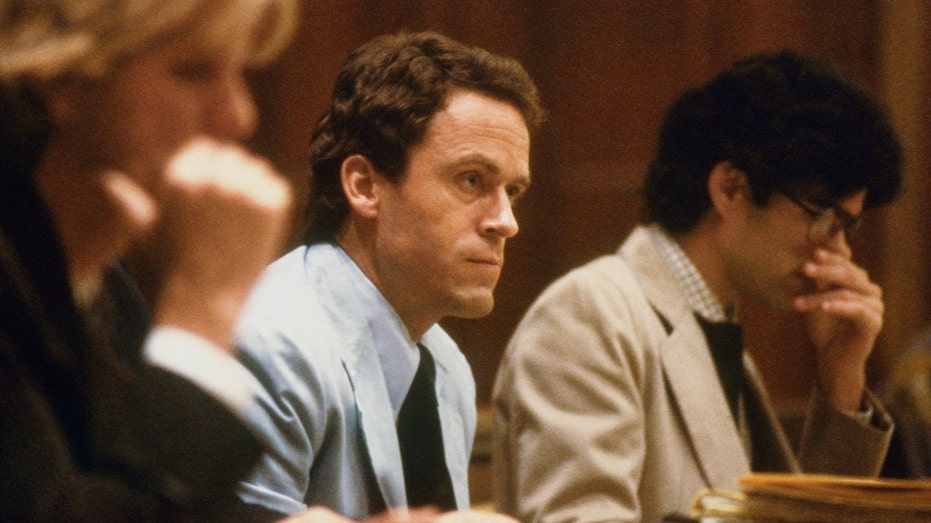

Melissa Ann Smith, a 17-year-old Utah police chief’s daughter, was formally identified as a victim of Ted Bundy after DNA evidence connected him to her 1974 murder. The breakthrough followed a separate DNA match in the killing of Laura Ann Aime, another Utah teenager murdered that year. Investigators say the development could help examine other cases potentially connected to Bundy, although no broad link has been established. The case also underscores the importance of preserving evidence for decades.
| 1) | DNA evidence resolves a decades-old Utah murder |
| 2) | A second case provided the investigative breakthrough |
| 3) | Preserved evidence may support additional investigations |
| 4) | Detectives caution against attributing every case to Bundy |
| 5) | The investigation remains focused on victims and families |
DNA evidence resolves a decades-old Utah murder
Melissa Ann Smith was found dead by hunters on Oct. 27, 1974, in a wooded area near the border of Summit and Salt Lake counties. She was the daughter of then-Midvale Police Chief Louis Smith. Investigators had long suspected Ted Bundy because the circumstances resembled other crimes associated with him, but similarities in methods were not enough to establish responsibility.
That changed after investigators compared preserved evidence from Smith’s postmortem examination with evidence from another Utah homicide. The DNA findings, combined with evidence concerning Bundy’s pattern, motive, means and opportunity, led authorities to conclude that he killed Smith and formally close the case more than five decades after her death.
A second case provided the investigative breakthrough
Laura Ann Aime, also 17, disappeared after leaving a Halloween party to buy cigarettes on Oct. 31, 1974. Hikers later found her body near American Fork Canyon, and investigators determined that she had been raped, strangled and murdered. Bundy was considered the prime suspect for years, but authorities initially lacked conclusive evidence.
Investigators eventually developed a DNA profile from evidence in Aime’s case that matched Bundy. That result created an opportunity to compare the Aime evidence with material retained from Smith’s investigation. The Utah Bureau of Forensic Services worked with investigators from Summit, Salt Lake and Utah counties to conduct the comparison.
Preserved evidence may support additional investigations
Ben Pender, a 35-year law enforcement veteran assigned to the Salt Lake County Sheriff’s Office unsolved homicide and missing person unit, said evidence from Smith’s case was preserved because homicide evidence is retained indefinitely.
“We’re gonna hold on to this evidence, and we’re gonna utilize it in cases that we believe may be connected,” Pender said.
Pender said investigators will continue preserving the evidence and could use it when other agencies have cases that may be connected to Bundy. He said DNA is not always available or decisive, but it can provide a missing piece when combined with other evidence.
Detectives caution against attributing every case to Bundy
Pender cautioned that the Smith finding does not mean every unsolved killing potentially associated with Bundy can be tested or assigned to him. Some cases have no DNA evidence, some evidence has degraded, and some material was handled before investigators understood the value of genetic testing. Evidence may also contain genetic material from more than one person.
Bundy confessed to 28 murders, while investigators have long believed his total victim count could have been much higher. He was convicted in Florida for murdering two Florida State University students and separately received a death sentence for the rape and murder of a 12-year-old girl. He was executed in Florida in 1989, but not every killing attributed to him has been independently confirmed.
The investigation remains focused on victims and families
Pender said Smith’s case does not close the investigation into Bundy’s possible crimes. His caseload includes 34 unsolved homicides and 14 adult missing-person cases in which foul play is suspected, although those cases are not believed to be connected to Bundy except for the disappearance of Nancy Wilcox.
Bundy confessed to killing Wilcox, but her body has never been recovered, preventing investigators from closing the case based solely on that confession. Pender emphasized that agencies must establish responsibility carefully rather than placing unresolved cases on a notorious suspect without sufficient proof.
“It’s more about the victim, right? It’s about the victim, the family, the community, it’s about resolving the case,” Pender said.
| 1 | DNA evidence linked Ted Bundy to the 1974 killing of Melissa Ann Smith. |
| 2 | A DNA match in Laura Ann Aime‘s case enabled the comparison. |
| 3 | Investigators will preserve the evidence for potential future cases. |
| 4 | Authorities say each suspected Bundy connection requires independent proof. |
Summary
The Smith investigation was resolved through cooperation among county investigators and the state forensic laboratory, made possible by evidence preserved for more than 50 years. The DNA finding strengthens the documented case against Bundy but does not establish that he committed every unsolved crime associated with his era. Investigators will continue examining credible evidence while keeping the focus on identifying victims and providing answers to their families.
Frequently Asked Questions
What case led to the DNA breakthrough?
The breakthrough came from the murder of Laura Ann Aime, whose 1974 case produced a DNA profile linked to Ted Bundy.
Why was Melissa Ann Smith‘s case not resolved earlier?
Investigators suspected Bundy, but earlier evidence showed similarities rather than conclusively identifying him. Later DNA comparison provided the missing forensic link.
Could Bundy be connected to more victims?
Investigators say it is possible, but each potential connection must be evaluated separately because cases differ in the amount and condition of available evidence.
