

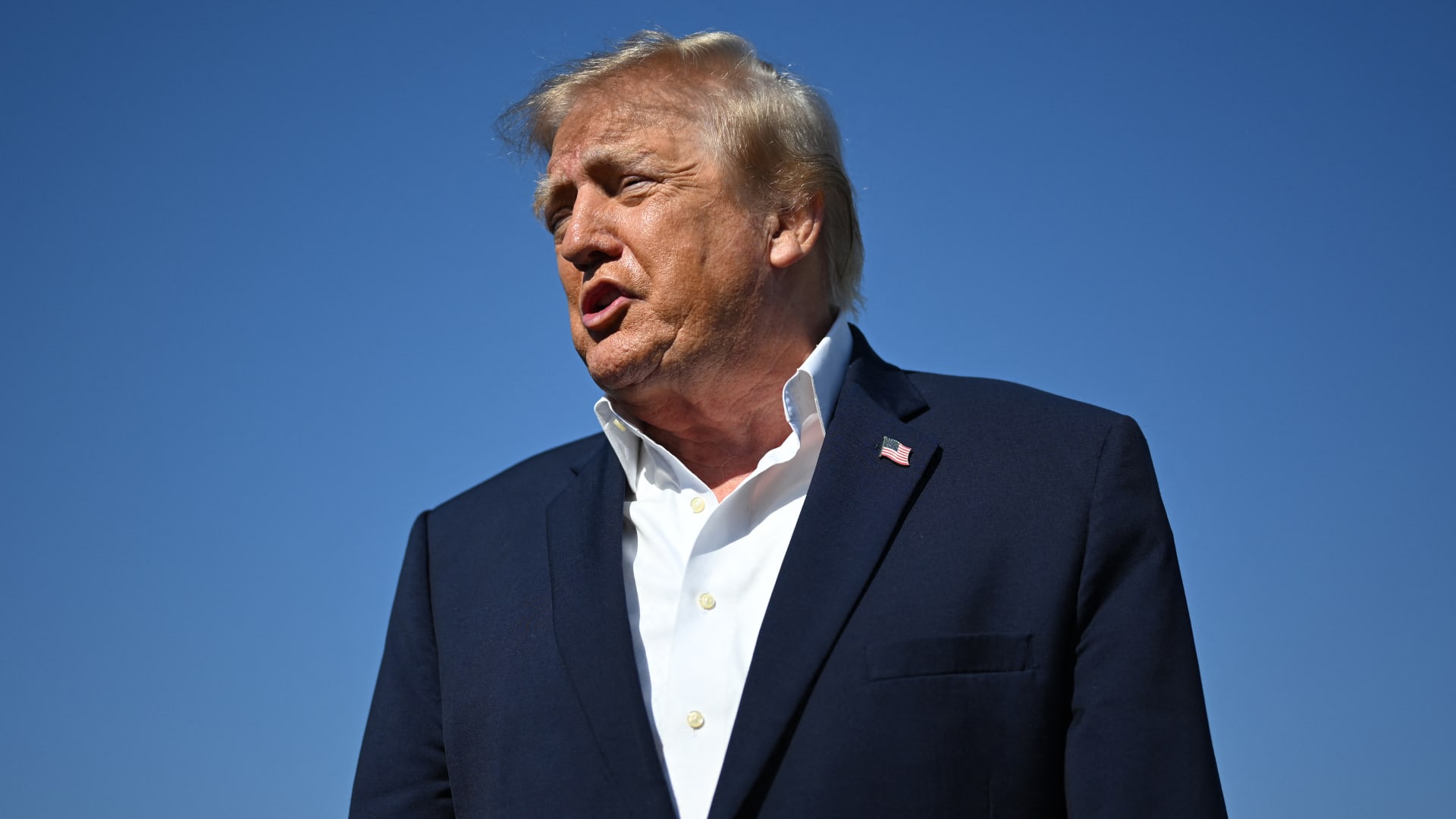

In a recent rally held in Lubbock, Texas, U.S. President Donald Trump emphasized his control over the ongoing war in Iran, claiming it could conclude “whenever I want it to.” His remarks come at a time when the administration faces significant challenges, including low approval ratings and rising energy costs that affect American families as the country heads into the midterm elections scheduled for November 3. Trump reiterated his stance on ensuring that Iran never acquires nuclear weapons, amid escalating tensions and military planning by U.S. and allied forces in the region.
| Article Subheadings |
|---|
| 1) Trump Asserts Control Over Ending the War |
| 2) The Economic Impact of the Conflict |
| 3) Military Planning and Future Actions |
| 4) Rising Costs and Their Implications |
| 5) Broader Context of U.S.-Iran Relations |
Trump Asserts Control Over Ending the War
During the rally in Texas, President Donald Trump confidently stated, “Whenever I want it to end,” in reference to the ongoing conflict in Iran. This assertion reflects Trump’s usual messaging that emphasizes his administration’s strong stance on national security. The President believes that the conflict can be concluded swiftly, provided that a clear and definitive agreement is reached, particularly focusing on ensuring that Iran does not develop nuclear weapons.
Trump’s statements come at a critical juncture as the United States approaches the midterm elections, where public opinion is pivotal. As part of his campaign rhetoric, he suggests that his approach toward Iran represents a commitment to peace and security. Moreover, his remarks fuel ongoing debates about U.S. involvement in foreign conflicts, highlighting his administration’s militaristic strategies.
The Economic Impact of the Conflict
The conflict in Iran has generated significant economic repercussions for American households, with recent assessments placing the cost at approximately $2,000 per family. Chief economist Mark Zandi at Moody’s Analytics pointed out that an estimated $1,100 of this figure is attributed to rising energy costs. This surge can be traced back to heightened tensions and military engagements that have disrupted global oil supplies, putting strain on American consumers.
Additionally, families are grappling with about $540 in increased interest rate costs, directly related to federal monetary policies that have escalated borrowing costs. Moreover, military spending associated with the conflict adds around $360 to the financial burden on the average American family. This economic landscape poses a challenge for Trump as he seeks to bolster his approval ratings amid concerns about affordability and financial stability ahead of the tight political race.
Military Planning and Future Actions
Recent developments indicate that the U.S. military is actively preparing for potential escalations in the conflict. Reports have circulated regarding the evacuation of diplomats from Saudi Arabia in anticipation of heightened military operations. Speculation arises that the U.S. and Israeli military forces are strategizing a “short but intensive” campaign aimed at Iran, post-midterm elections. This highlights the serious nature of the ongoing conflict and the proactive measures being taken by the U.S. regarding its defense strategy in the region.
Trump remarked on his decision-making process, leaving the possibility open for either negotiating a peace deal or taking decisive military action against Iran. Such planning suggests a significant level of readiness to respond to either diplomatic opportunities or perceived threats, remaining consistent with his administration’s approach to international relations.
Rising Costs and Their Implications
The financial burden of the Iran war has reportedly surged to $47 billion, a figure that indicates growing concerns not just from economic analysts but also within military budgeting circles. This new assessment has revealed a $3 billion increase compared to prior estimates, predominantly driven by the need for munitions replacements, which accounted for roughly $29 billion of the total expenditure.
Furthermore, the conflict’s implications extend beyond monetary costs. The damages incurred by U.S. military bases in the Middle East alone are estimated at $184 million. This figure includes the impact of Iranian strikes on U.S. diplomatic facilities across several strategic locations, which underscores the importance of assessing not only financial implications but also the broader strategic risks posed by ongoing hostilities.
Broader Context of U.S.-Iran Relations
The U.S. relationship with Iran has been fraught with tension for decades, characterized by a cycle of sanctions, diplomatic standoffs, and military engagements. Trump’s determination to ensure Iran does not develop nuclear weapons is a central theme of his foreign policy strategy. He maintains that achieving this goal is essential not only for U.S. national security but also for regional stability in the Middle East.
Moreover, the ongoing conflict raises questions about U.S. involvement and the lines between diplomatic dialogue and military intervention. In light of the upcoming elections, analyses of Trump’s stance towards Iran could be pivotal in shaping the narratives surrounding foreign policy, particularly as the electorate weighs the costs and benefits of military action against diplomatic engagement.
| No. | Key Points |
|---|---|
| 1 | Trump claims he can end the Iran war “whenever I want it to,” emphasizing his control over the situation. |
| 2 | The economic impact of the war is leading to an average cost of $2,000 for American families. |
| 3 | Military planning indicates preparations for potential actions against Iran following the midterm elections. |
| 4 | The cost of the Iran conflict has increased to $47 billion, driven significantly by munitions replacement. |
| 5 | Relations with Iran continue to be a cornerstone of Trump’s foreign policy strategy, focusing on nuclear weapons prevention. |
Summary
The statements made by President Donald Trump regarding the Iran war underscore his administration’s commitment to a militaristic approach to foreign policy while grappling with domestic challenges. As the country approaches the midterm elections, the implications of ongoing military engagements and their economic repercussions are brought into sharper focus. The overarching concern regarding Iran’s nuclear capabilities continues to shape U.S. strategy, reflecting the complex dynamics that characterize U.S.-Iran relations.
Frequently Asked Questions
Question: Why does Trump insist on controlling the timeline of the Iran war?
Trump’s assertion focuses on his belief that decisive leadership can lead to a swift resolution, reflecting his administration’s broader narrative of strength and control in foreign policy.
Question: What are the economic consequences of the Iran conflict for American families?
The economic consequences include increased energy costs and overall financial strain, with estimates putting the burden at around $2,000 per family due to rising military and interest costs.
Question: How is the U.S. military preparing for further actions in Iran?
Recent reports indicate U.S. and Israeli military forces are drawing up plans for potential operations against Iran, following the midterm elections, highlighting the readiness for both military engagement and negotiations.
