

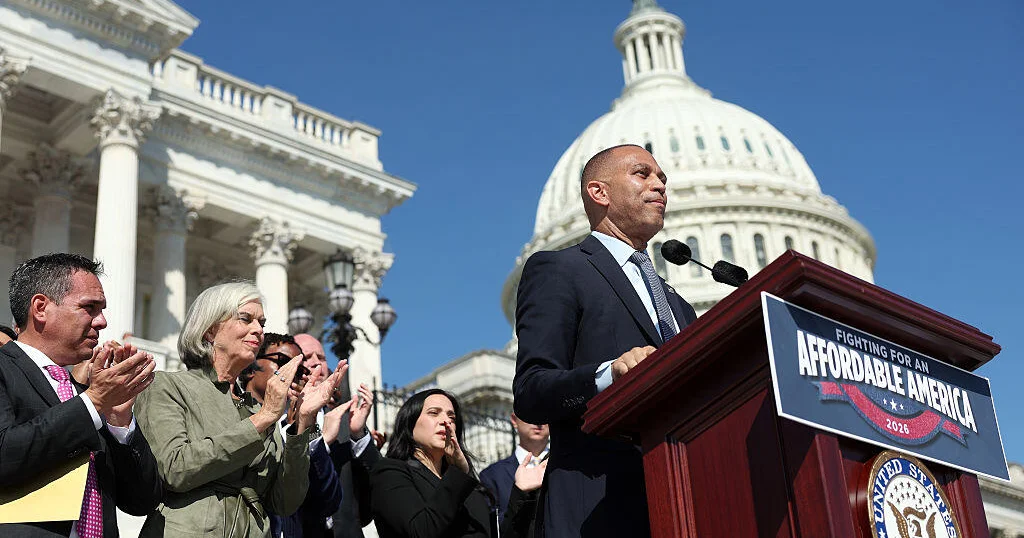

In a significant shift in the political landscape, the Democrats are projected to reclaim control of the House of Representatives, adapting to voter concerns over economic issues that have dominated recent years. This change is expected to halt President Trump’s legislative agenda and instigate a series of investigations into his administration and business practices as the new Congress convenes in January. As this political transformation unfolds, House Minority Leader Hakeem Jeffries is poised to lead in the push for legislative reforms, aiming to address affordability and governance issues that have become central to American voters’ concerns.
| Article Subheadings |
|---|
| 1) Implications of the Democratic Win |
| 2) Aggressive Investigations Planned |
| 3) Legislative Priorities for the New Congress |
| 4) Challenges Facing the New Leadership |
| 5) Reaction from President Trump and Republicans |
Implications of the Democratic Win
The Democrats’ anticipated capture of the House marks a pivotal moment in American politics, particularly as it halts the Republican majority that had dominated the chamber for the past four years. This shift is primarily attributed to rising discontent among voters regarding economic challenges, particularly the escalating cost of living that has affected families across the country. Analysts note that historic trends show midterm elections typically favor the opposing party of the sitting president, a pattern confirmed by the recent electoral outcomes. The Democrats’ return to power in the House is projected to not only reshape legislative priorities but will also induce a significant change in congressional oversight dynamics.
Polls indicated a fervent desire for substantial change among voters, leading to a series of Democratic victories across competitive districts. As a result, the overall extent of Democratic control remains uncertain until all votes are officially counted, but early projections suggest a solidified majority. The victory sets the stage for a more contentious relationship between the legislative and executive branches, particularly as Democrats seek to hold the president accountable for his actions during his tenure.
Aggressive Investigations Planned
With the new Congress convening in January, House Democrats are preparing to initiate several investigations aimed at President Trump and his administration’s conduct. Key figures, including Representatives Robert Garcia and Jamie Raskin, will lead committees dedicated to oversight and judiciary matters. Their efforts will focus on areas such as the president’s business dealings, response to immigration enforcement, and controversial pardons issued during his presidency.
These inquiries are expected to escalate tensions with the Trump administration, which may resist congressional subpoenas, potentially leading to legal battles over executive privilege and congressional authority. Democrats have signaled their determination to pursue these issues, resulting in a political climate fraught with conflict. The investigations promise to be rigorous, as Democrats leverage their newfound subpoena power to gather evidence that could result in wider repercussions, including possible impeachment discussions.
Legislative Priorities for the New Congress
House Minority Leader Hakeem Jeffries, who stands to become the first Black speaker of the House, has articulated the Democratic agenda focusing on addressing affordability issues. Immediate priorities include reversing recent Medicaid cuts, extending Affordable Care Act tax credits that expired, and working toward ending ongoing international conflicts, particularly in Iran, alongside rescinding tariffs that have burdened consumers. Jeffries emphasizes a commitment to enacting laws that resonate with the pressing concerns of Americans, highlighting the urgency of these reforms in his early communications with party members.
A backdrop to these legislative efforts is the ongoing economic dissatisfaction among the electorate, exacerbated by inflation and rising living costs that have become critical issues in recent elections. The Democratic leadership aims to convey a direct response to voter anxiety by pushing forward policies designed to enhance the financial well-being of American families, displaying a sharp contrast to the outgoing administration’s policies.
Challenges Facing the New Leadership
As the Democrats prepare to assume control of the House, they face a myriad of challenges that could shape their effectiveness over the next two years. Accomplishing bipartisan legislative victories will require adept negotiation and coalition-building, particularly given the presence of moderate Democrats who may be hesitant to support more progressive measures. The party’s internal dynamics could complicate Jeffries’ leadership, as factions ranging from centrist to liberal factions have differing priorities and electoral considerations.
The Democrats’ majority, while seemingly secure, is precariously balanced, similar to the Republican tenure marked by constant infighting. The approach to handling critical issues, including funding and potential bipartisan agreements, will likely hinge on Jeffries’ ability to maintain unity among diverse caucus members. Furthermore, Democrats may need to be strategic in their legislative approach, balancing ambitious policy goals with the pragmatism required to achieve tangible outcomes amidst possible Republican opposition.
Reaction from President Trump and Republicans
In response to the Democrats’ projected success, President Trump has expressed a willingness to collaborate with the new congressional majority but maintains a stance to leverage his veto power aggressively. He articulated that negotiations would be necessary, indicating a belief that Democrats will need to work with him to pass legislation, framing it as a necessity for the country. Trump’s focus points to a strategy of maintaining control over the narrative of policy discussions moving forward.
Republican leaders, feeling the impact of the electoral losses, conveyed a reluctance to retreat from their agendas despite the shifting power dynamics. House Speaker Mike Johnson noted that the party would continue to advocate for their priorities, labeling the election results as a call to refocus rather than a definitive defeat. This sentiment among Republicans suggests an ongoing battle in Washington, as divergent views and policies vie for dominance in a landscape altered by the recent elections.
| No. | Key Points |
|---|---|
| 1 | Democrats are projected to regain control of the House, signaling a halt to President Trump’s agenda. |
| 2 | House committees, led by prominent Democrats, plan substantial investigations into the Trump administration. |
| 3 | Priorities include addressing affordability issues through healthcare reforms and reversing cuts. |
| 4 | Democratic leadership will face challenges in uniting diverse factions within their party. |
| 5 | Republican leadership remains committed to their agenda, emphasizing the need for negotiation. |
Summary
As Democrats prepare to take control of the House, the coming months will be critical in defining the trajectory of their legislative agenda in light of recent voter sentiment. The anticipated investigations into the Trump administration will establish a new tone in Washington, one dominated by oversight and accountability. Meanwhile, the necessity for bipartisan cooperation looms large, as both parties must navigate a politically charged environment influenced by public interest and economic conditions. The actions taken by the new Congress may very well determine not only the dynamic in Washington but also voter sentiment in upcoming elections.
Frequently Asked Questions
Question: What does the Democrat’s victory in the House mean for President Trump?
The Democrat’s victory effectively halts President Trump’s legislative agenda and sets the stage for significant investigations into his administration and business dealings during his final term.
Question: What investigative actions are expected from Democrats?
Democrats plan to launch a series of investigations focusing on President Trump’s actions, including his business dealings, immigration enforcement, and various controversies stemming from his presidency.
Question: What are the main priorities for the newly empowered Democrats?
Key priorities include addressing affordability through healthcare reforms, reversing cuts to Medicaid, and working on policies that enhance consumer protections and healthcare access.
