

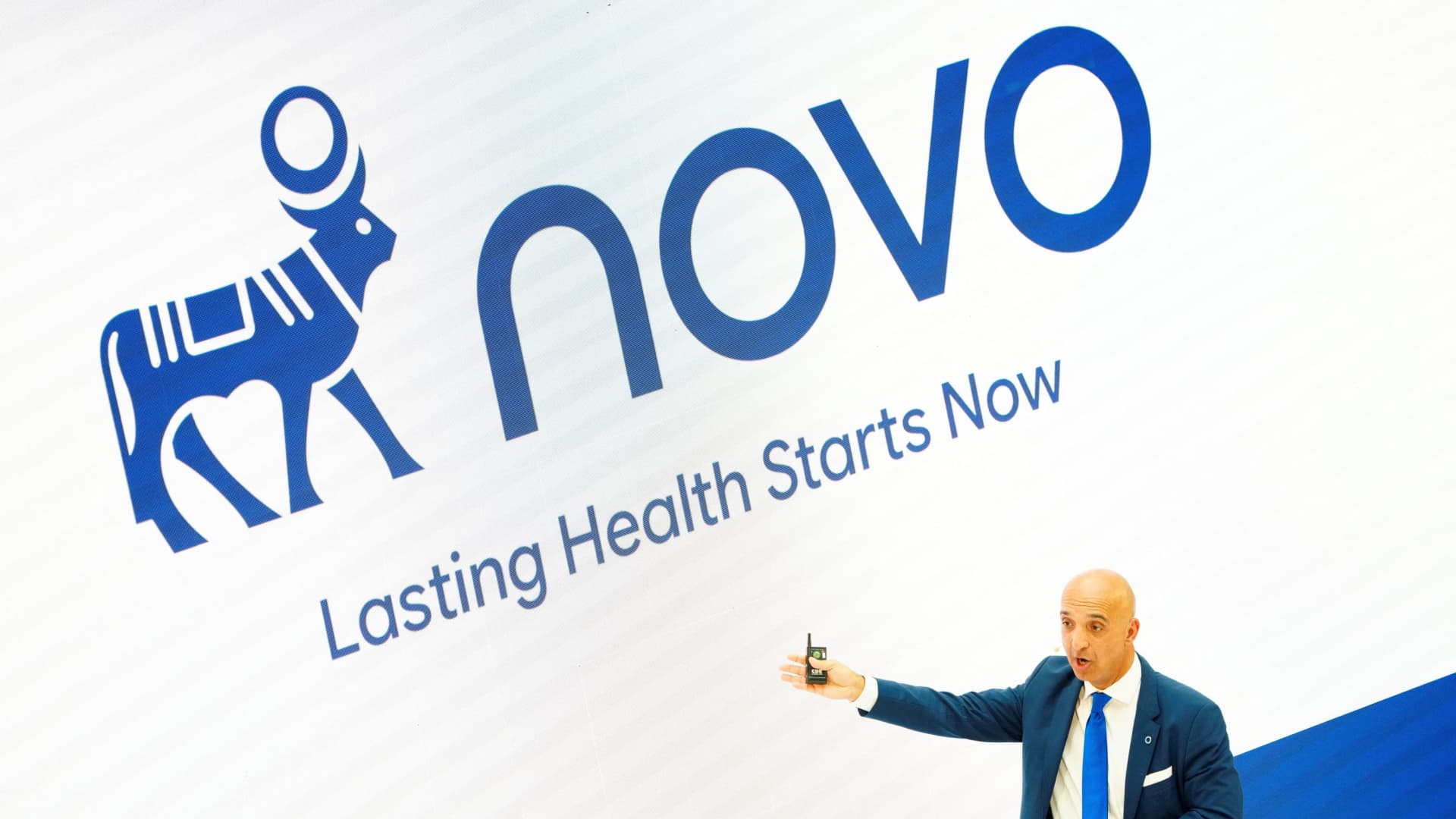

Novo Nordisk released its quarterly earnings report early Wednesday, exceeding market expectations largely due to robust sales of its Wegovy weight-loss pill. The strong performance led to a share price increase of over 6% in early trading as analysts noted impressive growth in GLP-1 (glucagon-like peptide-1) medication volumes globally. After adjusting its outlook, Novo anticipates revenue and operating profit growth to fluctuate between negative 2% and 2%, a positive revision from earlier forecasts that indicated a potential decline.
| Article Subheadings |
|---|
| 1) Strong Earnings Report Exceeds Expectations |
| 2) Impact of Wegovy and Other Products on Sales |
| 3) Novo’s Strategic Position Against Rivals |
| 4) Leadership Changes at Novo Nordisk |
| 5) Market Reactions and Future Projections |
Strong Earnings Report Exceeds Expectations
Novo Nordisk’s earnings report indicated a significant turnaround for the company as it posted sales of 79.2 billion Danish kroner, which translates to approximately $11.9 billion. This performance reflects a year-on-year increase of 4% at constant exchange rates, surpassing expectations set by analysts who predicted figures around 73.6 billion kroner. The adjusted operating profit also ballooned to 31.7 billion kroner, notably exceeding the projected 28.6 billion kroner, further supporting the positive narrative surrounding the company’s financial recovery.
These results represent a critical point for Novo Nordisk, especially following a challenging year marked by increased competition and market challenges. The upbeat earnings signal that the company’s strategic initiatives may be starting to bear fruit and that it is reclaiming lost ground in the competitive pharmaceutical landscape. Following this strong financial showing, the company optimized its annual guidance, now expecting adjusted revenue and operating profit growth to be between negative 2% and 2% at constant exchange rates—an improvement from its prior forecast.
Impact of Wegovy and Other Products on Sales
A significant contributor to this quarter’s strong earnings was the sales performance of the Wegovy weight-loss pill, which reached an impressive 5.4 billion kroner, outpacing the anticipated sales of around 4.5 billion kroner. This figure highlights not only the demand for Wegovy but also its importance in Novo’s overall strategy to regain market leadership in the GLP-1 category. Additionally, sales from the injectable Wegovy and the diabetes treatment Ozempic reported remarkable performances, generating 20.4 billion kroner and 29.7 billion kroner, respectively, both exceeding analyst expectations.
As more consumers turn to medications for weight loss and diabetes management, Novo’s portfolio positioning seems increasingly favorable. The growth in GLP-1 products like Wegovy can be attributed to the rising obesity rates, particularly in the U.S., where around 10% of the population now utilizes these medications. If Novo Nordisk continues to capitalize on this market trend, it may further strengthen its competitive advantage.
Novo’s Strategic Position Against Rivals
Although Novo was a pioneer in the GLP-1 weight-loss drug category, its ability to maintain momentum has been challenged by strong competition from Eli Lilly, which has gained significant market traction. Analysts note that Eli Lilly’s swift advancements in similar weight-loss medications are a pressing concern for Novo. With the market becoming increasingly lucrative for GLP-1 drugs, multiple pharmaceutical companies are laying the groundwork for their entries, which could intensify competition.
Investors are keeping a keen eye on the developments of both Novo and Lilly’s next-generation weight-loss products and their potential effectiveness against obesity-related comorbidities such as heart disease and sleep apnea. As these medications evolve, their implications for treatment could redefine market positions and profitability for both corporations.
In this competitive setting, Novo’s leadership is focused on maintaining its edge by not only investing in research and development but also by bolstering its marketing strategies to ensure sustained interest in its existing products while exploring new avenues for innovation.
Leadership Changes at Novo Nordisk
In a critical leadership update, Novo Nordisk announced that Chief Financial Officer (CFO) Karsten Munk Knudsen will be leaving the company at the end of 2026, after serving a commendable 27 years, including nine as CFO. His departure raises questions about the financial strategy moving forward. The company has appointed Luigi La Corte, currently CFO of a Swiss dermatology firm, to succeed him, marking a significant change in leadership. This transition may reflect Novo’s strategy to infuse fresh ideas into their financial operations while navigating the evolving pharmaceutical landscape.
Such leadership transitions can often mark the beginning of new strategic initiatives. Stakeholders and investors will now be looking for reassurance about how the incoming CFO will handle the fiscal policies and investment decisions that shape the future of Novo. The timing of this transition coincides with a critical point in Novo’s efforts to stabilize and elevate its market position amid increasing competition.
Market Reactions and Future Projections
Following the release of these earnings, market reactions have been predominantly positive, with shares climbing over 6% in early trading. However, Novo remains on a cautious path; its stocks are still down by approximately 17% year-to-date. Following a disappointing September where shares fell nearly 8% in a single session due to a lack of clarity in its post-Wegovy growth strategy, the company’s leadership understands that sustained performance is necessary for long-term recovery.
CEO Mike Doustdar expressed optimism about the company’s future, stating, “Turnaround and recovery is not done based on one data point, on one quarterly good result,” emphasizing the need for continuous improvement rather than relying solely on quarterly metrics. The path forward for Novo will demand hard work and strategic executions to solidify recovery and growth trajectories in the face of fierce competition and consumer demand pressures.
| No. | Key Points |
|---|---|
| 1 | Novo Nordisk’s earnings exceeded expectations, reporting sales of 79.2 billion kroner. |
| 2 | Wegovy weight-loss pill sales significantly contributed to the company’s positive performance. |
| 3 | Novo is focusing on regaining lost market share against competitors like Eli Lilly. |
| 4 | Leadership changes are on the horizon with the upcoming departure of CFO Karsten Munk Knudsen. |
| 5 | Market reactions have so far been positive, but year-to-date stock performance remains weak. |
Summary
The recent earnings report from Novo Nordisk illustrates the company’s resilience and adaptability in a challenging pharmaceutical landscape. With a significant boost in sales from the Wegovy pill and other products, the firm seems to be navigating a path towards recovery despite facing strong competition. As leadership transitions and market strategies evolve, the focus will remain on maintaining growth and enhancing its competitive stance among pharmaceutical giants. The future trajectory for Novo will rely heavily on successful innovation and consumer engagement in a dynamic market.
Frequently Asked Questions
Question: What factors contributed to Novo Nordisk’s recent earnings success?
Novo Nordisk’s recent earnings success was largely driven by robust sales of its Wegovy weight-loss pill and other GLP-1 products, which exceeded analysts’ expectations and indicated high consumer demand.
Question: Who will succeed Karsten Munk Knudsen as CFO?
Luigi La Corte, the current CFO of a Swiss dermatology company, has been appointed to succeed Karsten Munk Knudsen after his departure at the end of 2026.
Question: What is the current market perception of Novo Nordisk’s stock performance?
Market perception of Novo Nordisk’s stock has been cautiously optimistic after a positive earnings announcement, although its year-to-date performance is still down by around 17% due to previous challenges.
