

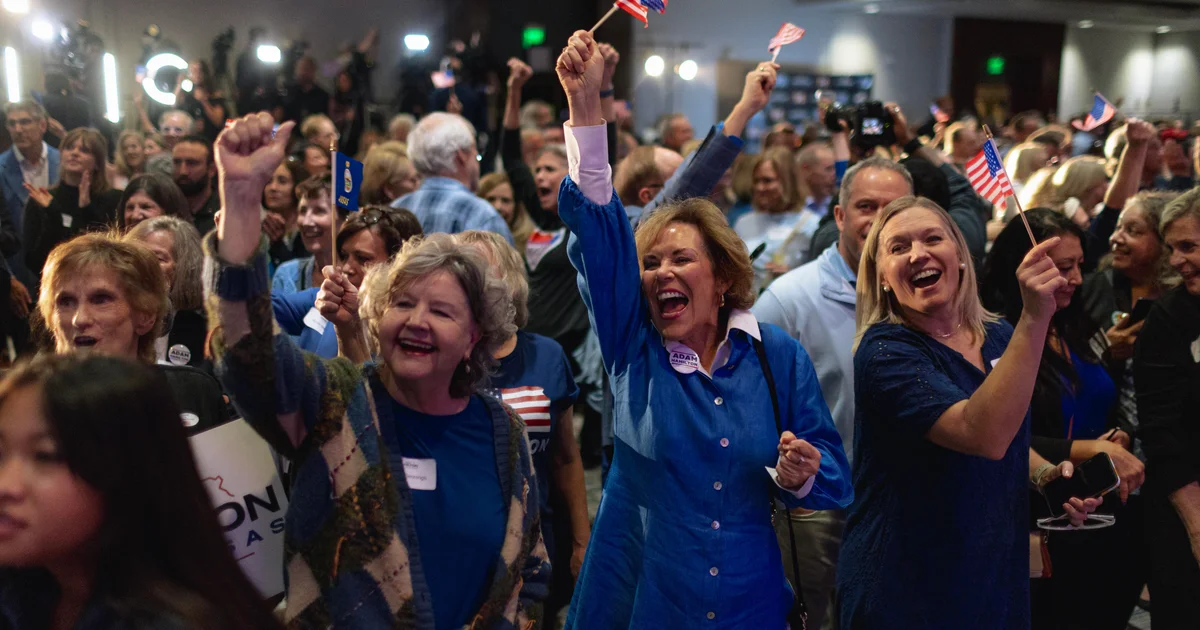

In a historic victory for Michigan, Democratic Senate candidate Abdul El-Sayed has claimed victory in what many have described as a tight race. Although major media outlets have yet to officially declare a winner, early indications suggest strong support for El-Sayed, who could become the first Muslim-American elected to the U.S. Senate. Celebrating with his supporters, El-Sayed expressed gratitude for their trust and support while addressing the contentious nature of the race against Republican challenger Mike Rogers.
| Article Subheadings |
|---|
| 1) Abdul El-Sayed’s Historic Campaign |
| 2) The Election Context |
| 3) Key Messages in Victory Speech |
| 4) Responses from Opponents |
| 5) Looking Ahead to the Senate |
Abdul El-Sayed’s Historic Campaign
Strongly rooted in community activism and progressive values, Abdul El-Sayed has made a significant mark during his campaign for the Senate. He rose to prominence not only for his policy positions but also for his identity as a practicing Muslim. El-Sayed aimed to reflect the diversity of Michigan and its growing population of minority constituents. His campaign focused on issues such as healthcare, education, and social justice, resonating with many voters who felt marginalized in the political landscape.
The candidate’s background as a physician and former public health director allowed him to connect health-related issues with voters, especially in a post-pandemic context where healthcare accessibility has become paramount. El-Sayed often emphasized the importance of creating an inclusive society—one that he believes is large enough to embrace everyone, regardless of their background. This message became particularly resonant as he shared his story with voters at various community events.
The Election Context
The election landscape in Michigan was characterized by fierce competition and divisive issues. The race between El-Sayed and Republican incumbent Mike Rogers was not only about party allegiance but also reflected larger national trends in polarization. As a city of considerable ethnic and racial diversity, Michigan has often been a microcosm of political debates in the United States. Many voters were deeply concerned with El-Sayed’s progressive stances on various international and domestic issues, which brought to light strong tensions, especially regarding U.S. foreign policy.
El-Sayed’s strong critiques of the Israeli government drew both support and backlash, making him a focal point for multiple narratives during the election season. His candidacy was propelled amid national discussions about representation for marginalized groups, with many hopeful that an El-Sayed victory could shift the political dynamics in the state. As ballots were counted, the state showcased an engaged electorate, willing to take chances on candidates who promise a radical shift in status quo politics.
Key Messages in Victory Speech
In his victory speech, El-Sayed struck a tone of hope and resilience. He expressed pride in representing Michigan’s voters, saying, “Michigan, we did it!” His immediate gratitude was directed to the community—acknowledging the invitations he received to various places of worship and homes, highlighting the interconnectedness of his campaign with grassroots efforts. El-Sayed appeared humbled by the opportunity, which he believes is a reflection of voters wanting transformational leadership rather than replicating past political behaviors.
Throughout his address, El-Sayed underlined the challenges he faced during the campaign, remarking on how the opposition sought to undermine not only him but also the values he stood for. He was quick to inspire voters against the backdrop of vitriol by his opponents, ensuring them that solidarity and mutual respect will define his tenure. With phrases like, “They want an America that is too small for some of us. We know that America is big enough for all of us,” he captured a vision of a country united in diversity.
Responses from Opponents
The campaign became heated, especially with remarks from opponents that included direct jabs at El-Sayed’s background and identity. Rogers, along with other Republican figures, aimed to paint El-Sayed as out of touch with traditional Michiganians—a move that ultimately backfired with the electorate seeking to redefine representation. El-Sayed’s ability to eloquently counter these attacks allowed him to emerge victoriously, and he delivered parting words to Rogers, saying, “Mike, enjoy your retirement!” This marked a poignant shift in tone as he deftly pivoted from the bitterness of the race to a message of hope and renewal for his potential constituents.
Rhetoric from national figures, including former President Trump, who often targeted El-Sayed’s identity, only served to mobilize greater support for his candidacy. As El-Sayed pointedly remarked during his address, “You chose hate, and Michigan chose hope,” he encapsulated the sentiments of many voters who sought change in a country witnessing increasing divisiveness. His victory speech embodied a climax of underdog triumphs, bolstered by a narrative of overcoming hostility with unity and hope.
Looking Ahead to the Senate
El-Sayed’s impending role in the Senate raises significant interest, particularly in how he plans to fulfill his promises made during the campaign. He emphasized a commitment to legislation that aims at expanding healthcare access, improving education, and fostering a more equitable economic landscape for all Americans. As he prepares for his swearing-in ceremony, which will take place in January, he indicated that he is keen on holding those in power to greater accountability.
Moreover, El-Sayed’s potential influence in the Senate may impact ongoing discussions about social justice and healthcare reform, issues he highlighted as central to his candidacy. He expressed a desire to challenge the existing paradigms that many feel have privileged special interests, stating, “To the super PACs and special interests who tried to beat us, we are coming for your system of politics.” This reflects a broader aspiration to redefine the political landscape in favor of working-class individuals and families who he feels have long been overlooked.
His journey serves as a beacon of hope for those who wish to see a more inclusive government, making it imperative to watch how he balances his ideals with the pragmatic realities of governance in a deeply divided political climate.
| No. | Key Points |
|---|---|
| 1 | Abdul El-Sayed declared victory in a competitive race for the Senate seat in Michigan. |
| 2 | If he wins against Republican Mike Rogers, he will become the first Muslim-American elected to the U.S. Senate. |
| 3 | El-Sayed’s campaign focused on progressive issues, connecting deeply with marginalized communities. |
| 4 | His victory speech emphasized a push against hate and a commitment to diversity and unity. |
| 5 | El-Sayed has promised to focus on expanding healthcare and addressing social justice as he enters the Senate. |
Summary
Abdul El-Sayed’s victory marks a significant milestone for political representation in Michigan and highlights the changing dynamics of American politics. His candidacy and the overwhelming support from diverse communities reveal a profound desire for leadership that represents the breadth of American society. Looking forward, El-Sayed’s commitment to progressive values will be crucial as he navigates the complexities of the Senate and aims to create policies that uplift all citizens, continuing the narrative of hope amidst the challenges of division.
Frequently Asked Questions
Question: Who is Abdul El-Sayed?
Abdul El-Sayed is a Democratic Senate candidate from Michigan, known for his progressive stance and focus on inclusive policies.
Question: What does El-Sayed aim to achieve in the Senate?
El-Sayed aims to focus on expanding healthcare access, improving education reform, and promoting social justice for marginalized communities.
Question: Why is El-Sayed’s election significant?
His election would mark a historic moment as he could become the first Muslim-American elected to the U.S. Senate, showcasing increased representation for diverse populations in American politics.
