

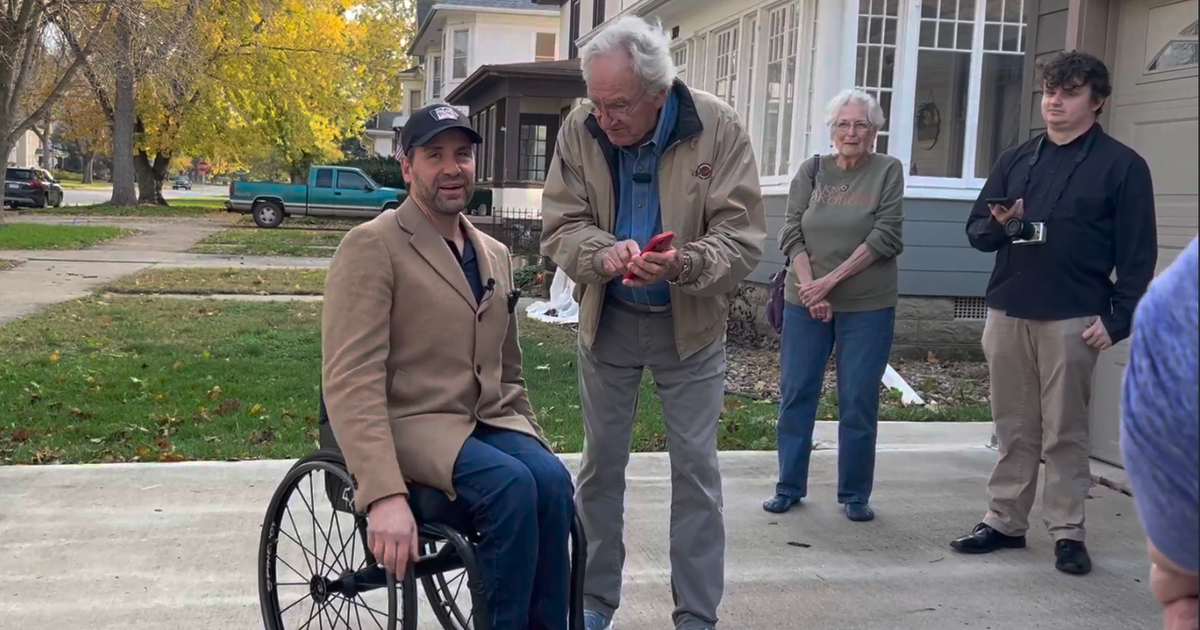

Sioux City, Iowa — In a crucial moment for his Senate campaign, Democratic candidate Josh Turek is gearing up for what he predicts will be one of the most closely watched races in the nation. With the odds slightly in his favor against Republican candidate Ashley Hinson, Turek draws on support from notable figures such as former Senator Tom Harkin while emphasizing the need for change in Iowa. The final days of the campaign are echoing with messages about generational change, bipartisan cooperation, and addressing the urgent challenges facing Iowans.
| Article Subheadings |
|---|
| 1) Turek’s Senate Bid and Support from Harkin |
| 2) The Importance of Bipartisanship |
| 3) Key Issues on the Campaign Trail |
| 4) Hinson’s Strategies and Positioning |
| 5) The Path Ahead for Iowa Democrats |
Turek’s Senate Bid and Support from Harkin
Josh Turek, the Democratic contender for the Iowa Senate seat, recently found himself alongside former Senator Tom Harkin in a small Western Iowa town. Their exchange highlighted Turek’s upward trajectory in the polls, with prediction markets showing him leading Republican candidate Ashley Hinson by a narrow margin of 52% to 48%. Turek’s optimism is palpable as he positions his campaign as a possible transformation for the state. He remarked on the competitive nature of this race, branding it as potentially the “closest election on the entire U.S. Senate map.”
Turek’s approach to his campaign mirrors the legacy of Harkin, whom he describes as a “common-sense prairie populist.” As a state lawmaker, Turek advocates for a broader strategy of political cooperation. He aims to capture the attention of voters by appealing to both party lines and shared concerns, signaling a potential generational shift in Iowa’s political climate. Through this campaign, Turek not only seeks personal success but also aims to bring back the kinds of values associated with notable Democratic leaders from Iowa’s past.
The Importance of Bipartisanship
One of Turek’s distinguishing factors is his willingness to engage with ideas from both political parties. During a recent campaign stop, Turek stated,
“I don’t believe that any party has a monopoly on good ideas.”
This approach has resonated with voters who are exhausted by political divisions. Turek highlights issues where he feels agreement may be reached, insisting that collaboration is essential for solving pressing state issues.
As he contemplates the ongoing challenges faced by Iowans, Turek believes that past instances of cooperation could hold the key to future legislative successes. His comments regarding President Trump illustrate his willingness to engage. Turek mentioned that seeing the impact of healthcare cuts and tariffs first-hand has given him a unique perspective that he could offer in Washington. By framing his campaign around bipartisanship, he hopes to attract undecided voters who prioritize practical solutions over party loyalty.
Key Issues on the Campaign Trail
Turek is addressing a range of critical issues that plague Iowa, including rising energy costs and healthcare problems. Throughout the campaign, he has emphasized that many residents are “hurting more than almost any other state.” With high cancer rates and economic struggles affecting a large segment of the population, Turek seeks to make these issues central to his message as he rallies support.
Turek is also engaging voters with his analysis of high gas and diesel prices. He has connected these issues to Hinson’s stance on the tariffs imposed during Trump’s administration, arguing she hasn’t adequately represented Iowans. For Turek, these concerns are not just statistics; they are intimately related to the everyday lives of Iowans, as he invokes past Republican leaders like Ronald Reagan, asking if Iowans are truly better off than they were before. This question, previously posed by Reagan during his campaign, is used by Turek to galvanize voters dissatisfied with the current state of affairs.
Hinson’s Strategies and Positioning
On the other side of the campaign trail, Ashley Hinson has positioned herself as a staunch fighter for Iowans, often emphasizing her identity as a “minivan-driving mom.” Like Turek, she has expressed the importance of working across party lines but often positions herself more to the right of the political spectrum. Hinson has distanced herself from some of Trump’s policies in recent weeks, pledging to assert her independence when necessary. Her public commitment to pushing back against the president seems a strategic move aiming to maintain her conservative base while appealing to centrist voters.
Hinson’s counter-narrative frames Turek as too liberal for the state, emphasizing her commitment to coserving Iowa values. Her campaign argues for tangible results, a message she hopes will resonate with voters seeking practical solutions to the issues most affecting their lives. By revising her approach to the former president’s policies, she seeks to broaden her appeal in a landscape that seems increasingly competitive.
The Path Ahead for Iowa Democrats
As Turek rallies his supporters in the final days leading up to the election, he emphasizes the potential for a significant shift not just in Iowa, but for the nation at large. Envisioning a departure from entrenched political norms, Turek cites his personal journey—from a Paralympic athlete facing numerous health challenges to a candidate aiming to reshape Iowa’s political narrative. He believes people who have faced adversity can bring a deeper understanding of the problems that need solving in government.
The message of inclusivity and empathy strikes a chord, particularly with independent and undecided voters looking for a candidate who can connect with their struggles. Turek’s cooperation with past Democratic figures has shown a commitment to regaining voters’ trust, predicated on the premise that Iowans are seeking authentic representation and accountability in the Senate. These final campaign days are crucial, and Turek insists that success could herald a broader generational change.
| No. | Key Points |
|---|---|
| 1 | Josh Turek’s campaign is gaining momentum, positioning him closely against Republican Ashley Hinson. |
| 2 | Turek emphasizes the need for bipartisan solutions to pressing issues faced by Iowans. |
| 3 | High energy prices and healthcare concerns are central to Turek’s campaign messaging. |
| 4 | Ashley Hinson positions herself as a conservative ally while also asserting the need for independence from Trump’s policies. |
| 5 | Turek’s campaign is framed as a chance for generational change within Iowa and beyond. |
Summary
The Senate race in Iowa is shaping up to be an intensely competitive battleground, with Josh Turek advocating for a more inclusive and compassionate representation. As both he and Ashley Hinson navigate the final campaign trails, their differing strategies highlight a broader ideological divide that resonates deeply with voters. With critical issues on the line, the outcome of this race may not only affect Iowa’s political landscape but could reverberate throughout the United States as both candidates strive to connect with everyday Iowans.
Frequently Asked Questions
Question: Who are the main candidates in the Iowa Senate race?
The main candidates are Democrat Josh Turek and Republican Ashley Hinson.
Question: What are the critical issues being discussed in the campaign?
Key issues include rising energy prices, healthcare challenges, and economic struggles faced by Iowans.
Question: How does Turek plan to address bipartisanship in his campaign?
Turek emphasizes cooperation across party lines, advocating for solutions that incorporate ideas from both Democrats and Republicans.
