

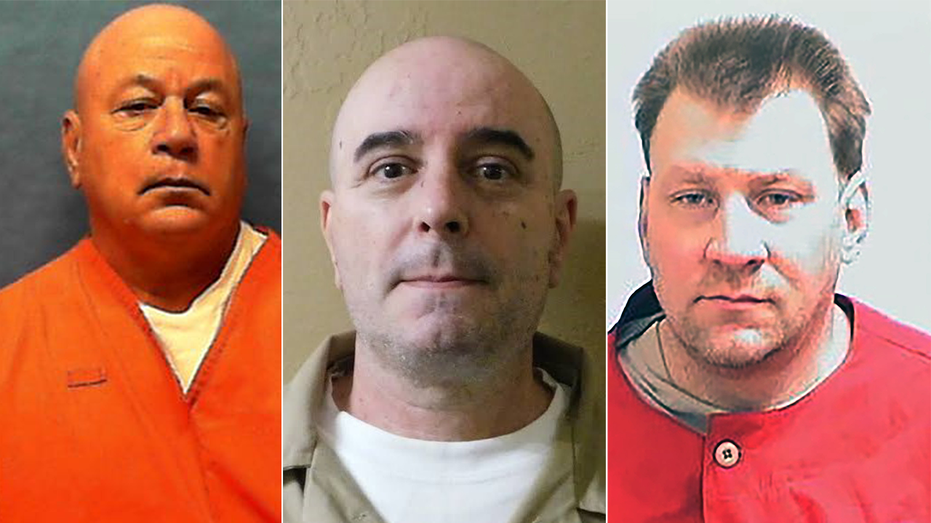

Indiana executed Jeffrey Weisheit early Thursday for setting a 2010 house fire that killed his girlfriend’s two young children. His death was the first of three executions scheduled in the United States that day. Florida and Alabama prepared to carry out the other two, renewing attention on capital punishment and lethal injection procedures after a failed execution attempt in Tennessee in September.
| 1) | Indiana carries out the first execution |
| 2) | Florida approaches another execution record |
| 3) | Alabama prepares to execute Michael Taylor |
| 4) | Legal challenges focus on evidence and methods |
| 5) | Three executions highlight the national debate |
Indiana carries out the first execution
Jeffrey Weisheit, 50, was pronounced dead at 12:45 a.m. Thursday at Indiana State Prison in Michigan City after receiving a lethal injection. He was convicted of setting a house fire that killed Alyssa Lynch, 8, and her brother, Caleb, 5, as his relationship with their mother deteriorated.
The injection began shortly after midnight. Weisheit requested barbecue ribs as his final meal and did not make a final statement. His attorneys sought additional brain scans because of reported head injuries and mental health problems. Gov. Mike Braun denied the request and rejected appeals to commute the sentence to life in prison.
Defense attorneys also questioned execution drugs obtained from a pharmacy facing a disciplinary hearing before the Indiana Pharmacy Board. The corrections department said it was confident the execution could be conducted humanely. Braun said courts had repeatedly reviewed the case without overturning the sentence.
Florida approaches another execution record
Florida scheduled the execution of Jesse Guardado, 64, for Thursday. Guardado confessed and pleaded guilty to fatally stabbing Jackie Malone, 75, inside her home in 2004. Prosecutors said he stole her jewelry box, $80 and other belongings to support his drug addiction.
The execution would be Florida’s 19th of 2026, matching the number carried out by the state in 2025. Florida executed more prisoners last year than under any other governor in a single year since the death penalty was reinstated in 1976. Its 19 executions represented about 40% of the 47 executions nationwide in 2025.
Gov. Ron DeSantis has increased the pace of executions by signing death warrants since 2025. In July, Florida carried out two executions on the same day, the first double execution by one state in nearly a decade. Advocates said Guardado accepted responsibility and expressed remorse.
Alabama prepares to execute Michael Taylor
Alabama scheduled the execution of Michael Taylor, 54, for the 1991 murders of an older couple during a robbery at their home. The victims were beaten to death with a metal bar. Authorities later captured Taylor in Birmingham, about an hour away, driving the victims’ Cadillac.
Officials planned to use lethal injection after a judge rejected objections to that method. Taylor had requested execution by nitrogen gas, and his attorneys sought to preserve that option. The execution would be Alabama’s third of 2026.
Opponents asked Gov. Kay Ivey to commute Taylor’s sentence to life in prison. They argued that he was 19 at the time of the murders and too young and immature to fully understand the consequences. Ivey rejected the clemency requests.
Legal challenges focus on evidence and methods
The cases drew challenges involving defendants’ histories, clemency and the procedures used for lethal injections. In Indiana, Weisheit’s lawyers cited possible brain injury and mental health concerns and questioned the pharmacy supplying the execution drugs.
In Alabama, Taylor’s attorneys challenged lethal injection and attempted to preserve his preference for nitrogen gas. In Florida, advocates focused on Guardado’s childhood and argued that his early life should be considered in reviewing the sentence.
The scheduled executions followed a failed execution attempt in Tennessee in September. Death row inmate Christa Pike survived two doses of pentobarbital and was taken to a hospital before returning to prison. The incident renewed scrutiny of execution drugs and procedures.
Three executions highlight the national debate
The Indiana execution was the first of three scheduled across the United States on Thursday. It was expected to be only the second such occurrence in 2026. The first took place on August 13, when Oklahoma, Tennessee and Alabama executed three prisoners within hours of one another.
The cases involve different crimes and legal arguments, but together illustrate the continuing divide over capital punishment. Supporters describe executions as enforcement of court-ordered sentences. Opponents argue that age, childhood experiences, mental health, possible brain injuries and execution reliability deserve greater consideration.
| 1 | Indiana executed Jeffrey Weisheit at 12:45 a.m. Thursday. |
|---|---|
| 2 | Florida’s scheduled execution would match its 2025 total of 19. |
| 3 | Alabama planned its third execution of 2026 for Michael Taylor. |
| 4 | Challenges addressed mental health, age, execution methods and drug sourcing. |
Summary
Indiana’s execution began a day expected to include two additional U.S. executions. Florida’s use of capital punishment and Alabama’s dispute over execution methods placed both states at the center of renewed national attention. The cases show how courts, governors and defense attorneys continue to contest death sentences and the procedures used to carry them out.
Frequently Asked Questions
Who was executed in Indiana?
Jeffrey Weisheit, 50, was executed by lethal injection for setting a 2010 house fire that killed two children.
Which states scheduled additional executions?
Florida scheduled the execution of Jesse Guardado, while Alabama scheduled the execution of Michael Taylor.
Why was Florida’s execution significant?
It would have been Florida’s 19th execution of 2026, matching the state’s total from 2025.
What prompted scrutiny of lethal injection?
A failed Tennessee execution attempt in September, during which Christa Pike survived two doses of pentobarbital, renewed questions about execution procedures and drugs.
