

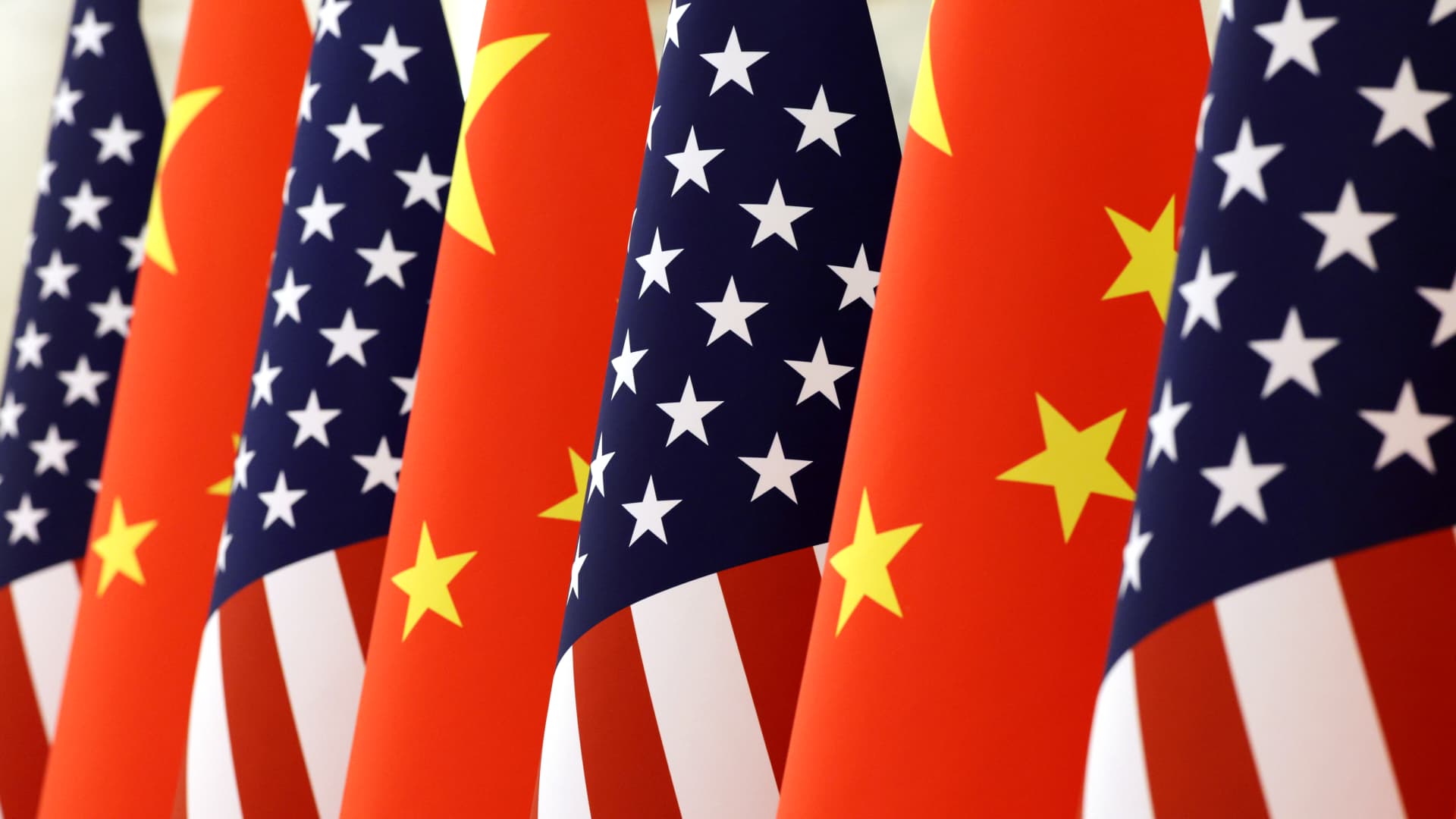

Tensions between the United States and China are expected to escalate as a result of the recent Democratic victories in Congress, according to analysts. Following this week’s midterm elections, where Democrats gained control of both the House and Senate, new policies regarding Taiwan and technological competition with China may emerge. As President Donald Trump and President Xi Jinping plan to meet twice before the new Congress begins, the dynamics of their fragile truce are set to undergo significant scrutiny.
| Article Subheadings |
|---|
| 1) Implications of the Democratic Win on U.S.-China Relations |
| 2) The Taiwan Situation: A Critical Flashpoint |
| 3) The Landscape of Tech Competition |
| 4) Economic Policies and Impacts on Trade |
| 5) Future of U.S.-China Interactions |
Implications of the Democratic Win on U.S.-China Relations
The recent midterm elections in the United States have ushered in a new wave of Democratic leadership, which analysts believe will significantly affect the relationship with China moving forward. With the Democrats seizing control of both chambers of Congress, key policy arenas, particularly those addressing national security and economic competition with China, are likely to become more pronounced. The landscape of U.S.-China relations has been complex, characterized by fluctuating tensions and careful diplomacy; these shifts could lead to more assertive legislative actions concerning China.
In particular, the Democrats are expected to adopt a more hawkish stance, especially pertaining to issues such as economic security and Taiwan. This comes at a time when President Trump is navigating his final months in office as a lame-duck president, a term that implies he may be less aligned with the Republican Party’s traditional approaches to foreign policy. Experts believe that Trump will still attempt to maintain a degree of “strategic stability,” but with the Democrats at the helm of Congress, their proactive legislative agenda could push the boundaries of their approach to China.
Political analysts like Gabriel Wildau, managing director at Teneo, suggest that the Democrats’ focus on domestic inflation may lead them to remove some of the tariffs imposed by the Trump administration. Nonetheless, this could be met with tensions as some factions within Congress may seek to ramp up pressure on China, particularly in areas such as technology and supply chain management. Therefore, the balancing act of maintaining diplomatic relations while addressing security concerns will be critical in the forthcoming months.
The Taiwan Situation: A Critical Flashpoint
Taiwan has long been considered one of the most pressing issues in U.S.-China relations, and analysts believe that a Democratic Congress may challenge Beijing more aggressively regarding Taiwan. This small island nation plays a significant role in global geopolitical dynamics, not least because it is home to semiconductor manufacturer TSMC, which produces critical components for advanced technologies used in various industries.
The U.S. maintains an unofficial relationship with Taiwan, following the “One China” policy, which acknowledges China’s claim over the territory but does not explicitly endorse it. Recent interactions, such as then-House Speaker Nancy Pelosi‘s visit to Taiwan in 2022, have heightened tensions with Beijing, which views such actions as a direct threat. The continued military and diplomatic support for Taiwan by U.S. lawmakers, including high-profile meetings with Taiwanese leaders, indicates that congressional interest in Taiwan is likely to persist or even grow.
In fact, the potential for renewed clashes over Taiwan is further complicated by technological competition, particularly in artificial intelligence and semiconductor production. With Xi warning that mishandling Taiwan could jeopardize U.S.-China relations, the incoming Democratic leadership may feel pressed to bolster support for Taiwan as a means of countering China’s ambitions.
The Landscape of Tech Competition
The competition between the U.S. and China in the tech sector has intensified significantly in recent years. Following the Democratic victories, market analysts report a positive reaction in U.S. tech stocks, indicating potential investor confidence in new leadership. However, the underlying issue remains that the bipartisan consensus on limiting China’s access to advanced technology is likely to drive policy directions in the new Congress.
As previously mentioned by experts like George Chen, there is an emerging view that U.S. technological prowess should not be utilized in ways that could bolster China’s military capabilities. Legislative measures aimed at curbing Chinese access to advanced technologies might gain traction, further creating friction even amidst summit diplomacy. While President Trump and President Xi may continue to engage diplomatically, the underlying tensions fueled by tech competition are expected to persist.
Furthermore, analysts point out that while Chinese tech stocks have shown signs of resilience, they remain deeply intertwined with global investor sentiments about advanced technologies like AI. As the market fluctuates, regulations from the Chinese government will also play a critical role in determining the health of its tech sector and its ability to compete globally.
Economic Policies and Impacts on Trade
As Democrats prepare to transition into governance, economic policies regarding trade with China are set to take center stage. There is growing dialogue on the possible repeal of some tariffs that President Trump implemented during his administration, aimed at cooling domestic inflation. This potential move is part of broader efforts to stabilize the U.S. economy, which has been plagued by rising consumer prices and supply chain disruptions.
However, the complexities of international trade with China cannot be understated. While some Democrats advocate for reducing tariffs to alleviate inflation, they also recognize that doing so without addressing the competitive practices of Chinese firms may not be sustainable. Analysts warn that the intent to engage China’s markets must be balanced against the need to protect U.S. economic interests and uphold national security.
As the U.S. attempts to recalibrate its approach to trade with China, the importance of diplomatic negotiations cannot be overstated. Any legislative shifts regarding tariffs will likely require close coordination with the executive branch, which will have significant implications for future U.S.-China relations.
Future of U.S.-China Interactions
Looking ahead, the future interactions between the U.S. and China seem poised for both diplomatic engagement and increasing confrontation. With the incoming Democratic Congress asserting authority, Beijing is likely to face more scrutiny regarding its human rights record, trade practices, and geopolitical maneuvers, especially in the context of Taiwan and tech competition.
Experts agree that the direction taken by the new Congress will depend heavily on the outcomes of the planned meetings between Presidents Trump and Xi. If these meetings result in constructive outcomes, there may be grounds for constructive dialogue and cooperation, particularly on global challenges such as climate change and emerging health crises. However, if tensions rise, the relationships may devolve into increased sanctions and legislative measures addressing various aspects of bilateral ties.
Overall, navigating the complexities of U.S.-China relations will require a delicate balance between advocating for economic interests and fostering cooperation on pivotal global issues. The political climate in the U.S., compounded by the ongoing challenges posed by China, presents both obstacles and opportunities for future diplomacy.
| No. | Key Points |
|---|---|
| 1 | Democrats’ control of Congress is likely to impact U.S.-China policy, with heightened focus on Taiwan and tech competition. |
| 2 | Taiwan’s status remains a critical issue, with congressional support potentially increasing tensions with Beijing. |
| 3 | Technological competition can create friction even if diplomatic relations appear stable. |
| 4 | Economic policy reforms may include tariff removing, influenced by ongoing inflation discussions. |
| 5 | Future U.S.-China interactions are essential to monitor, as they hinge on several dynamic factors. |
Summary
In conclusion, the Democratic victories in the recent U.S. midterm elections herald a potential shift in U.S.-China relations, particularly concerning issues of Taiwan and technology. As Congress becomes more assertive, the balance between diplomatic engagement and increasing confrontation will be critical in shaping future policies. Given the nuanced complexities of international relations, both countries must navigate this period with caution and a focus on constructive dialogue to mitigate rising tensions.
Frequently Asked Questions
Question: What are the implications of the Democratic victory in Congress on U.S.-China relations?
The Democratic victory is expected to lead to a more assertive stance towards China, focusing on issues like Taiwan and technology competition, which may escalate tensions.
Question: Why is Taiwan a significant point of contention between the U.S. and China?
Taiwan is considered a critical issue because of its strategic importance and as a key player in semiconductor production, which is vital for global technologies.
Question: How might technology influence future U.S.-China relations?
Technological competition could lead to increased friction as the U.S. seeks to prevent China from accessing advanced technologies, which is intertwined with national security interests.
