

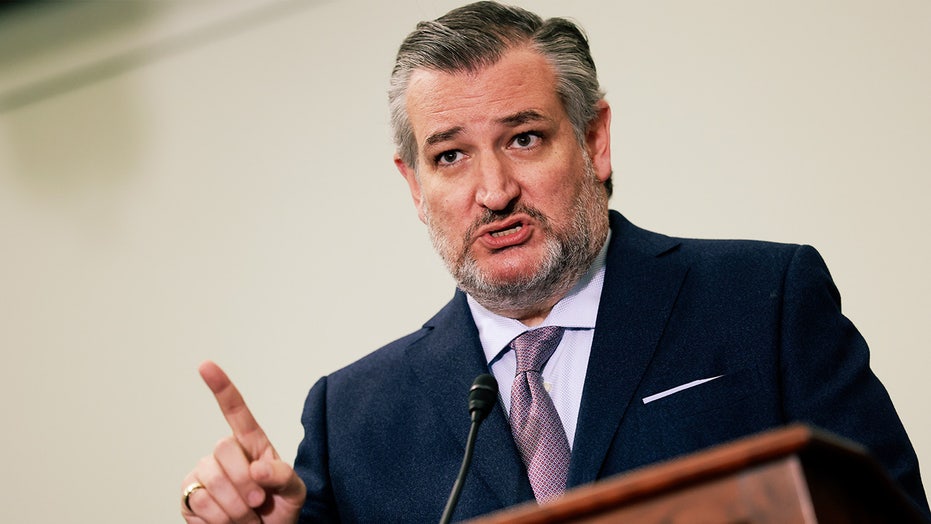

Democratic candidates were presented as the major winners in a sweeping midterm election result, prompting Republicans to examine what went wrong. Senator Ted Cruz delivered a sharply critical assessment, while other conservatives called for changes on affordability, messaging and strategy. The roundup also highlighted reactions from Kamala Harris, labor leaders and media figures, alongside major stories involving veterans, technology, legal disputes and public safety.
The political coverage focused on what the results could mean for Washington and the 2028 campaign. It also listed a series of developing stories, including reported fallout from the Iran war, a Learjet crash, proposed restrictions affecting artificial intelligence infrastructure and election-related controversies.
Because the material was presented as a headline roundup, several items were summaries of reports rather than detailed accounts. The following overview organizes the principal political developments and the wider stories included in the briefing.
| 1) | Democrats claim a broad midterm advantage |
| 2) | Republicans confront the causes of their losses |
| 3) | Democratic leaders urge an aggressive governing approach |
| 4) | Election reactions extend across politics and media |
| 5) | National news roundup includes technology, courts and culture |
Democrats claim a broad midterm advantage
The central political story described Democrats as sweeping the midterms and producing what several headlines called a blue wave. The result was framed as a major setback for Republicans and as an early indication that Democrats could enter the next phase of national politics with greater momentum. The roundup did not provide a detailed state-by-state breakdown or final vote totals.
The political significance centered on control, governing power and the possible effect on the 2028 presidential contest. Kamala Harris was reported to have urged Democrats to “be ruthless” with their power, suggesting that party leaders viewed the victories as a mandate for an assertive approach.
Republicans confront the causes of their losses
Republican officials and commentators were described as searching for explanations after what the roundup characterized as devastating midterm losses. Ted Cruz offered a scathing assessment of the outcome, while another Republican voice described the party as wounded but not beyond recovery.
The coverage identified affordability as a central weakness. One opinion analysis argued that Republicans had failed an affordability test and needed to find a way to win voters back. Other items examined whether the party’s campaign message, policy priorities and response to international developments had contributed to the result. A report also said Hegseth faced blame for Republican losses and could be at risk of losing his position, although no additional details were provided.
Democratic leaders urge an aggressive governing approach
The Democratic response emphasized using electoral power rather than treating the victories as symbolic. Kamala Harris was reported to have called for Democrats to act decisively, while television personality Whoopi Goldberg urged the party to take care of business after the sweep.
The roundup also noted tension within the broader political coalition. A UAW leader was reported to have declared that the union was not the Democratic Party, pointing to the possibility of disagreements over priorities even as Democrats celebrated. Another headline said newly elected Democrats faced scrutiny over past ties to an al Qaeda-linked charity, but the item did not explain the nature of those ties or identify the lawmaker.
Election reactions extend across politics and media
Conservative reactions included a defiant call from the widow of Charlie Kirk for supporters to remain engaged after the losses. The roundup also highlighted a Florida milestone involving Representative Byron Donalds, who was described as making state history before facing an immediate dispute over identity and politics.
The political section was paired with commentary from Hugh Hewitt, who argued that the Republican Party was not dead, and Mehek Cooke, who focused on the affordability issue. The material presented these as opinion-based interpretations rather than independent election analysis. It also promoted audio and podcast programming featuring Sean Hannity, investigative author David Paulides, Robert F. Kennedy Jr., Tyrus and Vince August.
National news roundup includes technology, courts and culture
Beyond politics, the briefing listed a reported viral incident involving a 70-year-old poet accused of backhanding a teenager at a polling place. It also described a timeline involving a Learjet crash that killed an Austin family, a dispute in which Paris Jackson reportedly sought $600 million from her father Michael Jackson’s estate, and a college discovery involving a previously unknown muscle attachment that could affect hip surgery.
Other items covered OpenAI’s pledge to pay for data center power as Democrats considered a nationwide moratorium, a CVS restructuring that prompted questions about pharmacy consumers, and West Hollywood’s unanimous approval of new rights and protections for throuples. The roundup additionally promoted a veteran homelessness campaign, a culture quiz and weather coverage.
| Number | Key Point |
|---|---|
| 1 | Democrats were described as sweeping the midterms. |
| 2 | Republicans faced calls to reassess strategy, messaging and affordability policies. |
| 3 | Democratic figures urged the party to use its electoral power aggressively. |
| 4 | The briefing included political disputes, election controversies and media reactions. |
| 5 | Additional headlines covered technology, aviation, legal disputes, health and culture. |
Summary
The midterm results dominated the briefing, with Democrats portrayed as gaining substantial momentum and Republicans pressed to explain their losses. The reported reactions centered on affordability, party strategy and how each side would use the result ahead of the next presidential cycle. A broad collection of additional headlines showed the political story competing for attention with developments in technology, law, health, aviation and culture.
Frequently Asked Questions
What was the main political development?
The main development was the reported Democratic sweep in the midterm elections and the resulting pressure on Republicans to reassess their approach.
What issues were identified as important for Republicans?
The roundup highlighted affordability, campaign messaging, policy priorities and the party’s response to international developments as areas requiring review.
What other stories were included?
The additional headlines covered a polling-place confrontation, a Learjet crash, artificial intelligence infrastructure, a legal dispute involving Michael Jackson’s estate, hip surgery research, pharmacy changes and veteran homelessness.
