

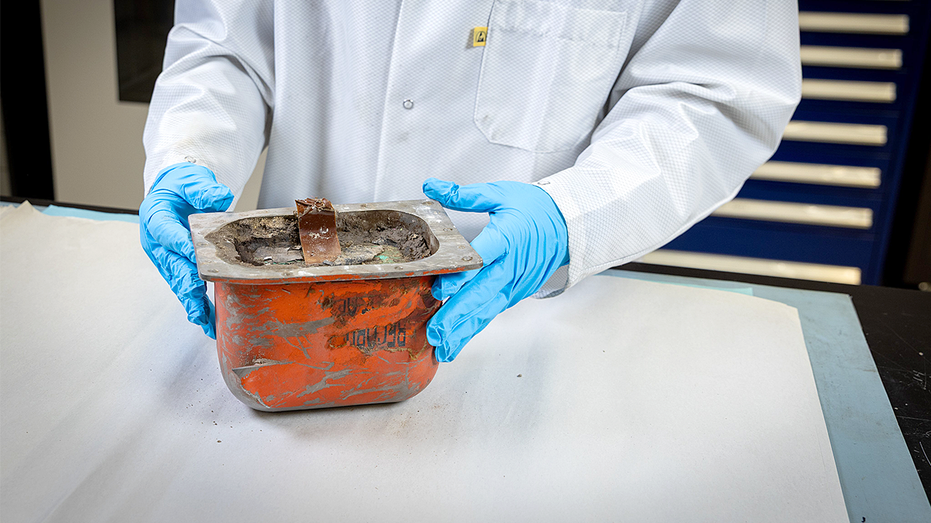

The National Transportation Safety Board has recovered the cockpit voice recorder from a Learjet 60 that crashed near Greenacres, Florida, killing all nine people aboard. Investigators found the recorder at the initial impact site and sent it to the agency’s Vehicle Recorders Laboratory in Washington, D.C. The recovery comes as investigators examine the aircraft’s wreckage, severe weather and the crew’s final communications. Excavation at the crash site has now been completed.
| 1) | Cockpit voice recorder recovered at impact site |
| 2) | Wreckage excavation reveals additional evidence |
| 3) | Flight details and the fatal descent |
| 4) | Severe weather remains a central investigative focus |
| 5) | Passengers and crew members who died |
Cockpit voice recorder recovered at impact site
The NTSB announced Monday that investigators had recovered the Learjet 60’s cockpit voice recorder from the location of the initial impact near Greenacres in Palm Beach County. The crash occurred on Nov. 1, and the recorder is now being evaluated at the NTSB Vehicle Recorders Laboratory in Washington, D.C. Its contents could help investigators establish the crew’s conversations, cockpit warnings and responses during the final phase of the flight.
“NTSB investigators have recovered the cockpit voice recorder (CVR) of the Learjet 60 that crashed on Nov. 1 near Greenacres, Florida.”
The agency has not announced when the recorder’s evaluation will be completed or released any findings from the device. Investigators continue to analyze physical evidence before determining what caused the crash.
Wreckage excavation reveals additional evidence
Excavation at the impact site began Wednesday after utility workers drained water and removed other hazards that had complicated access. During the digging, crews recovered part of one engine. The NTSB said the excavation work has since been completed.
Investigators had also recovered the left tail elevator, a flight-control surface that helps control the aircraft’s pitch. The elevator was found in three pieces, with one piece located nearly four miles from the main crash site. The agency has emphasized that even small wreckage fragments may contain evidence relevant to the investigation.
Flight details and the fatal descent
The Learjet departed Austin-Bergstrom International Airport at approximately 10:37 a.m. on Sunday, bound for North Eleuthera Airport in the Bahamas. Shortly before 1 p.m., the aircraft crashed in Palm Beach County near Greenacres. All nine people aboard died.
While the aircraft was flying at about 41,000 feet, an air traffic controller advised the crew that moderate precipitation was approximately five miles away. The crew was told it could turn either left or right, while the controller warned that the route toward Freeport in the Bahamas “looks pretty bad.” The flight was later directed toward a waypoint near Naples, Florida. The crew deviated toward Palm Beach County and reported worsening conditions.
Severe weather remains a central investigative focus
Heavy rain and thunderstorms were reported across South Florida around the time of the crash. Investigators have said weather will be a major focus as they reconstruct the aircraft’s final movements and assess how atmospheric conditions affected the flight.
The crew reported icing and turbulence to air traffic control and asked whether there was a “better ride” ahead. Those communications, the recovered recorder and the distribution of wreckage will be examined together. The investigation has not identified a final cause, and the available evidence does not establish whether weather, aircraft systems or other factors played a decisive role.
Passengers and crew members who died
The victims included Austin technology entrepreneur Adam Robinson, 45, his wife, Helen Sharp, 40, and their children, Emma Robinson, 4, and Charlie Robinson, 2. Their children’s nanny, Anita Maria Cetina, also died.
The other passengers identified were Rachael Reed and Charmi Fehr. The crash killed everyone on the Learjet, and investigators are using the victims’ flight information, aircraft records and recovered wreckage as part of the continuing inquiry.
| Number | Key Point |
|---|---|
| 1 | The cockpit voice recorder was recovered at the initial impact site. |
| 2 | The recorder is being evaluated in Washington, D.C. |
| 3 | Investigators recovered part of an engine and sections of the left tail elevator. |
| 4 | The crew reported icing, turbulence and deteriorating weather before the crash. |
| 5 | Nine people died when the Learjet crashed near Greenacres on Nov. 1. |
Summary
The recovery of the cockpit voice recorder gives investigators an important source of information as they examine the fatal Learjet crash near Greenacres. Physical evidence, air traffic control communications and reported severe weather will be analyzed together. The NTSB has not yet determined the cause of the crash.
Frequently Asked Questions
Where was the cockpit voice recorder found?
It was found at the location of the Learjet’s initial impact near Greenacres, Florida.
Where is the recorder being evaluated?
The recorder is being evaluated at the NTSB’s Vehicle Recorders Laboratory in Washington, D.C.
What factors are investigators examining?
Investigators are examining the aircraft’s wreckage, flight communications, reported icing and turbulence, and the heavy rain and thunderstorms present across South Florida.
