

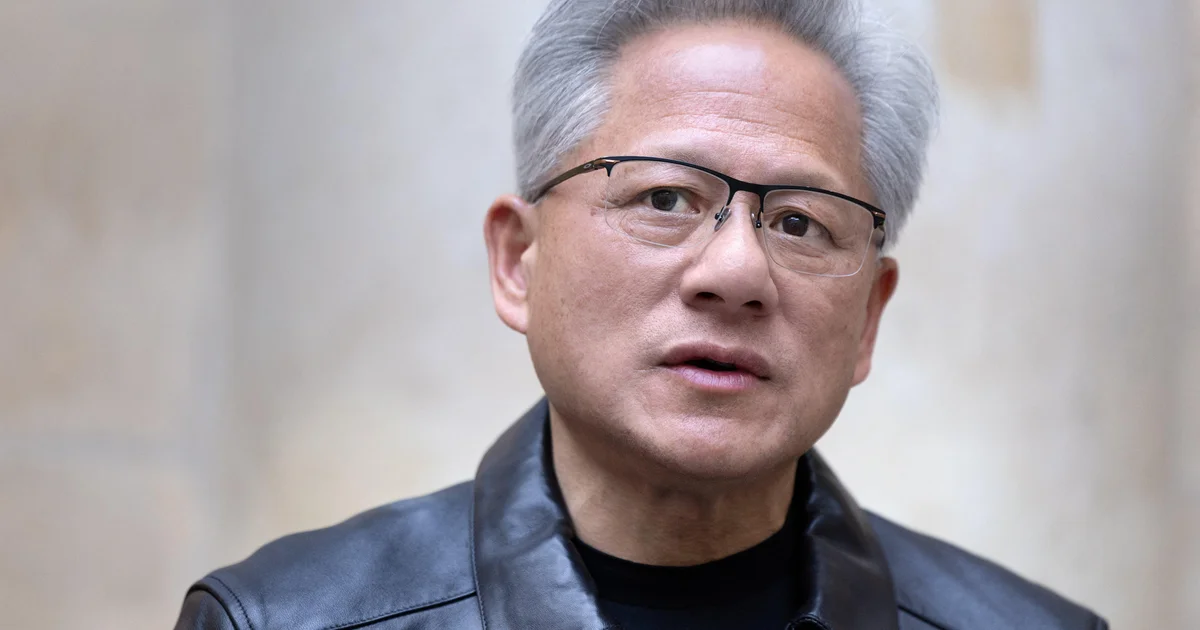

Nvidia’s stock experienced a notable decline on Monday amid investigations surrounding CEO Jensen Huang following allegations that he was a target of a Chinese intelligence operation. As the chipmaker faces scrutiny over these claims, Huang’s future at the company, which he co-founded, comes under question. Nvidia, valued at approximately $4.5 trillion, has already faced restrictions on selling high-end chips to China, further complicating the situation.
Shares of Nvidia fell 4.3%, equating to a loss of $7.97 per share, ultimately decreasing the company’s valuation by around $193 billion. The investigations have raised questions regarding Huang’s leadership and the stability of the company’s strategic direction, especially given the vital role he holds in its success.
| Article Subheadings |
|---|
| 1) Investigation and Allegations Against Huang |
| 2) Implications of Huang’s Potential Departure |
| 3) Impact on Nvidia’s Market Valuation |
| 4) Analyzing the AI Sector Amidst Controversy |
| 5) Future Directions for Nvidia and Huang |
Investigation and Allegations Against Huang
The Nvidia board has initiated an independent investigation following allegations that Jensen Huang was targeted in a Chinese espionage operation. Reports indicate that Huang had connections with Alice Huang, a former executive with ties to China’s Ministry of State Security, raising serious concerns. These investigations come at a time of growing scrutiny over corporate governance and national security interests, particularly as U.S.-China tensions escalate.
The allegations suggest a compromised situation not only for Huang but for Nvidia itself, as the company has faced increasing limitations on exporting high-end chips to China out of a desire to safeguard national security. Nvidia’s decision to investigate stems from the need to clarify whether any company secrets were jeopardized and to affirm its commitment to corporate policy and shareholder confidence.
Tech analysts have noted that this scandal is particularly damaging to Huang, who has served as Nvidia’s public face for years. While he has maintained a robust commitment to lead the company without interruption, speculation about the viability of his position dominates industry discussions. The outcomes of the investigation could catalyze Congressional inquiries and impact investor sentiment significantly.
Implications of Huang’s Potential Departure
Should the investigation yield conclusions that are unfavorable for Huang, replacing him might pose significant challenges for Nvidia. Several analysts describe Huang as akin to the company’s figurehead, often likening his role to that of a visionary leader like Steve Jobs for Apple. His extensive commitment to Nvidia—originating from its foundation in 1993—positions him as a central pillar of its identity and success.
While Huang’s leadership may be instrumental, reports indicate there’s no clear succession plan in place. With investors and stakeholders expressing concerns about the absence of a defined successor, the uncertainty surrounding Huang’s potential exit could foster a sense of instability within the company. The lack of a strategic shift in leadership could complicate Nvidia’s capacity to navigate turbulent market conditions and to implement future strategies effectively.
Should Huang be forced to step down, analysts believe that it would not only disrupt operations but could also lead to a significant reorganization of company strategy. The ramifications extend beyond immediate leadership lacks, impacting investor confidence and possibly the company’s overall market valuation.
Impact on Nvidia’s Market Valuation
The ongoing scrutiny surrounding Jensen Huang and Nvidia has already manifested in tangible financial consequences. Following the news of the investigation, Nvidia shares dipped 4.3%, representing not just a short-term market reaction but a worrying long-term trend for one of the world’s most valuable tech firms. With a staggering $193 billion lost in market capitalization, investor concerns regarding stability and leadership have never been more pronounced.
Additional wavering in the stock price can be attributed to market reactions to broader trends within the AI sector. Experts assert that the scandal heightens existing apprehensions about stock valuations in a climate where investors are increasingly skeptical. The pressure to strengthen corporate governance amid espousing national security interests adds further volatility to Nvidia’s position in the market.
Investors will be closely watching the outcomes of the board’s investigation, since any finding suggesting misconduct could lead not only to Huang’s potential departure but also regulatory scrutiny that may impose additional limitations on engagements with China. This potential chain reaction could result in even further declines in stock prices and investor sentiment.
Analyzing the AI Sector Amidst Controversy
The developing situation at Nvidia intersects perilously with the shifting dynamics of the AI sector, which has already experienced notable sell-offs. The company’s essential position as a provider of advanced tech solutions for AI applications places it at the forefront but also subjects it to heightened scrutiny and speculation. With a global focus on regulation, the prospects for U.S.-China technical collaborations continue to fluctuate.
As Jensen Huang has lobbied for more lenient parameters on chip exports to China, the fallout from the investigations threatens those initiatives. Experts have expressed concerns that increased regulatory scrutiny could manifest in stricter export limitations, effectively challenging Nvidia’s competitive positioning in a growing market. The geopolitical tensions surrounding U.S.-China relations complicate these issues, whereas concerns about foreign espionage create a compounded stress for tech firms.
Moreover, the emphasis on national security introduces additional complexities that could impact the entire AI market. Investors might prepare for a lengthy period of adjustment, as market actors reassess the viability and strategic pathways for companies reliant on AI innovations. The discourse surrounding social responsibility and ethical obligations in technology development further clouds the future outlook for Nvidia and similar industry players.
Future Directions for Nvidia and Huang
Looking ahead, the future of Nvidia hinges not only on the outcomes of the investigation but also on how the company can reconfigure its strategies in light of recent revelations. Should Jensen Huang maintain his position, he will face the monumental task of restoring investor confidence while addressing governance concerns emerging from the fallout. An imperative will also be to solidify the company’s strategic direction amid external pressure.
For Nvidia, engaging proactively with regulatory bodies and fortifying security protocols may be vital in navigating this complicated landscape. If Huang can leverage experience to promote transparency and bolster corporate governance, stakeholders may find reason to restore faith in Nvidia’s trajectory.
However, should the investigations lead to his removal, the company will be forced to confront a significant legacy and the challenge of redefining leadership. While potential successors could emerge, the process will inevitably involve a transformation that would leave a lasting impact on Nvidia’s cultural framework. As investors and the industry await developments, all eyes are on the interplay between Nvidia’s future and Huang’s potential role within it.
| No. | Key Points |
|---|---|
| 1 | Nvidia faces a significant investigation into Jensen Huang regarding allegations of espionage connections. |
| 2 | The company has experienced a drop of approximately $193 billion in market valuation following negative news. |
| 3 | Jensen Huang’s leadership is viewed as pivotal, with no clear succession plan established. |
| 4 | The AI sector is under additional pressure due to market sell-offs and geopolitical tensions. |
| 5 | The outcome of the investigation and Huang’s potential future will significantly determine Nvidia’s strategic directions. |
Summary
In conclusion, Nvidia finds itself in a precarious position, grappling with a high-stakes investigation into its CEO amidst the tumultuous landscape of the AI industry. Jensen Huang’s significant contributions to the company make his potential departure a point of concern for investors, stakeholders, and the market at large. The unfolding events might not only impact Nvidia’s future but also reflective trends in corporate governance, national security measures, and the role technology plays within U.S.-China relations.
Frequently Asked Questions
Question: What prompted the investigation into Jensen Huang?
The investigation was prompted by allegations that Jensen Huang was targeted in an intelligence operation by China, leading to concerns about his connections and their implications for Nvidia.
Question: How has Nvidia’s stock been affected by the investigation?
Nvidia’s stock fell 4.3%, resulting in around a $193 billion decrease in market valuation as investors responded to the potential instability caused by the investigation.
Question: What challenges does Nvidia face in terms of leadership succession?
Nvidia does not currently have a clear succession plan in place for Jensen Huang, which raises concerns about leadership continuity should he be unable to continue in his role.
