

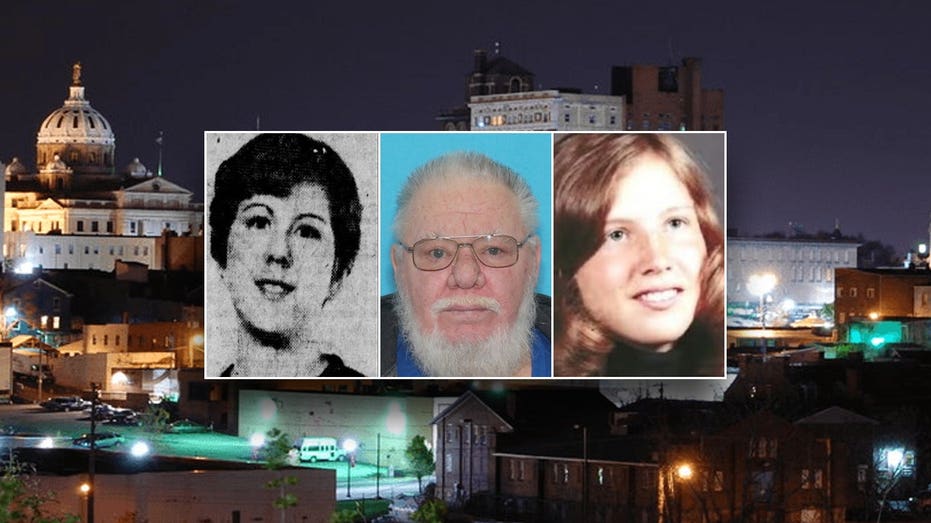

Advanced DNA testing has linked a Pennsylvania man who died in 2023 to the killings of two women in the 1970s. Pennsylvania State Police identified James Richard Clark Sr. as the man who sexually assaulted and strangled Brenda Ritter and Susan Rush. Investigators said forensic genealogy and cybergenetics testing helped connect evidence from both cases to Clark. A behavioral expert warned that serial offenders may have additional victims who have not been identified.
| 1) | DNA links one man to two Pennsylvania killings |
| 2) | The 1976 disappearance of Susan Rush |
| 3) | The 1977 killing of Brenda Ritter |
| 4) | Why investigators believe more victims are possible |
| 5) | How dormant cases are solved decades later |
DNA links one man to two Pennsylvania killings
Pennsylvania State Police said James Richard Clark Sr. was responsible for the deaths of Brenda Ritter, 18, and Susan Rush, 21. The killings occurred in Pennsylvania in the 1970s, when Clark was approximately 20 years old in Ritter’s case and 19 in Rush’s. Clark died of natural causes at age 66 on July 17, 2023, before authorities publicly identified him in connection with the cases.
Investigators said Clark left DNA at both crime scenes. Evidence from Ritter’s killing was submitted to the state police crime laboratory in late 2008, producing an unknown male DNA profile. The profile was entered into the FBI’s Combined DNA Index System, where it was searched weekly without producing a match. Further testing in May 2025 indicated that the same man was connected to both deaths.
The 1976 disappearance of Susan Rush
Susan Rush disappeared on Nov. 24, 1976, after leaving a shopping mall in Washington, Pennsylvania, according to police. She was expected to meet her family at church but did not arrive. The following morning, Thanksgiving Day, her brother found her car along a street.
Rush’s body was discovered in the trunk of the vehicle. Police said the circumstances of the death and the later DNA findings established the connection to Clark. The case remained unresolved for decades because early investigative methods could not identify the person associated with the biological evidence.
The 1977 killing of Brenda Ritter
Brenda Ritter disappeared from her boyfriend’s house in 1977. Her body was later found on a hillside, and authorities determined that she had been sexually assaulted and strangled. Police said Clark was about 20 years old when Ritter was killed.
Evidence from Ritter’s case became central to the later investigation. After an unknown male profile was developed in 2008, investigators continued searching for a connection. Testing by multiple laboratories, including work involving forensic genealogy and cybergenetics, helped investigators focus on Clark before additional testing confirmed the link between him and both women.
Why investigators believe more victims are possible
Pennsylvania State Police Cpl. James Petrosky said investigators believe the two confirmed killings may not represent Clark’s full criminal history. The possibility is based on the nature of the crimes, the long period involved, and the fact that Clark was not identified while alive.
“I believe that once you’re a serial killer, you’re always a serial killer. I believe there could potentially be more victims out there,” Petrosky said.
Former FBI behavioral analysis consultant and former Los Angeles Police Department psychologist Kris Mohandie said known victims often represent only part of a serial offender’s suspected toll. He said additional cases can remain unconnected when evidence is limited, victims are missing, or investigative technology has not yet produced a match.
How dormant cases are solved decades later
The investigation illustrates how older cases can advance when biological evidence is retested with newer methods. The original DNA profile did not match records in the national database, but forensic genealogy and cybergenetics provided additional ways to analyze the evidence and identify a likely suspect.
Kris Mohandie said serial offenders may stop killing for extended periods, a pattern investigators describe as a cooling-off period. He said some offenders become concerned that police are getting close, while others may become occupied with family or other aspects of their lives. A long pause can make a series more difficult to recognize, but it does not necessarily rule out additional crimes.
“The reality is that there are usually more crimes attributable to serial offenders than they’re ever held to account for,” Mohandie said.
| Number | Key Point |
|---|---|
| 1 | DNA testing linked James Richard Clark Sr. to two 1970s killings. |
| 2 | Susan Rush disappeared in 1976 and was found in the trunk of her car. |
| 3 | Brenda Ritter disappeared in 1977 and was later found on a hillside. |
| 4 | Police and a behavioral expert said additional victims may be possible. |
| 5 | New forensic methods helped resolve evidence that had gone unmatched for years. |
Summary
The identification of James Richard Clark Sr. demonstrates how forensic genealogy and advanced DNA analysis can resolve killings that remained open for decades. Police linked Clark to the deaths of Susan Rush and Brenda Ritter after earlier database searches failed to identify the unknown profile. Authorities continue to acknowledge the possibility that other cases could be connected to him, although no additional victims have been confirmed.
Frequently Asked Questions
Who was identified in the Pennsylvania cold cases?
James Richard Clark Sr., who died in 2023, was identified as the man linked by DNA to the killings of Brenda Ritter and Susan Rush.
When did the two killings occur?
Rush was killed in 1976, while Ritter disappeared and was killed in 1977.
What technology helped solve the cases?
Investigators used DNA profiling, forensic genealogy, and cybergenetics testing. A DNA profile developed in 2008 had not matched records in the FBI database before later testing identified the connection.
Could there be additional victims?
Police and behavioral expert Kris Mohandie said additional victims are possible, but authorities have confirmed only the two Pennsylvania killings described in the investigation.
