

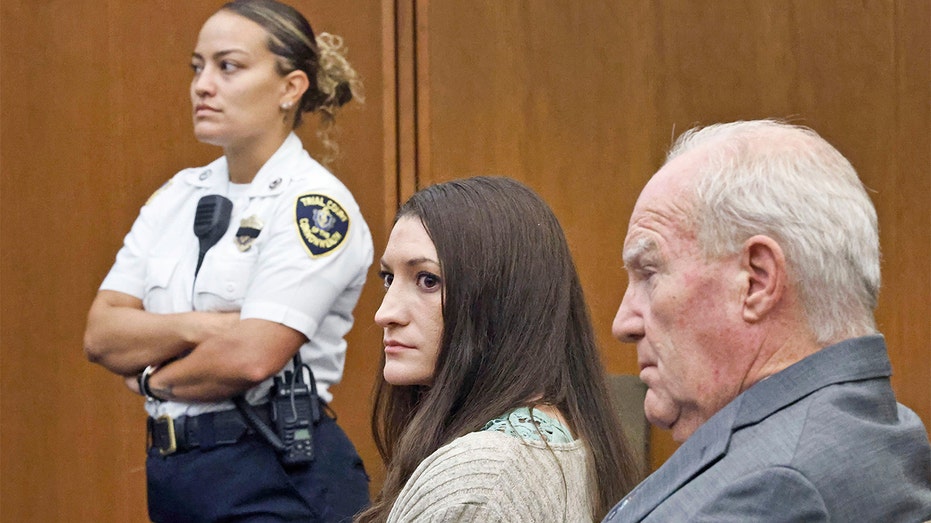

A Massachusetts judge has denied Lindsay Clancy’s motion to dismiss the murder case against her, ruling that a retrial would not violate her constitutional protection against double jeopardy. Judge William Sullivan found that the jury’s inability to reach a unanimous verdict created a “manifest necessity” for declaring a mistrial. Clancy’s 26-day trial ended Sept. 4 after jurors remained divided over her insanity defense. Prosecutors have not publicly said whether they will pursue the same or different charges in a second trial.
| 1) | Judge rejects double jeopardy challenge |
| 2) | Jury deadlock followed a divided insanity debate |
| 3) | Judge explains how jury notes were handled |
| 4) | Defense challenge and emergency appeal failed |
| 5) | Prosecutors weigh the path toward a retrial |
Judge rejects double jeopardy challenge
In a 17-page order and memorandum made public Monday, William Sullivan ruled that the mistrial was justified by the jury’s deadlock. The decision means Lindsay Clancy can be tried again on the murder indictments involving the deaths of her three children at the family’s Duxbury, Massachusetts, home in January 2023.
Clancy’s lawyers argued that the court had not exhausted alternatives before ending the trial and that a second prosecution would violate the Fifth Amendment. Sullivan rejected that position, concluding that the circumstances met the legal standard of “manifest necessity,” which permits a retrial after a mistrial caused by a genuinely hung jury.
Jury deadlock followed a divided insanity debate
The 26-day trial ended Sept. 4 after deliberations began Aug. 27. Jurors later said publicly that 11 of the 12 members accepted Clancy’s insanity defense, while one juror supported a first-degree murder conviction. The holdout described the killings of Cora, 5, Dawson, 3, and Callan, 8 months, as “methodical,” according to the account presented in court and afterward.
The split prevented the unanimous verdict required to resolve the murder charges. The case centered on whether Clancy was legally responsible for the deaths, with the jury’s disagreement focused on the insanity issue and the application of the court’s instructions.
Judge explains how jury notes were handled
The jury sent its first deadlock note on Sept. 1, stating:
“After many hours of deliberation, we are unable to come to a unanimous verdict.”
A similar note followed Sept. 2, prompting Sullivan to give a Tuey-Rodriguez instruction. That charge encouraged jurors to reconsider their views with open minds while making clear that they should not abandon honestly held beliefs simply to reach a verdict.
On Sept. 3, jurors asked how to proceed after one member allegedly appeared unable to follow the reasonable-doubt instruction. Sullivan conducted a limited inquiry, asking each juror whether they could follow the law. He wrote that every juror answered affirmatively and credibly. After the court reinstructed the group, the foreperson sent another note accusing the holdout of acknowledging doubts but refusing to apply them to the verdict.
Defense challenge and emergency appeal failed
The defense asked Sullivan to replace the holdout with an alternate juror, but he denied the request. Prosecutors opposed an inquiry into the substance of deliberations, and Sullivan agreed that questioning the foreperson in greater detail could improperly intrude on the jury’s decision-making process.
Before deliberations resumed Sept. 4, Sullivan again instructed jurors on reasonable doubt and following the law. He also directed them not to identify individual jurors by number in future notes. After about two more hours without movement, he announced that he planned to declare a mistrial over defense objections. Sullivan granted a one-hour stay while the defense sought emergency relief from the state Supreme Judicial Court. A single justice denied that request, after which Sullivan formally declared the mistrial.
Prosecutors weigh the path toward a retrial
The ruling leaves prosecutors with the option of trying Clancy again, although they have not publicly committed to a retrial or specified whether the charges would change. Randolph Rice, a trial attorney and former prosecutor who is not involved in the case, said the decision gives the prosecution an opportunity to assess its presentation and address weaknesses exposed by the first trial.
Rice said prosecutors may consider whether they showed jurors enough empathy and whether their explanation of the evidence and insanity defense was effective. Any second trial would remain subject to further motions, courtroom scheduling and decisions by Plymouth County District Attorney Timothy Cruz and his office.
| Number | Key Point |
|---|---|
| 1 | The judge ruled that the jury deadlock created a legally sufficient reason for a mistrial. |
| 2 | Jurors were divided 11-1 over Clancy’s insanity defense. |
| 3 | The judge questioned jurors about their ability to follow the law but did not replace the holdout. |
| 4 | The ruling clears the legal path for prosecutors to seek a retrial. |
Summary
The court’s decision preserves the possibility of a second trial after the first proceeding ended without a verdict. Sullivan’s order concluded that the deadlock, repeated jury notes and failed efforts to resolve the dispute provided sufficient grounds for a mistrial. The prosecution must now decide whether and how to proceed, while the defense may continue to challenge future proceedings through additional motions.
Frequently Asked Questions
Why was the first trial declared a mistrial?
The jury could not reach a unanimous verdict after extended deliberations. The reported split was 11 jurors for the insanity defense and one juror for a first-degree murder conviction.
What did the judge decide about double jeopardy?
Judge William Sullivan ruled that a retrial would not violate double jeopardy because the jury deadlock created a “manifest necessity” for the mistrial.
Will there definitely be a second trial?
No. The ruling allows a retrial, but prosecutors have not publicly committed to bringing the case back to trial or explained whether they would pursue the same charges.
