

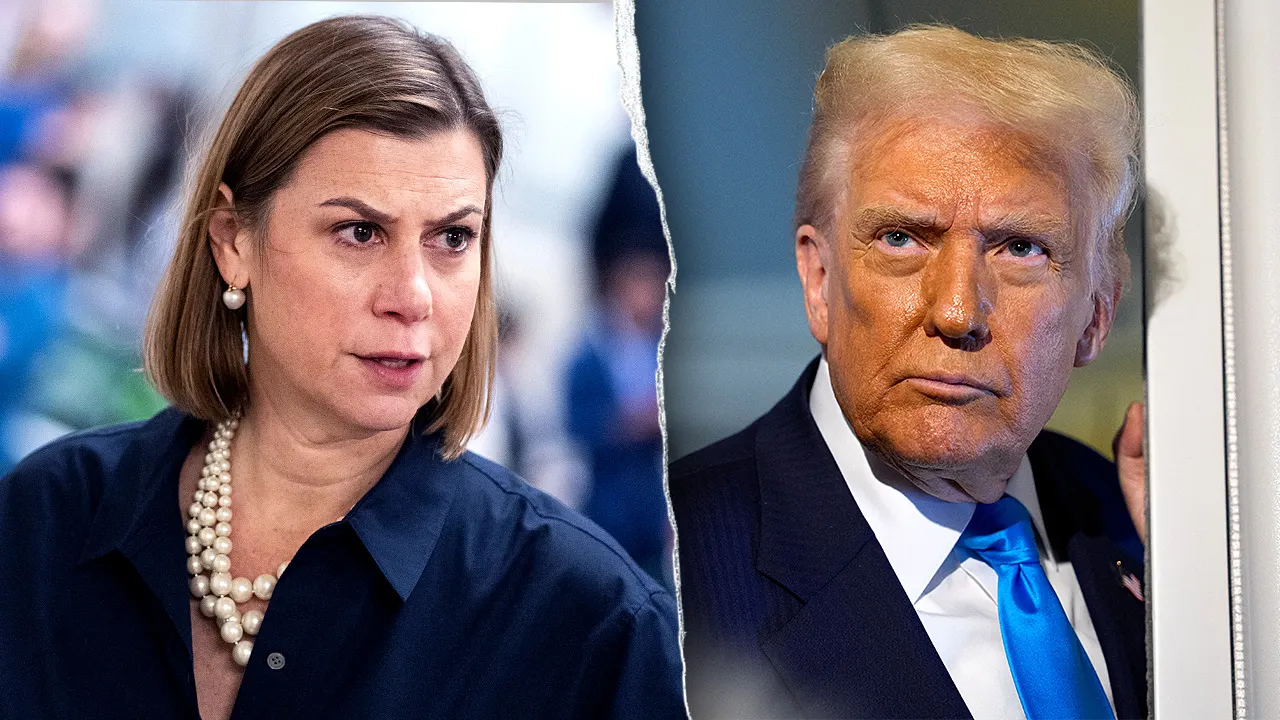

Senator Elissa Slotkin, a Democrat from Michigan, has publicly accused former President Donald Trump of initiating a targeted campaign against her following her remarks warning young Republicans of potential legal repercussions if they joined his administration. Trump responded with a post on Truth Social, calling for an investigation into Slotkin’s comments, which he characterized as an attack on Republican youth. Slotkin, in her defense, asserted the importance of accountability for any potential misuse of public funds or violation of laws, emphasizing her commitment to the First Amendment.
| Article Subheadings |
|---|
| 1) Background on the Controversy |
| 2) Trump’s Reaction and Subsequent Actions |
| 3) Slotkin’s Defense and Assertions |
| 4) Ethics Complaint and Broader Implications |
| 5) Potential Legal Matters and Conclusion |
Background on the Controversy
The tension between Senator Slotkin and former President Trump escalated quickly following her comments made at a University of Chicago event on October 13. Discussing the potential for Democrats to utilize congressional power effectively, she highlighted concerns regarding the ethical implications for young individuals contemplating positions in the Trump administration. Slotkin’s assertions suggested that young Republicans could be involved in legality-related issues and warned that they might face “a ton of problems” if they chose to join his team. This statement quickly drew the ire of Trump, who perceived it as a direct threat to the integrity of his administration and its associates.
In the realm of politics, such a statement carries significant weight, leading to what Slotkin describes as a coordinated wave of backlash aimed at deterring her from expressing further critiques of Trump’s tactics. The senator expressed that this incident reflects a broader pattern of intimidation intended to silence dissenting voices among those challenging the former president’s narratives and actions within the political landscape.
Trump’s Reaction and Subsequent Actions
In response to Slotkin’s remarks, Trump, in a Truth Social post over the recent weekend, characterized her comments as part of a larger effort by Democrats to weaponize political narratives. He specifically accused Slotkin of targeting young Republicans and questioned her intentions publicly. Within the same post, he took the extraordinary step of instructing the Department of Justice (DOJ) to investigate her statements, labeling them a “criminal act” and demanding immediate scrutiny by federal authorities.
Trump’s comments have solicited voices across party lines, with many seeing his call for a DOJ investigation as an unprecedented political maneuver. By threatening legal action against Slotkin, Trump aimed to bolster his supporters’ allegiance while simultaneously attempting to frame Slotkin as a villain in the narrative surrounding young Republicans. This stance aligns with his approach of asserting a dichotomy between his administration and those who oppose his policies, further stirring divisive sentiments within the political sphere.
Slotkin’s Defense and Assertions
In a video response shared widely on social media platforms, Slotkin made it clear that her comments were aimed at ensuring accountability for individuals who may violate laws or misuse taxpayer funds. She emphasized her commitment to upholding ethical governance and voiced her concerns regarding the potential implications of Trump’s administration on the rule of law. Slotkin affirmed her First Amendment rights, noting that her remarks should not be construed as a personal attack or criminal conduct.
“If you’re not violating the law — no problem,” Slotkin articulated, directing her statements towards potential whistleblowers and young Republicans who might reconsider aligning with morally questionable figures. Throughout her defense, she highlighted the broader principle of accountability that underpins her comments, resisting Trump’s efforts to frame her warnings as politically motivated assaults. Furthermore, Slotkin’s attorney has submitted a letter to the DOJ demanding clarification on whether an investigation has been initiated, highlighting her proactive stance against what she perceives as a targeted attack against her position.
Ethics Complaint and Broader Implications
The controversy surrounding Slotkin’s remarks does not stop at Trump’s call for a DOJ investigation; it extends to a congressional ethics complaint filed by a University of Chicago student, Michael Bicksel. Bicksel argues that Slotkin’s comments could deter young individuals from pursuing careers within the Republican Party and that her proposed use of congressional power could reflect back on the Senate negatively. His formal complaint brings another layer of complexity to the situation, suggesting that Slotkin’s statements are not merely rhetoric but could be seen as a weaponization of congressional authority.
Slotkin sees this complaint and the backlash as a manufactured response to her initial remarks. In an environment often characterized by partisan divides and escalating tensions, her contention highlights the risks of political expressions in polarizing moments. As the situation unfolds, many are questioning where the boundaries lie in political debate and what consequences may arise from provoking individuals in positions of power.
Potential Legal Matters and Conclusion
While the DOJ has yet to officially confirm whether an investigation into Slotkin’s comments has commenced, the political fallout from Trump’s involvement could have lasting effects. With Attorney General Todd Blanche declining to disclose a specific crime during his Sunday interview, the ambiguity surrounding Slotkin’s situation leaves room for speculation about the legal ramifications of her statements. Some observers argue that a probe could constitute an attempt to stifle political speech, setting a concerning precedent for how dissent is handled in American politics.
As this contentious dialogue continues to evolve, Slotkin remains undeterred in her commitment to confronting corruption and advocating for accountability. Her case presents a nuanced debate on accountability, political expression, and the intersections of power in a rapidly changing political landscape.
| No. | Key Points |
|---|---|
| 1 | Senator Elissa Slotkin confronted backlash for her remarks about young Republicans joining Trump’s administration. |
| 2 | Former President Donald Trump called for an investigation into Slotkin’s comments, labeling them a criminal act. |
| 3 | Slotkin defended her comments, stressing her commitment to accountability and her First Amendment rights. |
| 4 | An ethics complaint has been filed against Slotkin, questioning the implications of her statements on Senate integrity. |
| 5 | The controversy raises significant questions about political speech and accountability in today’s political climate. |
Summary
This escalating conflict between Senator Slotkin and former President Trump illustrates the complexities of political speech, accountability, and the consequences of dissent within the current political environment. As the situation unfolds, the implications of Slotkin’s comments extend beyond her personal experience, reflecting broader tensions surrounding freedom of speech and the appropriate use of power. With public discourse increasingly polarized, the outcomes of this controversy could reshape the landscape of political engagement in the United States.
Frequently Asked Questions
Question: What provoked Trump’s call for an investigation into Slotkin?
Trump called for an investigation following Slotkin’s remarks about potential legal ramifications for young Republicans who might join his administration, viewing her comments as an attack on Republican values.
Question: What did Slotkin argue regarding her comments?
Slotkin argued that her comments were aimed at ensuring accountability for those who might violate the law or misuse taxpayer funds, and emphasized her right to free speech.
Question: What does the ethics complaint against Slotkin entail?
The ethics complaint filed against Slotkin questions whether her remarks could negatively reflect on the Senate and seeks to assess if her comments represent improper conduct in the political sphere.
