

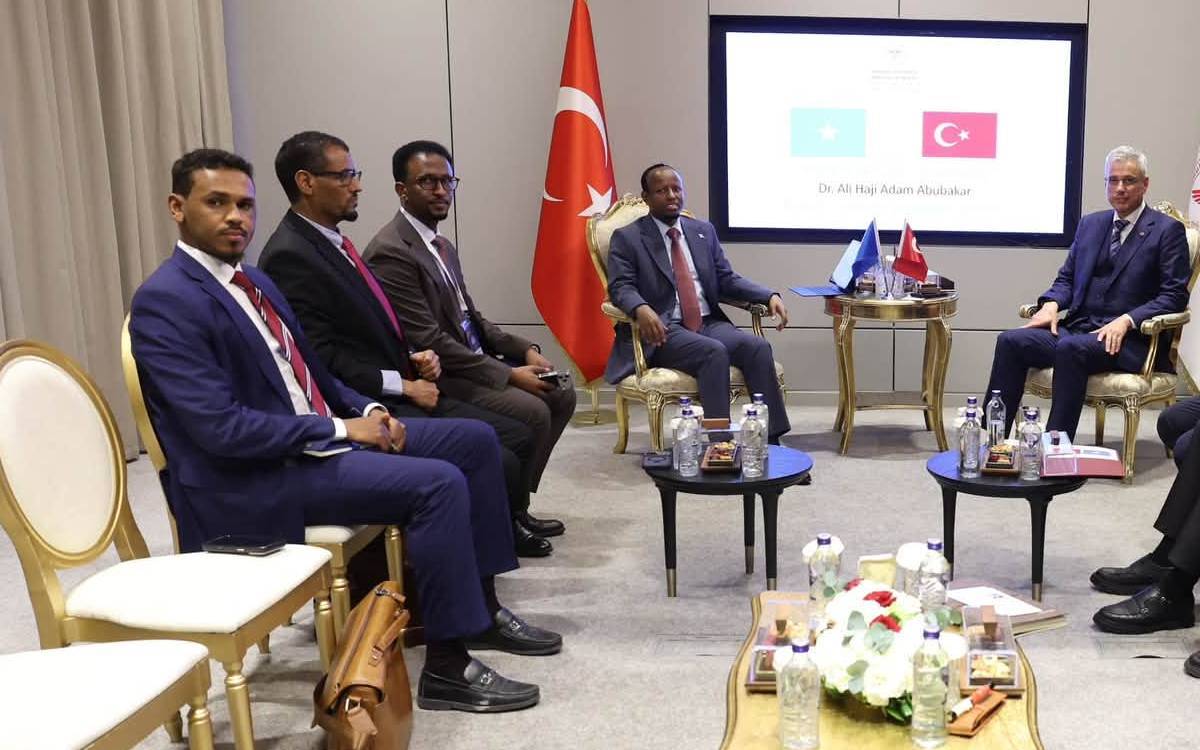

In a striking turn of events, Muhammed İsa Abdullah has returned to Turkey not as a restaurant owner but as a trade attaché at the Somali Embassy in Ankara. This appointment comes after his previous establishment, Saab Cafe, faced multiple police interventions that led to its closure in 2022 and resulted in Abdullah receiving a deportation order. His recent discussions regarding trade relations reflect a new chapter in his career and have shed light on past challenges related to discriminatory treatment and the struggle for migrant rights in Turkey.
| Article Subheadings |
|---|
| 1) The Closure of Saab Cafe |
| 2) The Deportation Order |
| 3) Court Ruling on Discrimination |
| 4) The Opening of a New Cafe |
| 5) Abdullah’s Return to Turkey |
The Closure of Saab Cafe
Saab Cafe, which was inaugurated in 2019 in Ankara’s Kızılay neighborhood, quickly gained popularity for its unique offering of Somali and African cuisine. However, from 2021 onwards, the restaurant faced an array of police inspections that triggered public scrutiny. The police interventions stemmed from complaints regarding the restaurant’s name, which was perceived as foreign, and the colors of its sign—all of which aligned with the Somali flag’s hues of yellow, red, and green. The situation intensified in June 2022, when police took the controversial step of painting the eatery’s sign white, leading Abdullah and his team to protest vehemently, claiming that they adhered to all legal guidelines.
Municipal authorities, through a statement from the General Directorate of Security, defended their actions by stating that the business name displayed did not match the registered business name, thereby violating sign regulations. This alleged inconsistency set off a contentious legal and public debate over bureaucratic procedures and citizen rights, particularly affecting migrant communities running businesses in Turkey.
The Deportation Order
On September 20, 2022, Muhammed İsa Abdullah was detained and taken to the Akyurt Removal Centre in Ankara. The circumstances surrounding his detention were closely linked to the challenges he faced with his restaurant. Abdullah’s lawyers mounted a legal challenge, and he was released on October 25 of the same year. Unfortunately, the bureaucratic pressure proved too overwhelming; by December 2022, Abdullah announced that he would permanently close Saab Cafe.
In a poignant post on social media, he shared a photograph signaling the conclusion of his entrepreneurial endeavor with the caption: “Beginning–Middle–End!” This closure was not just the end of a business; it represented a larger narrative of struggle faced by many migrants like him, who frequently navigate the complexities of setting up a life in a foreign country.
Court Ruling on Discrimination
On April 2024, a landmark ruling from Ankara’s 5th Administrative Court addressed the police conduct that had targeted Abdullah’s establishment. The court determined that the actions taken by local authorities were indeed discriminatory and stemmed from a prejudicial attitude toward migrants. Video evidence provided by Abdullah, which included derogatory remarks made by police officers, was pivotal to this ruling.
Following the outcome of the case, Abdullah expressed relief over the court’s acknowledgment of his experience. He highlighted that the ruling validated his perspective—that he had been unfairly targeted due to being a Somali citizen. This decision has since been regarded as an important milestone for immigrant rights, drawing attention to the systemic challenges faced by foreign nationals wanting to establish businesses in Turkey.
The Opening of a New Cafe
In a twist that further fueled Abdullah’s frustrations, a new café called “Verte Coffee House” opened at the same location where Saab Cafe had once operated. This business, featuring a foreign name, faced none of the obstacles or scrutiny that had hampered Abdullah’s operations. Critically, he pointed out the perceived inconsistency in enforcement of regulations, branding the situation as “institutional racism.”
This development not only reignited discussions about discrimination against migrants but also highlighted systemic inequalities affecting immigrant entrepreneurs. Abdullah’s critique underscores a broader concern regarding how businesses owned by migrant individuals are often subject to stricter regulations compared to their local counterparts.
Abdullah’s Return to Turkey
Despite the tumultuous experiences, Muhammed İsa Abdullah made a significant return to Turkey in 2026, this time stepping into a diplomatic role as the trade attaché at the Somali Embassy in Ankara. Abdullah, who moved to Turkey in 2012 to pursue his education at Ondokuz Mayıs University, later earned a master’s degree from Bursa Uludağ University. Throughout his academic journey, he developed a profound understanding of both Turkish and Somali cultures, facilitating his recent engagement with trade discussions.
His appointment as trade attaché brings a new perspective on enhancing trade relations between Somalia and Turkey. During a recent meeting with executives from the Hak Industrialists and Businesspeople’s Association (HAKSİAD) on October 30, 2026, Abdullah emphasized the potential for collaboration between the two nations, marking a significant moment in his career amidst the backdrop of his previous struggles. Through this new role, he aims to bolster economic ties and foster understanding between Turkey and his home country, proving that resilience and determination can lead to renewal and opportunity.
| No. | Key Points |
|---|---|
| 1 | Muhammed İsa Abdullah’s Saab Cafe was closed due to police interventions and subsequent legal issues. |
| 2 | Abdullah faced a deportation order, which was subsequently subject to legal challenge. |
| 3 | A court ruling in April 2024 found that police interventions against Abdullah’s business were discriminatory. |
| 4 | A new café opened at the same location as Saab Cafe after its closure, raising concerns of institutional racism. |
| 5 | Abdullah has returned to Turkey as a trade attaché at the Somali Embassy, aiming to improve trade relations. |
Summary
The journey of Muhammed İsa Abdullah from restaurant owner to trade attaché encapsulates the challenges faced by migrants in Turkey, grappling with bureaucratic hurdles and systemic discrimination. His previous experiences of police interventions led to significant legal victories highlighting the need for better treatment of migrant entrepreneurs. With his new diplomatic appointment, Abdullah seeks to create avenues for cooperation and growth between Somalia and Turkey, emphasizing that resilience and commitment can transform personal adversity into professional triumph.
Frequently Asked Questions
Question: What led to the closure of Saab Cafe?
The closure of Saab Cafe was primarily due to a series of police interventions related to the restaurant’s foreign name and the appearance of its sign, which was deemed non-compliant with regulations.
Question: What was the outcome of the court ruling regarding Abdullah’s treatment?
Ankara’s 5th Administrative Court ruled that the police actions against Abdullah were discriminatory and motivated by racist prejudice, thereby validating his experiences of unjust treatment.
Question: What role has Abdullah taken up upon his return to Turkey?
Upon his return to Turkey in 2026, Abdullah has been appointed as the trade attaché at the Somali Embassy in Ankara, focusing on enhancing trade relations with Turkey.
