

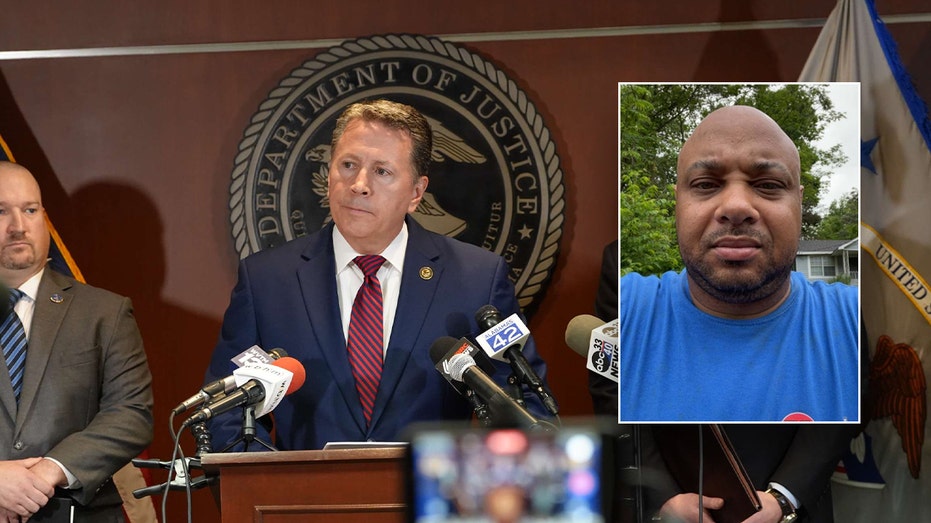

Alabama state Rep. Patrick Lorn Sellers has been federally indicted over allegations that he obtained more than $240,000 in pandemic-era grants and loans through fraudulent applications. Prosecutors say the funds were used for personal expenses, including mortgage and credit card payments, vehicle and water bills, and his daughters’ college tuition. The alleged conduct occurred between July 2020 and May 2021 and involved government programs and a private nonprofit. Sellers faces four felony counts of wire fraud and forfeiture demands if convicted.
| 1) | Indictment outlines alleged pandemic relief fraud |
| 2) | Money was allegedly directed to personal expenses |
| 3) | Nonprofit control allegedly enabled an improper application |
| 4) | Prosecutors cite false business and employment claims |
| 5) | Federal case carries significant potential penalties |
Indictment outlines alleged pandemic relief fraud
The Justice Department announced the indictment on November 19, 2026, identifying Sellers as a 53-year-old Alabama representative who has represented a district near Birmingham since November 2022. He was recently reelected to a second term. Prosecutors allege that, from July 2020 through May 2021, he pursued grants and loans intended to provide financial relief during the COVID-19 pandemic.
The alleged scheme involved applications directed at federal and state programs as well as a private nonprofit. Because the payments were transmitted electronically across state lines, prosecutors charged Sellers with four counts of wire fraud. The allegations remain claims, and the indictment is not a conviction.
Money was allegedly directed to personal expenses
According to prosecutors, Sellers used the allegedly fraudulently obtained funds for expenses unrelated to pandemic relief. Those expenses included credit card balances, mortgage payments, auto loan payments, water bills and tuition for his daughters’ college education.
The case centers on whether information submitted in relief applications falsely represented Sellers’ eligibility and business activities. Officials say the money was intended to support organizations and operations affected by the pandemic, rather than to pay the lawmaker’s household obligations.
Nonprofit control allegedly enabled an improper application
One allegation concerns an affiliate nonprofit associated with the Alabama State Missionary Baptist Convention. Prosecutors say Sellers took control of the affiliate and applied for pandemic assistance without notifying the convention’s president or board.
Officials further allege that, after the funds were obtained, the charity’s legitimate leaders were denied assistance when they later sought relief themselves. The allegation adds an organizational dimension to the case because it concerns both the use of a nonprofit’s identity and the effect on its actual leadership.
Prosecutors cite false business and employment claims
Prosecutors say Sellers repeatedly made false statements on federal and state relief applications. They allege that he claimed to operate several nonprofits employing as many as 10 people, even though he had no employees.
The indictment also alleges that Sellers represented himself as operating a landscaping business and created tax forms for returns that he had not filed with the Internal Revenue Service. Investigators say these representations were used to support applications for loans and grants.
Federal case carries significant potential penalties
The FBI investigated the allegations, while Assistant U.S. Attorneys Brett A. Janich and Ryan S. Rummage are prosecuting the case. U.S. Attorney Phillip W. Williams Jr. announced the indictment and said federal authorities would pursue alleged corruption regardless of an official’s position or influence.
“Under U.S. Attorney Williams, we have a mandate to aggressively pursue corrupt public officials, no matter what position they hold or what power they wield,” Assistant U.S. Attorney Brett A. Janich said.
Wire fraud carries a maximum sentence of up to 20 years in prison. Prosecutors are also seeking forfeiture of the funds they allege were obtained unlawfully. The case will proceed in federal court, where the government must prove the charges beyond a reasonable doubt.
| Number | Key Point |
|---|---|
| 1 | Sellers was indicted on four federal wire fraud counts. |
| 2 | Prosecutors allege more than $240,000 was obtained through fraudulent applications. |
| 3 | The alleged funds were used for personal bills and tuition. |
| 4 | The FBI investigated, and federal prosecutors are handling the case. |
| 5 | Each wire fraud count may carry a maximum penalty of 20 years in prison. |
Summary
The indictment accuses an Alabama lawmaker of exploiting pandemic relief programs, a nonprofit affiliation and false business information to obtain funds for personal expenses. The allegations now move into the federal court process, where the prosecution must establish the claimed fraud and the defense will have an opportunity to respond.
Frequently Asked Questions
Who was indicted?
Patrick Lorn Sellers, an Alabama state representative, was indicted in the federal case.
How much money is involved?
Prosecutors allege that more than $240,000 in pandemic-related grants and loans was obtained through fraudulent applications.
What charges does Sellers face?
He faces four felony counts of wire fraud. The offense carries a maximum penalty of up to 20 years in prison per count, subject to the court and applicable law.
What happens next?
The case will proceed through the federal court system. The government must prove the allegations beyond a reasonable doubt, and an indictment alone does not establish guilt.
