

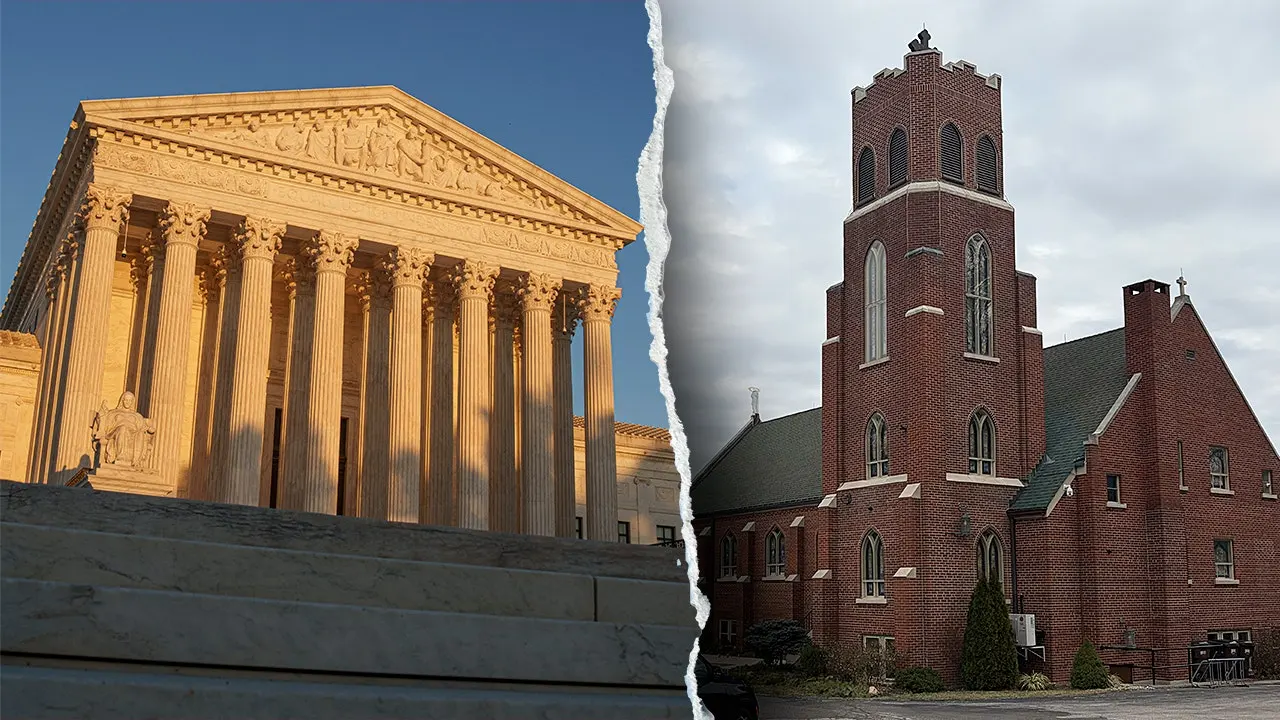

A legal dispute is unfolding in Park Hills, Kentucky, as a Catholic religious community seeks to build a small shrine honoring the Virgin Mary on its property. This initiative has sparked a significant legal battle against local residents opposed to the project, with implications that may reach the U.S. Supreme Court. Kentucky Attorney General Russell Coleman is leading an effort involving 18 states, advocating for the reversal of a recent ruling that thwarted the construction of the proposed 600-square-foot prayer grotto.
| Article Subheadings |
|---|
| 1) Background of the Shrine Proposal |
| 2) Legal Developments and Court Rulings |
| 3) Broader Implications for Religious Liberty |
| 4) Community Response to the Grotto |
| 5) Next Steps and Future Considerations |
Background of the Shrine Proposal
The Missionaries of St. John the Baptist initiated plans to construct a 16-by-39-foot grotto, inspired by the apparition of the Virgin Mary to Saint Bernadette in Lourdes, France. This proposal arose in 2021 as part of the community’s commitment to provide a serene space for prayer and meditation. The design includes various features such as a shrine, plaza, walking path, and a retaining wall, all intended to create a peaceful environment for worshippers.
Prior to the legal disputes, the project received the necessary approvals from local zoning officials in April 2021. This initial endorsement from the Park Hills Board of Adjustment seemed to signal a successful step toward the realization of the grotto. However, the construction plans quickly faced opposition from neighboring property owners, Joel and Elizabeth Frederic, initiated their challenge by questioning the city’s approval and citing violations of local zoning ordinances.
Legal Developments and Court Rulings
The legal battle intensified as the Frederics pursued their objection in court, claiming that the city’s approval of the outdoor shrine infringed upon local zoning laws. As the case evolved, a trial court initially sided with the Park Hills Board, upholding the decision to allow the construction. However, the Kentucky Court of Appeals ultimately reversed this ruling, arguing that the zoning board had exceeded its jurisdiction in granting the permits necessary for the grotto’s construction.
As the dispute reached the Kentucky Supreme Court, the court upheld the appellate ruling in December 2025, effectively blocking the Missionaries’ claim under the Religious Land Use and Institutionalized Persons Act (RLUIPA). Throughout this process, Russell Coleman has passionately defended the Missionaries’ right to build their shrine, asserting that this legal skirmish is not just isolated to local issues, but signifies larger national discussions on religious freedoms.
The Supreme Court has now agreed to hear the case, with oral arguments scheduled for January 20, 2027. This decision marks a pivotal moment as it will address whether blocking a religious structure on an organization’s property constitutes a substantial burden on religious exercise, leading to greater implications for religious entities across the nation.
Broader Implications for Religious Liberty
According to legal analysts and activists, the implications of this case extend beyond the narrow confines of a local community dispute. As highlighted by legal representatives for the Missionaries, including senior counsel Ryan Gardner, the outcome of this litigation could redefine how zoning and land-use laws interact with religious freedoms throughout the United States. The RLUIPA, enacted in 2000, was designed to protect religious institutions from being unduly burdened by zoning regulations, making this case especially significant.
With states across the nation looking closely at the ongoing litigation, outcomes pledged to impact how zoning laws are shaped, potentially allowing for a more favorable environment for religious organizations wishing to establish places of worship. The crux of the argument is whether religious exercise should take precedence over local zoning regulations, a question that could redefine church-state relations in America.
The coalition of 18 states, led by Coleman, emphasizes that religious liberty is a fundamental American right that should not be overridden by local opposition. This coalition’s involvement signifies a broader movement to preserve and protect religious expressions, especially in an era where such rights are continuously scrutinized.
Community Response to the Grotto
As the debate over the grotto continues, community opinions are divided. Supporters of the Missionaries argue that the grotto represents an integral part of their religious expression, providing a space for devotion and reflection that many in the community desire. They view the development as a way to enhance the local landscape and provide a tranquil refuge for personal prayer.
Conversely, the Frederics and some locals raising concerns argue that the construction of the grotto may disrupt the character of the neighborhood, voicing fears that it might bring increased foot traffic and alter the local environment. Their apprehensions center on maintaining the residential ambiance and protecting the rights of homeowners regarding land use in their immediate vicinity.
Public meetings and discussions have been held to address concerns from both sides, revealing a community grappling with the balance between religious freedoms and local governance. Many residents remain engaged in the proceedings, recognizing that the decision of the Supreme Court may ultimately set significant precedents for future religious projects and land-use disputes.
Next Steps and Future Considerations
As the Supreme Court gears up to tackle this case, all eyes will be on its implications for religious institutions nationwide. The outcome will not only determine the fate of the proposed grotto in Park Hills but also set critical legal standards for how similar cases are handled in the future. The arguments presented by both the Missionaries and the Frederics will be essential in shaping the Court’s perspective on religious land use and the intersection of community zoning laws.
Experts suggest that if the justices rule in favor of the Missionaries, it could pave the way for increased protections for religious organizations. Conversely, if the ruling favors local opponents, it could significantly limit religious institutions’ ability to navigate zoning challenges, creating a precedent that may dissuade similar projects across the country. As the plot thickens, stakeholders from both sides eagerly await the oral arguments scheduled for January 2027, ready to mobilize either in defense or challenge based on the Court’s ruling.
| No. | Key Points |
|---|---|
| 1 | The Missionaries of St. John the Baptist are seeking to build a prayer grotto dedicated to the Virgin Mary on their property in Park Hills, Kentucky. |
| 2 | Local residents, Joel and Elizabeth Frederic, successfully challenged the construction in court, leading to an appellate ruling against the Missionaries. |
| 3 | The case raises important questions regarding religious liberty and the applicability of the Religious Land Use and Institutionalized Persons Act (RLUIPA). |
| 4 | A coalition of 18 states, led by Kentucky’s Attorney General Russell Coleman, is advocating for the Missionaries’ right to build the shrine. |
| 5 | The Supreme Court is set to hear the case with oral arguments scheduled for January 20, 2027, which will have lasting consequences for religious organizations nationwide. |
Summary
The proposed prayer grotto by the Missionaries of St. John the Baptist has sparked a legal battle that has escalated to the U.S. Supreme Court. With key implications for religious liberty, zoning laws, and community rights, this case will set a precedent that could affect how religious groups operate in the future. As stakeholders prepare for oral arguments, the national conversation surrounding church-state relations and the rights of religious entities remains at the forefront of public discourse.
Frequently Asked Questions
Question: What is the Religious Land Use and Institutionalized Persons Act (RLUIPA)?
RLUIPA is a federal law enacted in 2000 that protects the rights of religious institutions from burdensome zoning laws and local regulations that could impede their ability to practice their faith and expand their facilities.
Question: Why did the Frederics oppose the construction of the grotto?
The Frederics opposed the grotto based on concerns that it would violate local zoning laws and alter the character of their neighborhood, fearing it could increase foot traffic and disrupt the residential environment.
Question: How could this case affect future zoning laws for religious structures?
Depending on the Supreme Court’s ruling, the case could either strengthen protections for religious institutions regarding zoning laws or impose stricter limitations on their ability to construct worship facilities.
