

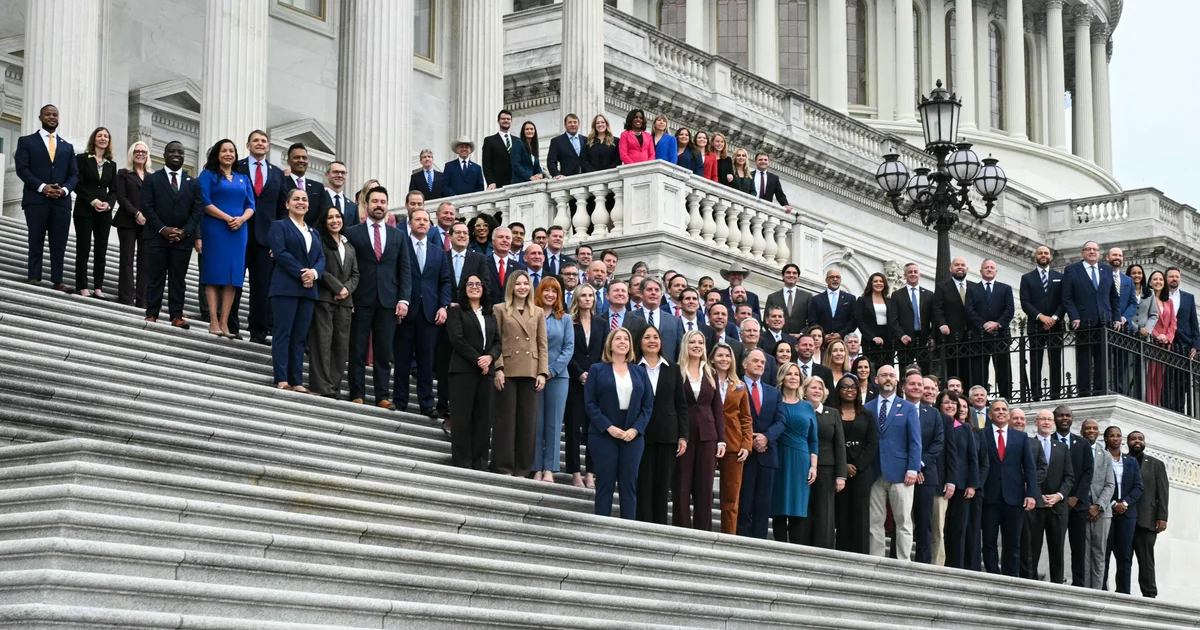

In a significant political reshaping, Democrats have achieved a remarkable milestone by securing their 258th seat in the House of Representatives, the largest majority for any party in over three decades. This victory follows the Democrats gaining 44 House seats, surpassing previous midterm elections and reflecting a decisive voter response amid rising economic concerns and political turmoil related to ongoing conflicts. As the Democrats prepare to govern with broader authority, they face both expectations to fulfill campaign promises and challenges ahead in a divided government.
| Article Subheadings |
|---|
| 1) Election Results and Their Significance |
| 2) Challenges Facing the New Majority |
| 3) A Call to Action from Democratic Leadership |
| 4) Transition to New Leadership |
| 5) Republican Strategy Moving Forward |
Election Results and Their Significance
The recent election results highlight a profound shift in the political landscape of the United States. With Democrats gaining 44 House seats, they have not only secured a historic majority but also managed to capture 258 seats overall—an achievement not seen since 1992. This surge reflects widespread voter dissatisfaction, particularly concerning economic issues such as inflation, which has impacted daily life for many citizens. The scale of these victories has been described by some as a “blue wave” or even a “blue tsunami,” illustrating a public sentiment that rejects the previous administration’s policies and direction.
The pivotal moment came when Democrat Chuck Hubbard defeated incumbent Republican Representative Virginia Foxx in North Carolina, highlighting a trend where discontented voters in traditionally Republican strongholds have expressed a clear desire for change. The implications of these results mean that Democrats not only have the ability to govern but also a mandate to address pressing issues affecting a diverse electorate.
Challenges Facing the New Majority
While the electoral gains are substantial, they also present numerous challenges for the Democratic Party as they prepare to govern under a divided government structure. With Republicans holding at least 173 seats, the Democrats face opposition in achieving their policy objectives, which requires careful negotiation and strategy to ensure that the needs of their constituents are met.
One of the significant challenges lies in managing the expectations of their voter base, who have high hopes for legislative progress on issues such as healthcare, economic stability, and immigration reform. As emphasized by Democratic leaders, failure to address these critical issues could result in backlash from voters who are eager for tangible outcomes from their chosen representatives.
A Call to Action from Democratic Leadership
Democratic leaders, including House Minority Leader Hakeem Jeffries, have publicly urged the importance of immediate action following their electoral success. In various interviews, leaders have stressed the necessity of addressing the affordability crises faced by American families. Jeffries remarked on the anger of the American public if Congress remains stagnant, stating,
“Can you imagine how angry the American people will be with Washington if, over the next two years, we fail to do anything about affordability, fail to do anything about healthcare, and fail to do anything about immigration?”
This highlights the urgency felt by Democratic officials to deliver on their promises within their first 100 days in power.
Furthermore, part of the Democratic agenda will include utilizing their subpoena powers to conduct investigations into the previous administration’s conduct, including potential ethics violations that could affect governmental transparency. The expectation is that these investigations will not only hold the previous administration accountable but also resonate with voters who have expressed concerns over corruption.
Transition to New Leadership
The upcoming transition in House leadership is set to mark a significant political moment. Hakeem Jeffries is poised to make history as he stands to become the first Black speaker of the House, a role that carries immense influence and responsibility. This new leadership is expected to have greater latitude in passing legislation, as the substantial Democratic majority means that even dissenting votes within the party can still secure passage for critical measures.
As the Democrats prepare for this transition, they must also ensure that they remain unified despite differing perspectives within the party. Representative Troy Carter from Louisiana emphasized this point, asserting,
“We’re not a monolith — people come to the caucus with different ideas — it’s OK.”
This acknowledgment of diversity within the party will be crucial as they navigate policy debates and legislative priorities moving forward.
Republican Strategy Moving Forward
In contrast, the Republican Party faces its own set of challenges as it transitions to the minority. With their number of House seats declining to one of the lowest in decades, they are tasked with redefining their strategies and messaging to regain the trust of American voters. Newly elected Republican leader Jim Jordan has already outlined a commitment to advocate for American families and push back against the Democratic agenda, highlighting a renewed focus on economic issues that resonate with their base.
The party aims to learn from recent electoral losses and work to diversify support across various demographics. As they recalibrate their approach, the GOP’s historical high-water mark includes the 301 seats they held after the 1920 election, serving as a benchmark for their future aspirations to rebuild and regain power.
| No. | Key Points |
|---|---|
| 1 | Democrats achieved a historic majority in the House with 258 seats. |
| 2 | The Democratic victory reflects widespread voter dissatisfaction with economic issues. |
| 3 | Challenges for the new Democratic majority include managing high expectations and opposing pressures. |
| 4 | Democratic leaders are advocating for swift action on key policy issues. |
| 5 | Republican leaders are formulating strategies to regain support and influence in the House. |
Summary
The recent election results mark a transformative moment in U.S. politics, as Democrats secure a historic majority in the House of Representatives. With a mandate to address economic concerns and implement significant policy changes, the Democratic leadership faces the dual challenge of fulfilling voter expectations while navigating opposition within Congress. Meanwhile, Republican leaders must regroup and strategize to reclaim influence as they confront a newly empowered Democratic majority. The coming months will be pivotal in shaping the legislative agenda and the future political landscape of the nation.
Frequently Asked Questions
Question: What were the key factors contributing to the Democrats’ success in the recent elections?
The Democrats’ success can be attributed to widespread voter dissatisfaction with economic conditions, rising inflation, and declining faith in government accountability, all of which galvanized voters to express their preferences at the polls.
Question: How does the new Democratic majority plan to address economic issues?
The Democratic majority plans to prioritize affordability, healthcare reforms, and immigration-related policies, along with swift legislative action aimed at reversing previous cuts to programs like Medicaid.
Question: What are the implications of a divided government for future legislation?
With divided government, passing legislation will require negotiation and compromise, as Democrats will need to work effectively with Republican lawmakers to achieve meaningful policy outcomes while also balancing their own internal party dynamics.
