

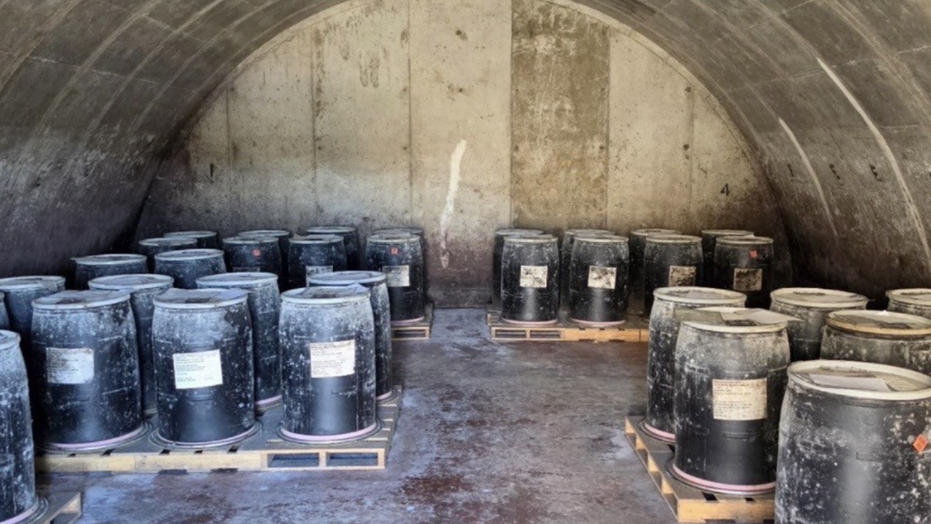

The U.S. Army detonated nearly 5 tons of degraded lead azide at the Iowa Army Ammunition Plant in Middletown on Wednesday morning. The operation involved 68 barrels of the highly volatile explosive material after officials determined that controlled destruction was safer than continued storage. Two explosions were heard near the site, while officials said initial mitigation measures appeared to have contained the blast and limited the projected lead plume. Residents within 20 miles were told to continue sheltering in place while federal agencies conduct air, soil and agricultural assessments.
| 1) | Controlled detonation follows safety delays |
|---|---|
| 2) | Army uses barriers and gels to contain fallout |
| 3) | Officials report limited early evidence of a lead plume |
| 4) | Residents remain under shelter guidance during testing |
| 5) | Agencies prepare longer-term environmental assessments |
Controlled detonation follows safety delays
The Army carried out the detonation Wednesday at the Iowa Army Ammunition Plant in Middletown, Iowa, after multiple delays and federal court involvement. The operation destroyed 68 barrels containing nearly 5 tons of lead azide, a sensitive explosive compound used in the production of detonators and other bomb-making materials. Military and federal officials had concluded that deliberately destroying the stockpile was safer than leaving it in place.
Officials said the lead azide had crystallized, increasing the risk that heat, shock or friction could trigger an unintended explosion. Freezing conditions in the area were also cited as a factor that could further destabilize the material. Two explosions were heard near the plant during the operation.
Army uses barriers and gels to contain fallout
The Army built extensive barriers around the detonation area and applied specialized gels intended to absorb or suppress hazardous debris and lead-containing particles. These measures were designed to reduce the possibility that the blast would spread toxic dust into nearby communities or across state lines.
A senior administration official described the result as exceeding expectations and said maximum mitigation had been achieved. Donald Trump also said early reports indicated that the containment effort had been successful. The measures were implemented in response to concerns from residents and environmental advocates about the consequences of detonating the unstable material.
Officials report limited early evidence of a lead plume
Initial statements from federal and state officials indicated that the explosion appeared to be well contained. Updated Army maps had projected that a plume could move southwest toward the northeastern corner of Missouri. Missouri Governor Mike Kehoe said the detonation occurred about 15 minutes before he confirmed it publicly.
“Initial analysis shared with us by federal partners and Iowa Homeland Security and Emergency Management indicates that the mitigation measures appear to have been successful and the explosion was well-contained.”
FEMA Administrator Cameron Hamilton said early observations did not show the large lead plume projected by some models. He characterized the response at the Army command center as a sigh of relief, while emphasizing that sampling and analysis would continue.
Residents remain under shelter guidance during testing
FEMA advised residents within 20 miles of the plant who had not evacuated to continue sheltering in place and follow safety guidance from the Environmental Protection Agency. The instruction remained in effect after the blast because airborne and deposited contaminants cannot be fully assessed through visual observation alone.
Officials said people in the affected area should rely on government instructions while monitoring continues. The guidance reflects the need to evaluate both immediate air conditions and any material that may have settled on soil, buildings or agricultural land.
Agencies prepare longer-term environmental assessments
Federal agencies plan to collect air and soil samples in the days and weeks following the detonation. Department of Agriculture officials are also expected to visit nearby farms to assess whether the operation affected crops, livestock areas or other agricultural resources.
The assessments will help determine whether lead particles or other hazardous residue moved beyond the controlled area. Results will be used to guide further public health and environmental recommendations as officials complete their review of the operation.
| No. | Key Point |
|---|---|
| 1 | The Army destroyed 68 barrels containing nearly 5 tons of degraded lead azide. |
| 2 | Barriers and specialized gels were used to limit hazardous fallout. |
| 3 | Residents within 20 miles were told to continue sheltering in place. |
| 4 | Air, soil and farm assessments are planned in the coming days and weeks. |
Summary
The controlled detonation removed an unstable stockpile that officials considered an ongoing risk of accidental explosion. Early observations suggested that the Army’s containment measures limited the spread of lead particles, but authorities have not completed their environmental review. Continued shelter guidance and planned sampling will determine the operation’s broader impact on nearby communities and farms.
Frequently Asked Questions
What material was detonated?
The Army detonated 68 barrels containing nearly 5 tons of degraded lead azide, a highly volatile explosive material.
Why was the material destroyed?
Officials said the lead azide had crystallized and could be triggered by heat, shock or friction, making controlled destruction safer than continued storage.
What happens next?
Federal agencies will collect air and soil samples, while Agriculture Department officials assess nearby farms. Residents within 20 miles were told to continue sheltering in place and follow EPA guidance.
