

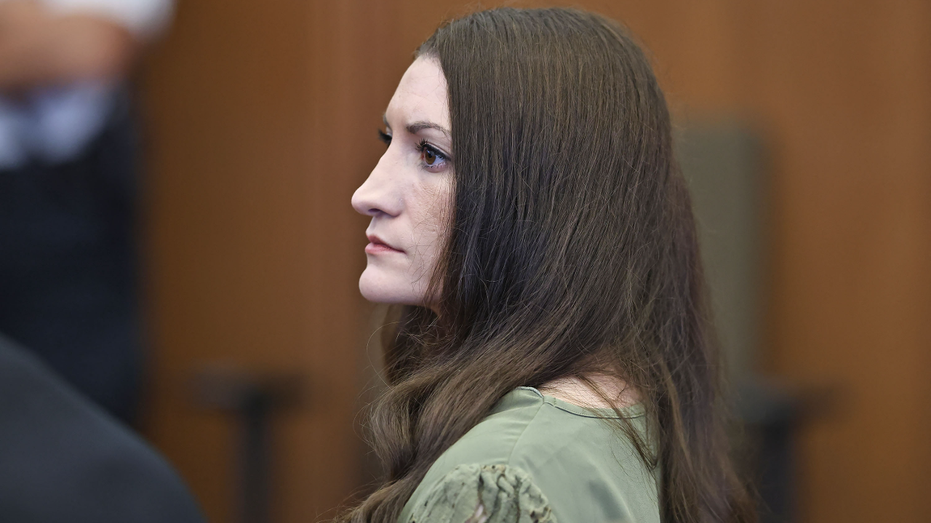

Lindsay Clancy‘s murder retrial preparations will continue after the Massachusetts Supreme Judicial Court rejected prosecutors’ request to pause the case. Prosecutors had argued that the court might not resolve Clancy’s double jeopardy appeal before jury selection is scheduled to begin on March 29. Clancy’s defense opposed a delay and said she wants to keep the trial date. The appeal follows a mistrial declared after jurors failed to reach a unanimous verdict in the deaths of her three children.
| 1) | Court rejects request to pause retrial preparations |
|---|---|
| 2) | Defense seeks to preserve March 29 trial date |
| 3) | Mistrial led to constitutional appeal |
| 4) | Case concerns deaths of three young children |
| 5) | Retirement of trial judge adds a scheduling issue |
Court rejects request to pause retrial preparations
The Massachusetts Supreme Judicial Court denied the Plymouth County District Attorney’s Office request to stay proceedings in the murder case. The court did not explain its decision. Prosecutors filed the motion on Monday, arguing that it would be difficult for the state’s highest court to decide the defense appeal before jury selection begins on March 29.
Assistant Plymouth County District Attorney Melissa Johnsen wrote that the full court would determine whether a retrial violates Clancy’s double jeopardy rights. Prosecutors said continuing preparations could create additional expense and effort if the court later rules that a second trial is barred.
“As such, it makes little sense to move forward with proceedings intended to bring the defendant to a trial, where this Court may ultimately decide that a retrial is barred by double jeopardy.”
Defense seeks to preserve March 29 trial date
Clancy’s attorneys, Kevin Reddington and Martin Weinberg, opposed the prosecution’s request. In a response, the defense said Clancy wants to keep the scheduled trial date rather than accept a delay while the appeal proceeds.
The defense also argued that the burden of pausing the case would fall on Clancy, who is being held without bail. The competing positions reflect different concerns: prosecutors emphasized the resources required for trial preparation, while the defense focused on the effect of continued detention and the need to move the case forward.
Mistrial led to constitutional appeal
The appeal arose after Judge William Sullivan declared a mistrial on Sept. 4, following a trial in Plymouth County Superior Court. Jurors were unable to reach a unanimous verdict and were divided 11-1.
Clancy’s lawyers contend that Sullivan unnecessarily declared the mistrial and that requiring her to face another trial would violate the constitutional protection against double jeopardy. The prosecution maintains that retrial preparations should continue unless the high court rules otherwise. The Supreme Judicial Court is now considering the defense challenge while the lower-court case remains active.
Case concerns deaths of three young children
Clancy, 36, is charged in the deaths of her children, Cora, Dawson and Callan, who were all under age 6. The children were found strangled at the family’s home in Duxbury, Massachusetts, in January 2023. Clancy has pleaded her case through the ongoing criminal proceedings, and the allegations remain unresolved unless and until there is a final judgment.
The case has involved sharply contested arguments over the evidence and the circumstances surrounding the children’s deaths. During a status hearing, defense attorney Kevin Reddington argued there was no evidence that Clancy killed her children. Assistant District Attorney Shanan Buckingham responded that the evidence was voluminous.
Retirement of trial judge adds a scheduling issue
Another timing question involves Judge Sullivan, who is preparing to retire in June 2027 after reaching Massachusetts’ mandatory judicial retirement age of 70. His expected departure could affect the administration of the case if proceedings extend beyond the planned retrial schedule.
Retired Massachusetts judge and legal scholar Jack Lu previously described the prosecution’s request for a stay as reasonable, citing the difficulty of resolving a full-bench appeal while preparing for a second trial on a compressed timeline. The high court’s denial means the parties must continue addressing trial preparations unless a later order changes the schedule.
| Number | Key Point |
|---|---|
| 1 | The state’s highest court denied prosecutors’ request to pause the case. |
| 2 | Clancy’s defense wants to retain the March 29 retrial date. |
| 3 | The double jeopardy appeal follows an 11-1 jury deadlock and mistrial. |
| 4 | The charges involve the January 2023 deaths of three children in Duxbury. |
| 5 | Judge Sullivan is expected to retire in June 2027. |
Summary
The Supreme Judicial Court’s decision keeps the retrial process moving while it considers whether a second trial would violate Clancy’s double jeopardy rights. The March 29 date remains the defense’s preferred schedule, although the appeal and the trial judge’s planned retirement could create further legal and administrative complications.
Frequently Asked Questions
What did the Massachusetts Supreme Judicial Court decide?
The court rejected prosecutors’ request to pause proceedings while it considers Clancy’s double jeopardy appeal. It did not provide an explanation for the denial.
Why is Clancy appealing?
Her attorneys argue that the mistrial was unnecessary and that forcing her to face another trial would violate her constitutional protection against double jeopardy.
When is the retrial scheduled to begin?
Jury selection is scheduled to begin March 29. Clancy’s defense has said she wants to keep that date.
