

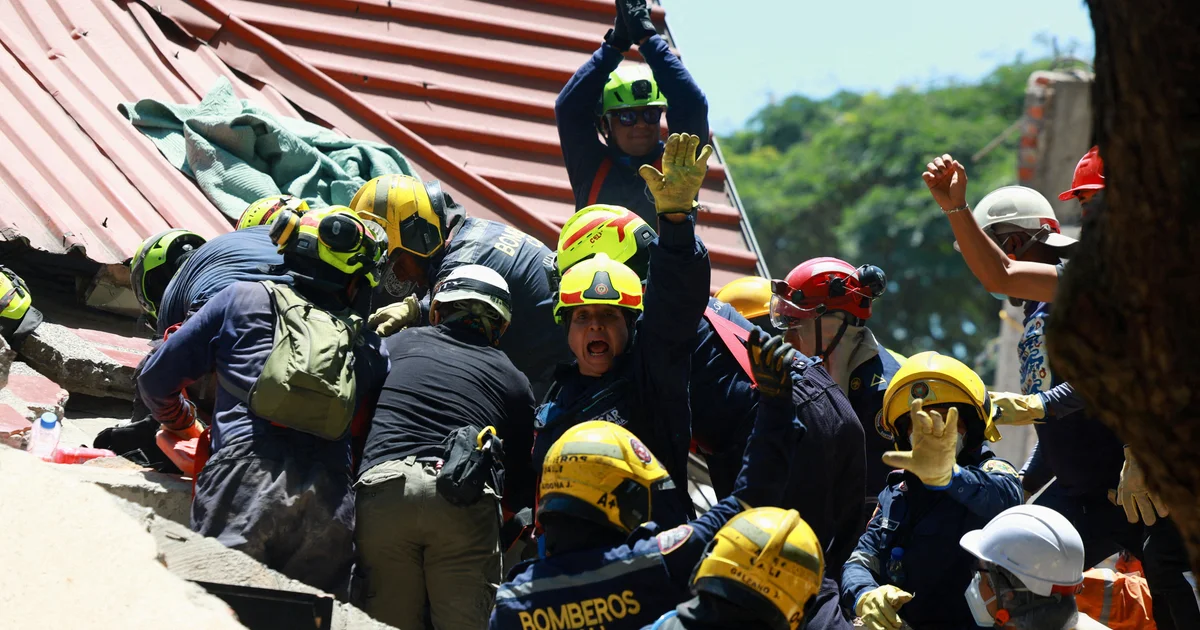

A powerful earthquake struck Colombia, marking the strongest tremor recorded in the country’s history. The incident occurred on Monday morning, leading to significant casualties and damage. As rescue operations unfold, officials are grappling with a rising death toll and a high number of missing individuals.
| Article Subheadings |
|---|
| 1) Overview of the Earthquake’s Impact |
| 2) Emergency Response Efforts |
| 3) Community Involvement and Humanitarian Efforts |
| 4) The Global Response |
| 5) Looking Ahead: Recovery and Assistance |
Overview of the Earthquake’s Impact
At 7:30 a.m. local time on Monday, Colombia experienced a powerful earthquake measuring 7.4 on the Richter scale. The tremor affected numerous cities across the western region, causing widespread panic and immediate reactions among the populace. Official reports indicate that at least 181 people lost their lives, while more than 1,595 individuals sustained injuries as a direct consequence of the quake.
In addition to the casualties, the disaster left 195 people reported as missing, a figure that some civilian-run databases suggest might be as high as 3,900. Families took to social media platforms, sharing information in hopes of reconnecting with their missing loved ones. The destruction was substantial; over 1,100 homes were completely destroyed, with more than 8,300 suffering from varying degrees of damage.
Emergency Response Efforts
In the aftermath of the earthquake, Colombian authorities declared a state of emergency, allowing for the mobilization of both military and police resources. The president, Abelardo de la Espriella, emphasized the urgency of the situation, stating that concerted rescue operations were underway. The power outage in the affected areas, particularly in the city of Pereira, significantly hampered rescue efforts.
Rescue workers and volunteers were observed tirelessly clearing debris, often using their bare hands to navigate through the rubble. In one poignant moment, rescuers formed human chains to remove bricks and masonry, frequently pausing to listen for any cries for help from potential survivors trapped beneath layers of destruction.
Community Involvement and Humanitarian Efforts
The community response has been remarkable, as volunteers have flocked to the hardest-hit areas, armed with basic tools and an unwavering spirit of solidarity. Local resident Juan David Gaitan captured the mood of despair, describing Pereira as a “zombie city,” devoid of power and overwhelmed by the chaos. Many families chose to sleep outside, fearing aftershocks and already displaced from their homes.
Amidst the rubble, heartwarming stories emerged of community members banding together. Volunteers composed teams that quickly stepped into action, uniting their efforts to search for survivors, even in the darkest hours after the quake. This spirit of cooperation has undoubtedly been vital, showcasing the indomitable human will to assist one another in times of crisis.
The Global Response
Internationally, the earthquake has drawn attention and concern. The Vatican issued a statement expressing that Pope Leo XIV is “deeply saddened” by the tragedy and has offered prayers for the affected. U.S. Secretary of State Marco Rubio remarked that the U.S. is closely monitoring the situation and stands ready to support Colombia, confirming an initial emergency relief commitment of $15.5 million.
European Union chief Ursula von der Leyen announced that the EU mobilized Copernicus, a satellite service, to assist in ongoing rescue operations. Nations such as Israel, Mexico, Ecuador, and France extended offers of assistance, marking a global outpouring of solidarity and support for Colombia.
Looking Ahead: Recovery and Assistance
As authorities work relentlessly on rescue operations, the focus is shifting toward recovery and rehabilitation. The challenges ahead are significant, with wide-scale infrastructure damage requiring urgent attention. Hospitals in major cities were put on maximum alert, emphasizing the need for immediate medical assistance to the injured population.
Community leaders are beginning to strategize on how best to address the needs of those displaced and how to restore normalcy. Organizations both within Colombia and abroad continue to mobilize resources, ensuring that rescue and recovery remain priorities in the days to come.
| No. | Key Points |
|---|---|
| 1 | Colombia experienced its strongest earthquake recorded, with a magnitude of 7.4. |
| 2 | Casualties include at least 181 deaths and over 1,595 injuries. |
| 3 | Significant damage to infrastructure was reported, leaving thousands of homes destroyed or damaged. |
| 4 | Emergency response efforts have mobilized military and police resources for rescue operations. |
| 5 | International community offers aid and support, showcasing global solidarity following the disaster. |
Summary
The recent earthquake in Colombia has not only reshaped the physical landscape but also the social fabric of affected communities. While resilience and solidarity have emerged as significant themes, the path to recovery remains fraught with challenges. As local and international efforts converge, the hope for a future beyond this tragedy endures.
Frequently Asked Questions
Question: What steps are being taken for rescue efforts in Colombia?
Authorities have declared a state of emergency allowing for a mobilization of military and police resources to assist in rescue operations. Volunteers are also actively involved in clearing rubble to search for survivors.
Question: How can international communities support Colombia during this crisis?
International organizations and nations can provide financial aid, medical support, and materials needed for rescue and rebuilding efforts, showcasing solidarity and assistance in the aftermath of the disaster.
Question: What challenges face the Colombian government in the aftermath of the earthquake?
The government faces pressing challenges, including addressing the immediate needs of the injured, providing shelter for the displaced, and restoring infrastructural stability for the affected regions.
