

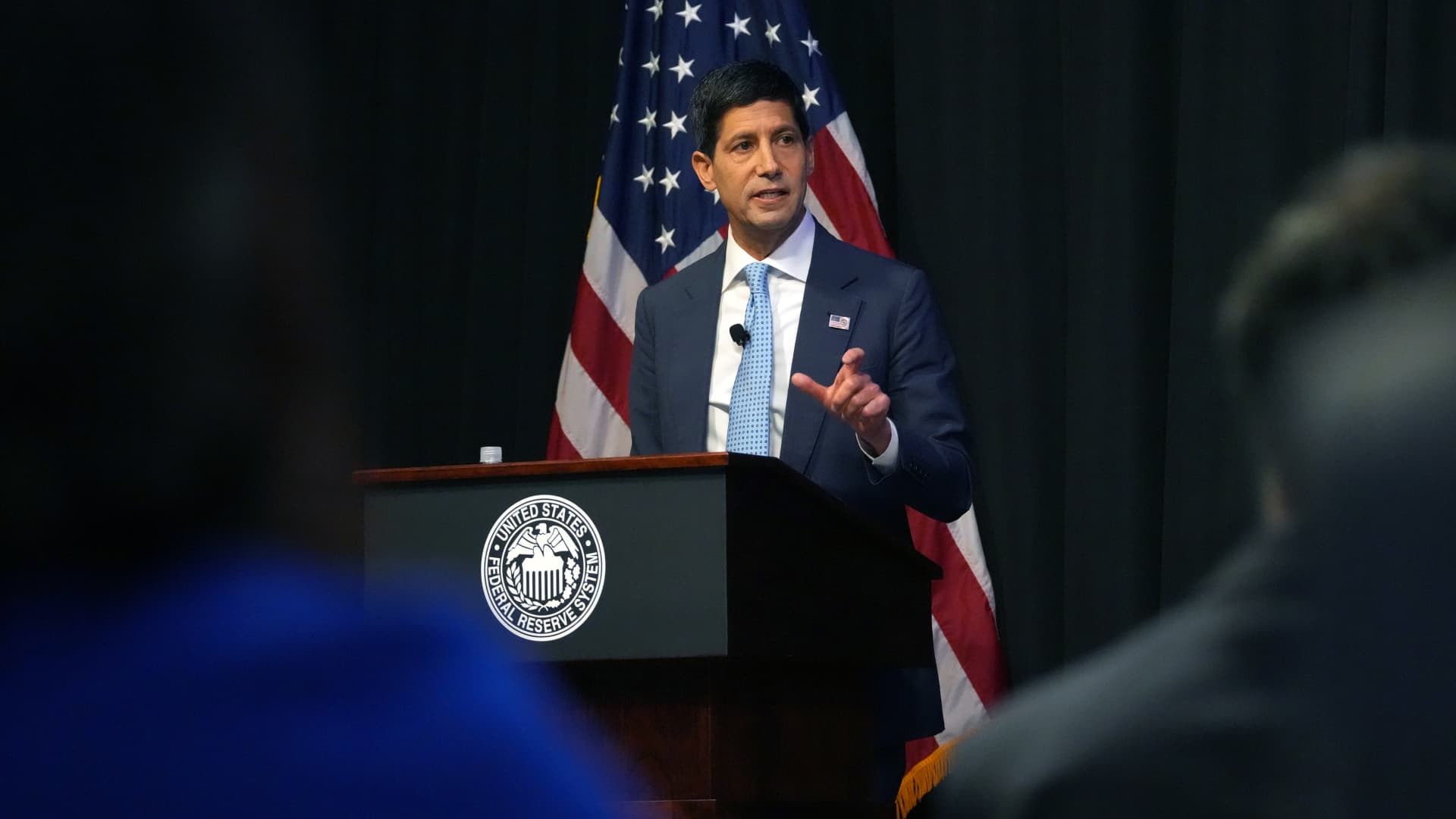

Recent discussions led by Federal Reserve Chairman Kevin Warsh highlight the rapid advancement of artificial intelligence (AI) and its potential impact on the U.S. economy. At a recent conference in San Francisco convened by Warsh, experts gathered to explore the implications of AI for employment, inflation, and monetary policy. As companies like Anthropic prepare for initial public offerings that could reshape market dynamics, the Fed faces critical questions regarding interest rates and economic stability amidst evolving technologies.
With increasing public concern regarding AI’s influence, especially related to job security, Warsh and his task force aim to navigate these intricacies while considering broader economic trends. Simultaneously, concerns are emerging from state-level legislation that may hinder the development of essential data infrastructures required to fuel AI advancements.
| Article Subheadings |
|---|
| 1) Impending Impact of AI on the U.S. Economy |
| 2) Warsh’s Concerns About Job Losses |
| 3) The Fed’s Response to Consumer Sentiment |
| 4) The AI Task Force’s Strategy and Insights |
| 5) Future Directions for Monetary Policy |
Impending Impact of AI on the U.S. Economy
As artificial intelligence technologies increasingly infiltrate various sectors, the Federal Reserve is beginning to assess the likely disruptions to the economy. According to Kevin Warsh, the U.S. has reached a pivotal moment, a so-called “hinge point” which could redefine labor dynamics, productivity, and ultimately consumer prices across the nation. At his recent conference, Warsh engaged with an array of experts to determine the broader implications of this technological evolution on economic structures.
These transformations herald potential outcomes for economic mechanics—particularly regarding interest rates and inflation. As corporations invest heavily in AI, driving economic activity, the Federal Reserve contemplates its monetary policy in response to the pace of these changes. The need for clarity on how the adoption of AI might reshape employment landscapes is becoming increasingly urgent.
Warsh’s Concerns About Job Losses
During the conference, Chairman Warsh addressed looming concerns about widespread job displacement due to AI advancements. As AI systems become increasingly capable of performing tasks traditionally assigned to human workers, there is widespread speculation that many white-collar jobs may soon face obsolescence. Despite Warsh not specifying his own views on the matter, he underlined the significance of gathering expert insights into the potential for job losses and the overall shifting landscape of the labor market.
“We are at a hinge point in the U.S. economy,”
he remarked, emphasizing that answers to pressing inquiries about the path forward will be mandatory as economic conditions evolve.
Experts gathered at the task force expressed varying perspectives: while some share Warsh’s sentiment regarding job losses, others think regulatory measures in sectors like healthcare and education might mitigate mass displacements. The ongoing debate sheds light on the complexities and uncertainties surrounding the futures of the American workforce in an AI-driven economy.
The Fed’s Response to Consumer Sentiment
The changing public perception of AI is becoming evident, especially following recent midterm elections in which numerous state-level measures aimed to curtail data center construction were approved by voters. This trend reveals growing skepticism about the impacts of AI technologies on society and the potential ramifications for employment.
Prominent figures such as former Secretary of Commerce Gina Raimondo have condemned these anti-data center measures, voicing concerns that restricting infrastructure development essential to AI will ultimately harm those who favor such regulations.
“Stopping AI would be very bad for America,”
she stated, highlighting the disconnect that might exist between immediate voter concerns and longer-term economic benefits stemming from technological advancement.
As American attitudes evolve, the Federal Reserve recognizes that consumer sentiment may influence its policy-making decisions. Balancing public interest with economic growth necessitates sensitive considerations that take into account both innovation and public acceptance.
The AI Task Force’s Strategy and Insights
At the forefront of these discussions is the AI task force that Warsh has established to bring fresh perspectives to the Fed’s policy considerations. Unlike traditional approaches that lean heavily on internal expertise, Warsh is intentionally incorporating insights from a diverse group of external experts to address the multifaceted implications of AI on productivity and labor markets.
During the conference, venture capitalist Marc Andreessen, a member of the task force, expressed optimism about AI’s potential to revolutionize various sectors but warned that excessive regulation could stunt this transformative effect. He noted that barriers, particularly in heavily regulated industries like healthcare, might hinder the displacement dynamics some experts have projected for the economy.
“To the extent our economy is a free-market economy, then maybe you could see the, let’s say, extremely rapid displacement scenarios people are talking about,”
he commented, suggesting that a balance must be struck to allow technology to flourish without jeopardizing job security.
The task force’s mandate goes beyond understanding immediate labor trends. It aims at preemptively addressing regulatory challenges while promoting economic pathways aligned with technological advancement, suggesting a need for policy reforms that embrace change rather than resist it.
Future Directions for Monetary Policy
As discussions progress, Warsh and his task force are tasked with formulating a comprehensive view regarding the future trajectory of monetary policy in light of AI’s growth. They are evaluating whether forthcoming AI advancements may lead to a scenario akin to the “China shock” experienced in the U.S. following China’s admission into the World Trade Organization. This shock resulted in significant job losses across the American manufacturing sector while simultaneously driving prices down for various goods.
The potential for a similar economic scenario looms if AI proves to be more efficient in sectors traditionally reliant on human labor, such as legal and administrative functions. Warsh intimated that as AI technology continues improving, it could lead to lower service costs, prompting broader considerations about inflation and interest rate policies from the Fed.
“Should we expect disinflation over the medium term, from what AI could do to services?”
he asked, reflecting the complexity of navigating inflationary responses in an AI-enhanced economy.
Before any changes in policy can take effect, the task force at the Fed must finalize its findings, translating them into actionable items for Warsh. Subsequently, the Fed will engage in discussions, weighing potential adjustments to existing policies and responding to AI’s evolving role in the economy.
| No. | Key Points |
|---|---|
| 1 | The Federal Reserve is assessing the potential economic impacts of artificial intelligence. |
| 2 | Chairman Kevin Warsh openly discussed the prospect of job losses due to AI during a recent conference. |
| 3 | Public sentiment regarding AI is shifting, with increasing resistance to data center developments noted in recent elections. |
| 4 | The AI task force is designed to integrate external expertise to inform Fed policies on AI. |
| 5 | Future Fed monetary policy adjustments are being considered in light of AI’s economic forecasting implications. |
Summary
The intersection of artificial intelligence and the U.S. economy presents both opportunities and challenges that the Federal Reserve must navigate carefully. With Chairman Kevin Warsh leading discussions among an advisory task force, the Fed is taking proactive steps to understand and adapt to changes prompted by AI advancements. Balancing the need for innovation with public sentiment around job security and economic growth will be crucial as the Fed contemplates future policy adjustments in response to the evolving landscape.
Frequently Asked Questions
Question: How is AI expected to impact job security in the U.S.?
AI technologies may lead to significant job displacement, particularly in white-collar roles as machines become increasingly capable of performing tasks traditionally handled by humans.
Question: What recent legislative actions reflect public concerns about AI?
Recent midterm elections saw voters enacting measures aimed at slowing down the development of data centers necessary for AI operations, illustrating a growing skepticism about the technology’s societal impacts.
Question: What is the role of the Federal Reserve’s AI task force?
The AI task force aims to gather external insights into AI’s economic implications, assisting the Federal Reserve in shaping monetary policy in light of rapidly advancing technologies.
