

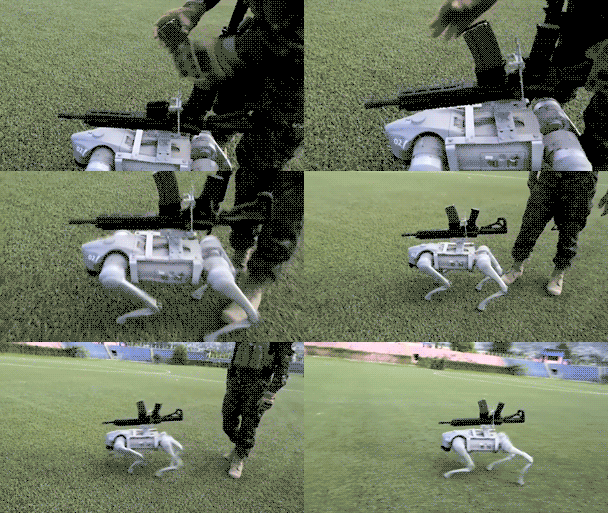

In a significant operation marking El Salvador’s expanded involvement in regional security, President Nayib Bukele has revealed the deployment of robotic dogs equipped with rifles in Haiti. This maneuver aims to reclaim the Sylvio Cator Stadium, which has been under gang control. The operation, conducted in partnership with the Haitian National Police and Armed Forces, highlights the continued challenges of gang violence in Haiti and El Salvador’s commitment to support its neighbors in restoring order.
| Article Subheadings |
|---|
| 1) Overview of the Operation in Haiti |
| 2) The Role of Robotic Technology in Military Operations |
| 3) The Current State of Gang Violence in Haiti |
| 4) El Salvador’s Ongoing Anti-Gang Efforts |
| 5) Implications for Latin American Security |
Overview of the Operation in Haiti
The recent military operation to reclaim the Sylvio Cator Stadium in Port-au-Prince, Haiti, was reported by President Nayib Bukele through a video shared on social media platforms. The operation involved a coordinated effort between the Haitian government and El Salvador, aiming to establish control over an area heavily influenced by gang activity. As part of the operation, Bukele announced that both the Haitian National Police and the Armed Forces (FAd’H) participated alongside Salvadoran Special Forces. This partnership was formalized under a bilateral agreement aimed at addressing the escalating gang violence in Haiti.
During the operation, President Bukele documented the use of robotic dogs outfitted with rifles, showcasing an innovative approach to military engagements. Although the video illustrated the robots traversing the stadium’s interior, the specifics of how they contributed to the operation remain unclear. Bukele mentioned the grim discovery of several human skulls, indicating the violent environment the operation was aimed at countering. Furthermore, the President emphasized a robust stance against gang members, urging them to vacate the area or face military confrontation.
The Role of Robotic Technology in Military Operations
Robotic technology’s integration into military operations offers a transformative approach to combating violent threats in urban environments. The deployment of robotic dogs in this particular operation reflects a trend seen globally, where innovative technological solutions are employed to augment traditional military tactics. Robotic dogs, often equipped with high-tech surveillance tools and weaponry, can operate in hazardous situations where human soldiers might be at greater risk.
These robotic units are capable of navigating complex terrains, which is particularly beneficial in densely-structured urban locales like Port-au-Prince. Their mobility allows for rapid reconnaissance and engagement, which can be crucial in swiftly addressing threats posed by gang members entrenched in fortified positions. The application of such technology also raises discussions about the future of warfare and military strategy, particularly in terms of minimizing human casualties while maximizing operational efficiency.
The Current State of Gang Violence in Haiti
Haiti is currently facing an alarming escalation of gang violence, which has severely impacted everyday life and security in the nation. The rise in gang power has led to widespread chaos, including kidnappings, extortion, and homicides, creating an environment of fear among the civilian population. The ongoing violence underscores the instability that has plagued Haiti for years, exacerbated by political turmoil, poverty, and weakened institutions.
The Sylvio Cator Stadium, targeted in the operation, became a symbol of the struggle against gang control. The presence of armed gangs has hindered efforts to restore normalcy and governance in Haiti, prompting increased calls for international assistance and intervention. Amidst this crisis, the involvement of El Salvador represents a broader regional concern for stability and security in the Caribbean and Latin America.
El Salvador’s Ongoing Anti-Gang Efforts
Since Nayib Bukele took office in 2019, combating gang violence has been a hallmark of his administration’s policy agenda. El Salvador has long grappled with a significant gang problem, most notably with groups like MS-13 and Barrio 18. Bukele’s approach combines stringent law enforcement policies with the implementation of social programs aimed at rehabilitation and prevention of gang recruitment.
The Salvadoran government’s measures include deploying military forces to assist in anti-gang operations domestically and regionally. The recent initiative in Haiti exemplifies Bukele’s commitment to not only tackling gang violence within El Salvador but also supporting neighboring nations in similar predicaments. This collaboration raises questions about the balance of regional security and the extent to which one nation can or should intervene in another’s internal conflicts.
Implications for Latin American Security
The operation involving robotic dogs and the cooperative effort between El Salvador and Haiti signifies a pivotal moment in the approach to security in Latin America. As gang violence persists as a critical issue, the success or failure of such operations could influence future strategies adopted by governments across the region. Increased reliance on technology in military operations may shift the paradigm of traditional law enforcement to more aggressive and high-tech approaches to maintaining order.
Moreover, this development may foster an environment of collaboration among Central American nations, aimed at addressing shared security threats. However, it also raises concerns regarding potential overreach, particularly if military involvement in civilian affairs becomes normalized. The delicate balance between ensuring security and respecting sovereignty will be crucial in shaping the future of regional military and diplomatic relations.
| No. | Key Points |
|---|---|
| 1 | El Salvador collaborates with Haiti to combat gang violence through military operations. |
| 2 | Robotic dogs equipped with rifles were showcased in an operation aimed at reclaiming control of a gang-occupied stadium. |
| 3 | The operation highlights the severe challenge of gang violence facing Haiti and its impact on national stability. |
| 4 | Bukele’s presidency has been marked by aggressive anti-gang policies since 2019. |
| 5 | The implications of such military involvement on regional security collaboration and potential sovereignty concerns are significant. |
Summary
The operation conducted by El Salvador and Haiti represents a bold step forward in addressing the pressing issues of gang violence in both nations. By incorporating advanced technologies such as robotic dogs into military strategies, leaders like Nayib Bukele are redefining approaches to security and law enforcement. However, the complexities surrounding sovereignty and the ethical implications of military interventions must also be weighed carefully as Latin America navigates through these turbulent waters.
Frequently Asked Questions
Question: What role did robotic dogs play in the operation?
The robotic dogs were equipped with rifles and used to assist military forces in reclaiming the Sylvio Cator Stadium from gang control. Their specific contributions during the operation remain unclear.
Question: Why is there an increase in gang violence in Haiti?
The increase in gang violence in Haiti is attributed to a combination of political instability, poverty, and weakened government institutions, leading to a power vacuum that gangs have exploited.
Question: What has been El Salvador’s approach to fighting gang violence?
El Salvador’s approach includes a combination of aggressive law enforcement, military involvement, and social programs aimed at rehabilitation to combat gang recruitment and violence.
