


Recent polling data reveals contrasting views among Americans regarding the trustworthiness of various leaders and experts in relation to public health information during a viral outbreak. While most individuals indicate a preference for medical professionals as their foremost source of information, partisan divisions are evident in the evaluations of President Donald Trump and Vice President Mike Pence. This divergence is especially pronounced among Republicans, who maintain confidence in their leadership, despite a general decline in approval ratings correlated to their handling of the pandemic.
| Article Subheadings |
|---|
| 1) Trust in Medical Professionals Remains High |
| 2) Polarization of Trump’s Approval Ratings |
| 3) State Governors Viewed More Favorably |
| 4) Partisanship Influences Trust Levels |
| 5) The Role of Media in Public Perception |
Trust in Medical Professionals Remains High
A significant majority of Americans express trust in medical professionals when it comes to obtaining accurate virus-related information. Recent surveys indicate that an impressive 84% of respondents regard health experts and physicians as reliable sources. This high level of trust spans across various demographics, including Democrats, Republicans, and Independents alike. Such consensus points to the integral role that health professionals play during public health crises, underscoring the public’s belief in science and medical expertise. This collective trust in established medical authority is pivotal as individuals navigate vital health information during troubling times.
Polarization of Trump’s Approval Ratings
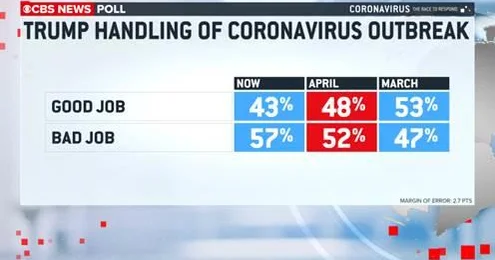
While confidence in medical advisors remains consistent, public sentiment surrounding President Trump’s handling of the outbreak has substantially declined. A recent poll indicates that only 43% of respondents view his performance favorably, marking a 5-point decrease in just three weeks and a striking 10 points lower than figures recorded back in March. This trend highlights a growing concern among Americans regarding the effectiveness of the federal response to the pandemic. Interestingly, the decline in support is particularly pronounced among political independents, with a substantial portion now labeling Trump’s management of the crisis as “very bad.” The data also reveal that Trump’s approval ratings are more polarized compared to overall evaluations of the government’s pandemic response.
State Governors Viewed More Favorably
In a stark contrast to federal ratings, governors across states are generally receiving more favorable assessments from constituents. Approximately two-thirds of surveyed individuals express confidence in their state governors, recognizing their leadership and decision-making skills during the crisis. This approval spans party lines, with both Democrats and Republicans offering similar levels of support for their local leaders. The greater trust in state governors may stem from their proximity to individuals and more direct impact on their daily lives, enhancing their perceived effectiveness during the ongoing crisis.
Partisanship Influences Trust Levels
Partisan identity has emerged as a crippling factor influencing public trust in political leaders regarding the pandemic response. While over 80% of Republicans affirm their trust in President Trump and Vice President Pence, contrasting results show that approximately 90% of Democrats do not share the same sentiment. The gap stretches further, as about two-thirds of Independents also express skepticism towards the statements made by both Trump and Pence. This partisan divide underscores the challenges faced in national communication surrounding the pandemic, with responses often reflecting deeper political allegiances rather than objective assessments of competency.
The Role of Media in Public Perception
Perceptions of media credibility are also part of the wider conversation surrounding the public’s response to the viral outbreak. Only 39% of Americans report a trust in the national media for accurate information regarding the pandemic. Interestingly, while a majority of Democrats may favor the media as a trustworthy source, the reception among Republicans is vastly different, showcasing a stark decline in media trustworthiness according to party lines. This schism can complicate public understanding and response to health information disseminated via traditional media outlets, aligning further with the overarching trends in partisan trust.
| No. | Key Points |
|---|---|
| 1 | The majority of Americans trust medical professionals for accurate virus information, with 84% expressing confidence in this group. |
| 2 | President Trump’s approval ratings concerning his handling of the outbreak are at an all-time low of 43%. |
| 3 | State governors are generally viewed more favorably than President Trump, with two-thirds of people expressing approval of their management of the situation. |
| 4 | Partisan polarization highly influences trust levels in Trump and Pence, with strong partisan divides observed in public opinion. |
| 5 | National media is trusted by only 39% of Americans, indicating a significant distrust particularly among Republican audiences. |
Summary
The current landscape of public trust regarding health information during a viral outbreak reveals significant divides in Americans’ perceptions of leadership at both federal and state levels. While medical professionals continue to receive widespread confidence and approval, President Trump’s approval ratings are faltering, primarily due to increased skepticism among independents and Democrats. In contrast, state governors enjoy higher levels of trust across party lines, emphasizing the depth of local leadership in crisis management. Overall, these dynamics outline the importance of accountability and consistent communication in times of public health emergencies.
Frequently Asked Questions
Question: Why do medical professionals hold a high level of trust among Americans?
Medical professionals are viewed as reliable sources of information during health crises due to their expertise, education, and direct experience in handling related issues. This trust is bolstered by their commitment to public health and safety.
Question: How do Americans perceive President Trump’s response to the pandemic?
Americans’ perceptions of President Trump’s response have notably declined, with only 43% approving of his performance, reflecting growing frustration and skepticism from both partisan and independent voters.
Question: What factors contribute to the varying approval ratings between state governors and the President?
State governors are often better positioned to directly impact their constituents’ lives and are frequently seen as more responsive to local needs, resulting in higher approval ratings compared to the more polarized views of federal leaders.
