

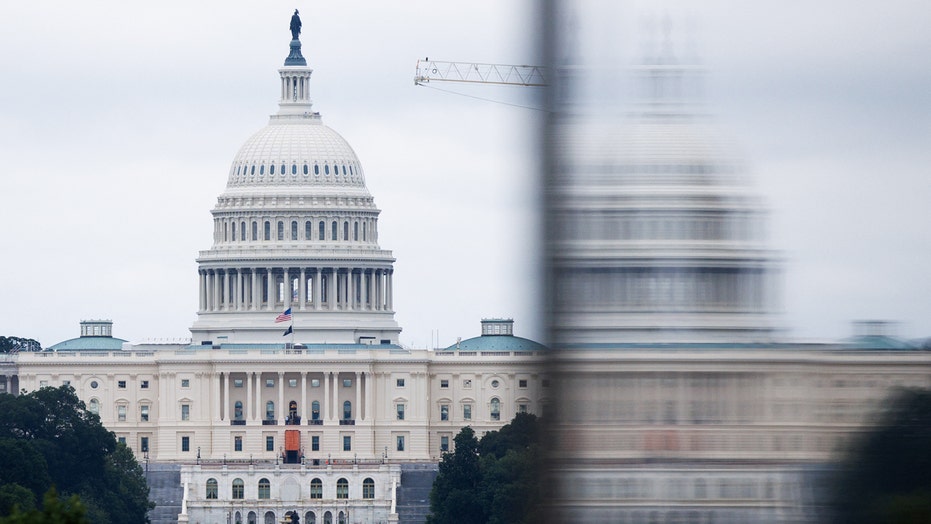

Democrats captured majorities in the House and Senate in a sweeping 2026 midterm election result, according to the supplied morning news briefing. The outcome immediately intensified political debate over President Donald Trump’s remaining term and the direction of both parties. Markets opened with mixed futures as investors assessed the election results, while several notable state-level contests produced historic outcomes. The briefing also highlighted reactions from politicians, commentators and the public, along with unrelated national and cultural stories.
The election results were presented as a major setback for Republicans and a test of the Trump administration’s agenda. President Donald Trump pledged to veto Democratic legislation he described as extreme and acknowledged that the Iran war contributed to Republican losses while defending the decision to enter the conflict. The developments are expected to influence congressional negotiations, executive policy and preparations for the 2028 presidential race.
| 1) | Democrats win control of Congress |
| 2) | Trump responds to the election setback |
| 3) | Key state races reshape the political map |
| 4) | Political and media reactions intensify |
| 5) | National, cultural and consumer stories |
Democrats win control of Congress
Democrats won House and Senate majorities in the November 2026 midterm elections, delivering a broad reversal of the congressional balance of power. The result gives Democratic lawmakers greater control over legislation, committee leadership and congressional investigations for the remainder of the current term. The briefing described the result as a blue wave and directed readers to continuing coverage of the election count and its consequences.
The shift is significant because midterm elections often serve as a referendum on the sitting president. Democratic control of both chambers is likely to make passage of the administration’s priorities more difficult and could increase partisan conflict over spending, oversight and national policy.
Trump responds to the election setback
President Donald Trump responded by promising to veto Democratic bills he considers unacceptable. He also said the war with Iran contributed to Republican losses, while maintaining that the conflict had been necessary. His comments placed foreign policy, congressional opposition and the future of his agenda at the center of the post-election debate.
The immediate political question is how the administration will work with a Congress controlled by Democrats. The result may force negotiations on legislation while encouraging both parties to define their positions ahead of the 2028 campaign. U.S. stock futures were mixed as markets weighed the implications of the election for economic policy and political stability.
“I am humbled,” Florida governor-elect Byron Donalds said in a statement highlighted in the briefing.
Key state races reshape the political map
Several state contests were identified as especially consequential. Abdul El-Sayed was reported to have dealt Republicans a major setback in Michigan after a difficult Senate race. Texas was described as flipping for Democrats for the first time in decades after a contest linked to Attorney General Ken Paxton.
In Florida, Trump-backed Byron Donalds was projected to become the state’s first Black governor. Minnesota voters reelected Ilhan Omar despite a series of scandals discussed during the campaign. Maine also saw a major change, as a Republican senator’s 30-year tenure ended with an upset victory by a fifth-generation logger. Together, the races underscored the breadth of the election’s impact across traditionally different political regions.
Political and media reactions intensify
Politicians and commentators quickly turned to social media to interpret the results. Democrats celebrated the victories, while Republicans and conservative commentators described the outcome as catastrophic. Hillary Clinton cautioned that Democrats could squander their advantage, and a political podcast team characterized the results as the end of the Trump era.
Other commentary remained divided along ideological lines. Joe Rogan argued that what he called woke ideology was replacing religion on the political left. Opinion writers including Laura Ingraham, Liz Peek and Doug Schoen offered differing assessments of the Trump agenda, the election’s biggest winners and losers, and possible consequences for the next presidential cycle.
National, cultural and consumer stories
The briefing also included stories outside electoral politics. Americans were urged to avoid a dangerous border state even after the United States lifted a shelter order. A country singer reportedly died at age 35 after doctors had given her three months to live, although the item provided no additional identifying details in the supplied text.
Other features included the discovery of an aircraft tail section miles from a crash site as investigators examined a possible mid-air breakup, the return of a discontinued Popeyes side dish, and a quiz focused on country cooking and park preservation. A podcast featuring David Marcus and Michael LaRosa was also promoted, with topics including culture, sports and comedy.
| 1 | Democrats won majorities in the House and Senate. |
| 2 | President Donald Trump pledged to veto Democratic legislation he opposes. |
| 3 | Major state races produced historic and unexpected outcomes. |
| 4 | Political commentators disagreed over what the results mean for President Trump’s agenda. |
| 5 | The wider briefing covered aviation, border safety, entertainment and consumer news. |
Summary
The 2026 midterm results transformed the balance of power in Washington and created an immediate challenge for President Donald Trump. Democratic control of Congress, combined with notable state-level victories, will shape policy negotiations and the political landscape through the remainder of the term. The outcome also gives both parties an early test of their strategies for 2028.
Frequently Asked Questions
Who won the 2026 midterm elections?
Democrats won majorities in both the House and Senate, according to the supplied briefing.
How did President Donald Trump respond?
He pledged to veto Democratic bills he considers unacceptable and said the Iran war contributed to Republican losses while defending the decision.
What other results were highlighted?
The briefing highlighted major contests in Michigan, Texas, Florida, Minnesota and Maine, including Byron Donalds’ reported historic victory in Florida.
