

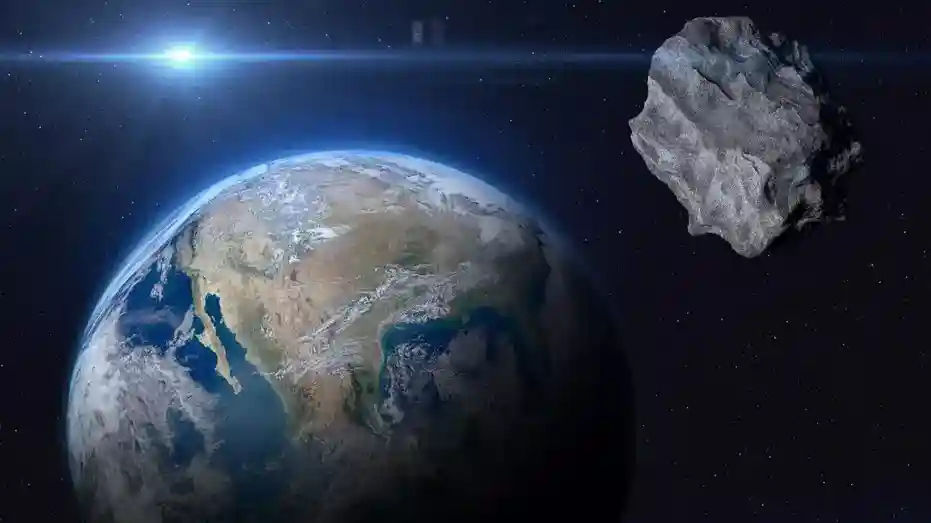

A debate over the nature of near-Earth object 1998 KY26 has intensified after Harvard astrophysicist Avi Loeb challenged NASA Administrator Jared Isaacman’s assessment that it is an asteroid. Loeb argues that the object’s apparent non-gravitational acceleration cannot be explained by a rocky body alone. His team has examined whether it could instead be the lost Soviet Phobos 1 spacecraft, although the theory remains unproven. A planned 2031 rendezvous by Japan’s Hayabusa2 mission could provide the evidence needed to resolve the question.
| 1) | The dispute over 1998 KY26 |
| 2) | Why the object’s acceleration matters |
| 3) | The case for a lost Soviet spacecraft |
| 4) | Competing natural explanations |
| 5) | How a 2031 mission could settle the mystery |
The dispute over 1998 KY26
1998 KY26 is an approximately 36-foot-wide object generally classified as a near-Earth asteroid. During a public appearance, Jared Isaacman said he had seen no evidence suggesting it was anything other than an asteroid. Avi Loeb subsequently disputed that conclusion, saying the object does not fit comfortably within the standard description of a rocky body. The disagreement centers on how scientists should interpret observations of the object as it moves through the solar system.
Why the object’s acceleration matters
Researchers have reported that 1998 KY26 appears to experience acceleration beyond what gravity alone would produce. Such an effect can have natural explanations, but it must be reconciled with the object’s observed behavior. Loeb said asteroids are rocks and therefore should not show unexplained propulsion-like movement without a physical mechanism. He also noted that the object appears highly reflective and rotates roughly once every five minutes, details that could help determine its composition and structure.
“It’s not an asteroid because 1998 KY26 appears to have non-gravitational acceleration, meaning it’s being pushed by some force other than gravity.”
The case for a lost Soviet spacecraft
Avi Loeb and his colleagues have examined whether 1998 KY26 could be Phobos 1, a Soviet spacecraft launched toward Mars in 1988. The mission lost communication after a faulty command caused the probe to shut down. Loeb’s team says the object’s trajectory resembles the path expected for the failed spacecraft and has calculated that sunlight reflecting from a spacecraft could produce a push consistent with the observed acceleration. The proposal remains a hypothesis rather than an established identification.
Competing natural explanations
Scientists have considered whether 1998 KY26 could be a dark comet, meaning a body that behaves like a comet without displaying an obvious cloud or tail. Other studies have proposed that sunlight pressure or heat radiating from the surface could account for the additional acceleration. Recent research has questioned whether the object could retain enough ice to support the dark-comet explanation. Loeb has emphasized that observers have not detected a visible tail, dust, or clear evidence of outgassing, which he says weakens the comet interpretation.
“We don’t see a cometary tail. We don’t see any evidence for outgassing around this object. That’s the puzzle.”
How a 2031 mission could settle the mystery
Japan’s Hayabusa2 spacecraft is expected to rendezvous with 1998 KY26 in 2031. A close examination or landing could reveal whether the object is rock, ice, an active natural body, or a manufactured spacecraft. Avi Loeb said the encounter could identify the object as a remnant of Soviet space history, but he also acknowledged that the theory would end if the mission found a natural rock or ice body. Direct measurements would therefore offer a decisive test of the competing explanations.
| 1 | 1998 KY26 is generally considered a near-Earth asteroid. |
|---|---|
| 2 | Its apparent non-gravitational acceleration remains under study. |
| 3 | A Harvard team has proposed that it could be the lost Phobos 1 spacecraft. |
| 4 | Dark-comet activity, sunlight pressure, and thermal radiation are among the natural explanations. |
| 5 | Hayabusa2’s planned 2031 encounter could provide a definitive answer. |
Summary
The disagreement over 1998 KY26 reflects a broader scientific effort to explain an object whose motion and appearance do not clearly match familiar categories. NASA’s current assessment remains that it is an asteroid, while Avi Loeb argues that the evidence warrants considering a spacecraft origin. Until direct observations are available, both the natural explanations and the Phobos 1 theory remain unresolved.
Frequently Asked Questions
What is 1998 KY26?
It is an approximately 36-foot-wide near-Earth object commonly classified as an asteroid.
Why does Avi Loeb question that classification?
Avi Loeb points to apparent non-gravitational acceleration and the lack of a visible cometary tail or detected outgassing.
What is the Phobos 1 theory?
The theory proposes that 1998 KY26 could be the Soviet Phobos 1 spacecraft, which lost communication during its 1988 mission to Mars.
When could the mystery be resolved?
Japan’s Hayabusa2 spacecraft is expected to rendezvous with the object in 2031, potentially allowing direct study.
