


A nationwide ground stop was initiated by the Federal Aviation Administration (FAA) on Friday afternoon, leading to significant disruptions in air travel across the United States. The stoppage began shortly after 3:30 p.m. ET and affected approximately 9,159 flights, stranding numerous passengers at airports nationwide. Preliminary investigations indicated the stoppage was due to a communication issue linked to maintenance updates by an FAA contractor.
| Article Subheadings |
|---|
| 1) Immediate Response by FAA and Government Agencies |
| 2) Investigating the Cause of the Ground Stop |
| 3) National Implications and Funding Concerns |
| 4) Recovery Efforts and Flight Cancellations |
| 5) Future Preventative Measures |
Immediate Response by FAA and Government Agencies
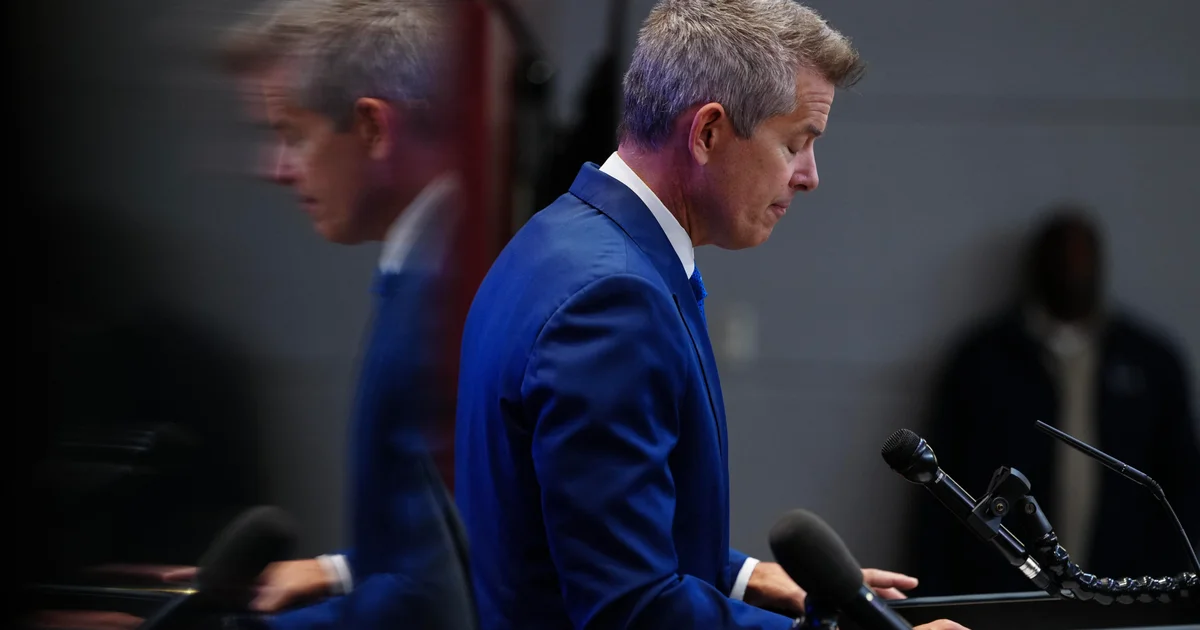
The FAA implemented a nationwide ground stop on Friday afternoon at 3:36 p.m. ET. This sudden order came while approximately 3,500 flights were already airborne, leading to a chaotic scene at various airports, with travelers facing numerous cancellations and delays. Within half an hour, key government officials—including those from the FBI, Department of Homeland Security, and the Joint Chiefs of Staff—started coordinating their responses via a multi-agency conference call. Transportation Secretary Sean Duffy announced that the grounding was necessary due to “a communication issue impacting all Air Route Traffic Control Centers,” setting off a wave of investigations into the technical hindrances affecting air traffic.
Investigating the Cause of the Ground Stop
As the initial alarm spread throughout the aviation community, the intelligence community swiftly began its own investigation to determine if the communication failure was indicative of malicious behavior. Officials combed through communication channels looking for any signs of nefarious activity but found no evidence suggesting foul play. Senior staff from the White House relayed updates to President Donald Trump, who was in an economic policy meeting at the time. The safety protocols and investigation procedures were immediately set in motion, with Duffy, Markwayne Mullin from the Department of Homeland Security, and others holding frequent discussions to ascertain the underlying issues.
National Implications and Funding Concerns
In parallel with the crisis management efforts, President Trump began reaching out to congressional leaders to advocate for increased funding for the FAA. Understanding that air traffic control requires a high level of modernization to prevent similar incidents in the future, the White House coordinated its congressional team to engage with key members about necessary investments. The significance of this dialogue also highlighted the broader implications of air travel infrastructure on national security, as failure to modernize could have cascading effects on air traffic safety.
Recovery Efforts and Flight Cancellations
While the FAA worked to identify and rectify the problem, the repercussions were felt throughout the nation. By the end of the day, the FAA reported that approximately 9,159 flights had been canceled, with an additional 7,190 delayed due to the four-hour grounding. However, it is essential to note that medical service flights continued to operate during the stoppage, ensuring that urgent healthcare needs were still met. Eventually, the issue was traced back to maintenance being performed by L3Harris Technologies, an FAA telecommunications contractor. The contractor was in the process of replacing aging copper lines with new fiber optic connections when a router malfunction occurred, prompting a flood of connection attempts that overwhelmed FAA systems.
Future Preventative Measures
The Homeland Security Council convened on Monday, inviting essential government stakeholders and outside experts to determine future steps and strategies aimed at preventing a recurrence of such a disruptive event. This interagency body plays a crucial role in coordinating national homeland security policy and reform initiatives, having been established in the post-9/11 era. As air traffic modernization efforts continue, the council’s discussions will focus on integrating more robust communication systems and protocols to enhance operational reliability across the FAA network.
| No. | Key Points |
|---|---|
| 1 | A nationwide ground stop was ordered by the FAA due to a communication issue. |
| 2 | The stoppage impacted thousands of flights and travelers across the country. |
| 3 | Government agencies coordinated quickly to address the situation. |
| 4 | The root of the problem was found to be a technical malfunction during routine maintenance. |
| 5 | Future measures are being discussed to prevent similar incidents from occurring. |
Summary
The events of Friday’s FAA ground stop underscored the critical nature of air traffic management and the importance of modernizing communication systems to ensure operational safety. The disruption not only resulted in significant logistical challenges for travelers but also prompted a comprehensive review of infrastructure needs at the federal level. The strategic dialogues taking place among officials and stakeholders signify an urgent need for systemic changes that will support the reliability of air travel in the years to come.
Frequently Asked Questions
Question: What triggered the FAA to issue a ground stop?
The FAA issued a ground stop due to a communication issue affecting all Air Route Traffic Control Centers, which necessitated immediate action to safeguard air travel.
Question: How many flights were impacted by the ground stop?
Approximately 9,159 flights were canceled, and an additional 7,190 flights were delayed as a result of the ground stop.
Question: What were the immediate actions taken by the government?
Key government officials, including the FBI and Department of Transportation, coordinated rapidly to address the situation and investigate the cause of the ground stop, ensuring safety protocols were followed.
