

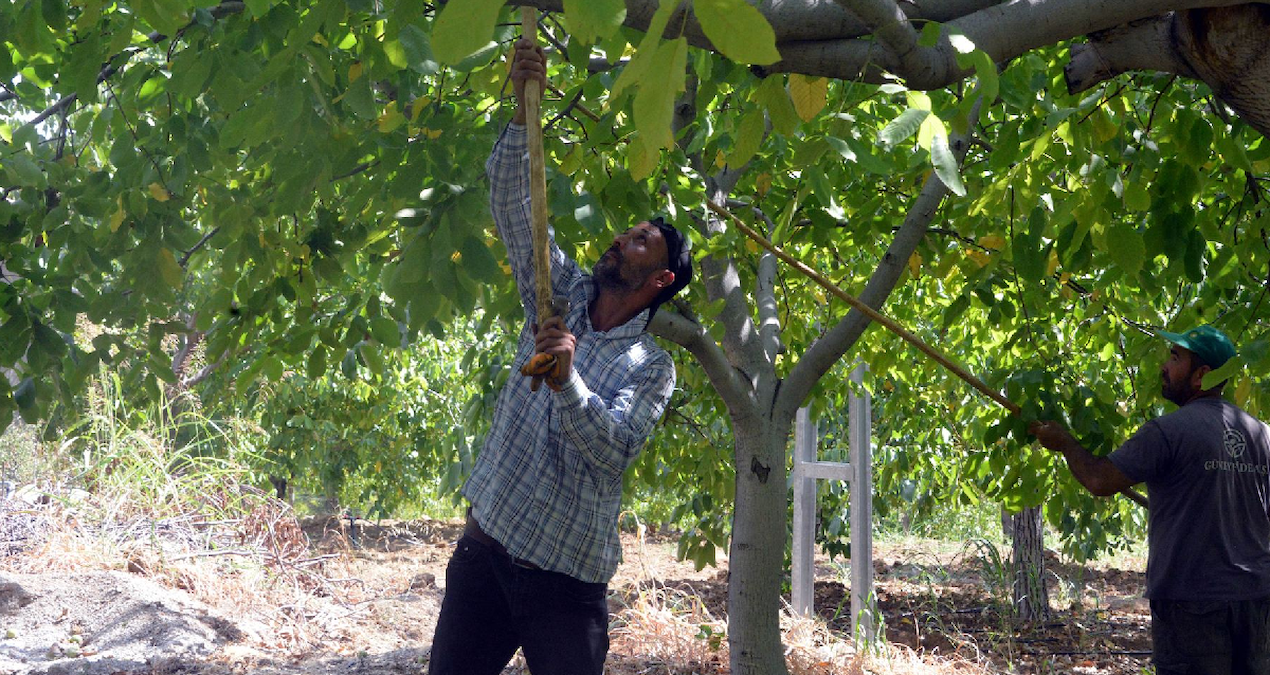

The walnut harvest season has commenced in the Çağlayancerit district of Kahramanmaraş, bringing renewed optimism to local producers after a challenging year marked by frost damage. This year’s harvest is expected to yield around 8,000 tons of walnuts, following a complete failure of production last year. With the Çağlayancerit walnut now officially recognized with geographical indication status by the European Union, farmers are keen to promote the unique qualities of their crop while navigating the challenges posed by imported walnuts.
| Article Subheadings |
|---|
| 1) The Significance of Walnut Harvest in Çağlayancerit |
| 2) Steps in the Harvesting Process |
| 3) Market Dynamics: Local vs. Imported Walnuts |
| 4) Impact on Seasonal Workers |
| 5) Future Prospects for Walnut Production |
The Significance of Walnut Harvest in Çağlayancerit
The harvest period for walnuts is more than just a routine agricultural season in the Çağlayancerit district; it is a crucial economic event for local farmers. Walnuts are a significant income source in the region, especially after facing a devastating loss last year due to frost, which left producers with no crop to sell. According to local agricultural authorities, the primary focus is now on the high quality of this year’s yield, which is expected to bolster the local economy and provide livelihoods for many families.
Officials estimate that the total production could reach up to 8,000 tons this year, provided that there are no unforeseen weather events. The regional authorities have confirmed that there are approximately 800,000 walnut trees cultivated locally, each offering the potential for fruitful returns. The President of the Çağlayancerit Chamber of Agriculture, Ömer Çedene, emphasized the uniqueness of Αυτοί walnuts, which have gained recognition due to their distinct taste and quality. Such recognition could improve the market position of Çağlayancerit walnuts compared to imports.
Steps in the Harvesting Process
The harvesting process for walnuts is labor-intensive and involves several meticulous steps. Workers, colloquially known as “crackers,” use long sticks to knock walnuts down from branches. This technique is essential for ensuring that the fruits are harvested efficiently without damaging the trees. Once the walnuts drop, they are carefully collected and transported to processing and packaging facilities. These facilities play a vital role in preparing the nuts for market, ensuring that the high-quality standards expected of Çağlayancerit walnuts are met.
In addition to basic harvesting methods, the local farmers have invested in modern facilities for cracking and processing the nuts. High standards in processing are crucial as they directly affect the walnuts’ taste and marketability. The processed walnuts are then packaged and shipped to various markets, contributing significantly to the local and national economy.
Market Dynamics: Local vs. Imported Walnuts
As the walnut harvesting season progresses, there are growing concerns among local producers regarding the competition from imported walnuts. Ömer Çedene pointed out that traders are currently holding off on making commitments in the local walnut market as they are awaiting the arrival of imported nuts. This uncertainty could significantly impact local producers who rely heavily on sales of their high-quality walnuts.
Chedene added that if imported walnuts enter the market while local stocks are still available, farmers could suffer financially. They advocate for a fair market that allows local walnuts to be sold out before imports are introduced to prevent local farmers from becoming collateral damage in a rapidly changing market landscape.
Impact on Seasonal Workers
The walnut harvest season is critical not just for the producers but also for seasonal workers who depend on this timeframe to earn a livelihood. According to Mehmet Sürmen, a local producer, the harvest period is generally very busy, lasting between 20 to 25 days. Seasonal workers play an essential role in facilitating the harvest process, and their income during this season often supports them for the entire year.
Seasonal worker Fatih Çekirise explained that the daily wage for walnut pickers is approximately 5,000 liras, while those who assist in the cracking process earn around 1,400 liras. Given the intensity of work over this short harvest period, a diligent worker can earn between 70,000 to 80,000 liras, which is vital economic support for many families in the area.
Future Prospects for Walnut Production
Looking ahead, the future of walnut production in Çağlayancerit appears promising, provided that the weather conditions remain favorable and no unexpected agricultural disasters occur. Officials have projected that if production continues to recover, it could eventually reach 12,000 tons as younger trees enter their productive years. The geographical indication status granted by the European Union is expected to play a significant role in boosting sales and maintaining a strong market identity for Çağlayancerit walnuts.
The farmers are actively working on promoting their unique walnuts, which differ significantly from other varieties in taste, size, and aroma. The hope is that through increased awareness and branding, local producers can secure a better market position and reinforce the value of their crops against imported alternatives. The success and sustainability of the walnut industry in this region rely heavily on collective efforts to navigate the current challenges while capitalizing on the unique offerings of the Çağlayancerit walnut.
| No. | Key Points |
|---|---|
| 1 | The walnut harvest in Çağlayancerit has commenced, promising an economic boost after last year’s frost damage. |
| 2 | Approximately 8,000 tons of walnuts are expected to be harvested this year, with total production aiming for 12,000 tons in the future. |
| 3 | Local farmers express concerns over the introduction of imported walnuts, fearing an adverse impact on their livelihoods. |
| 4 | Seasonal workers play a crucial role in the harvest and can earn substantial wages during the harvest period. |
| 5 | Geographical indication status for Çağlayancerit walnuts could enhance their market position and brand identity. |
Summary
The walnut harvest in the Çağlayancerit district represents not just an agricultural event but a vital economic catalyst for the community. With the potential for increased production and the protection offered by geographical indication status, local farmers are hopeful for a prosperous season. However, concerns regarding imported walnuts highlight the need for policy interventions to protect local producers. The dynamics of the walnut market, coupled with the contributions of seasonal workers, create a complex yet crucial framework for the region’s agricultural identity moving forward.
Frequently Asked Questions
Question: What is the significance of geographical indication for Çağlayancerit walnuts?
Geographical indication helps in protecting the unique qualities of Çağlayancerit walnuts, ensuring that they stand out in the market due to their specific taste, size, and aroma associated with the region.
Question: How can seasonal workers benefit from the walnut harvest season?
Seasonal workers benefit from the walnut harvest season as it provides them with a source of income, with the potential to earn between 70,000 to 80,000 liras for their efforts over a few weeks of intensive work.
Question: What challenges do local producers face from imported walnuts?
Local producers face the challenge of competing with imported walnuts, which can disrupt local market prices and lead to financial losses for farmers if imports are introduced before locally harvested walnuts are sold out.
