

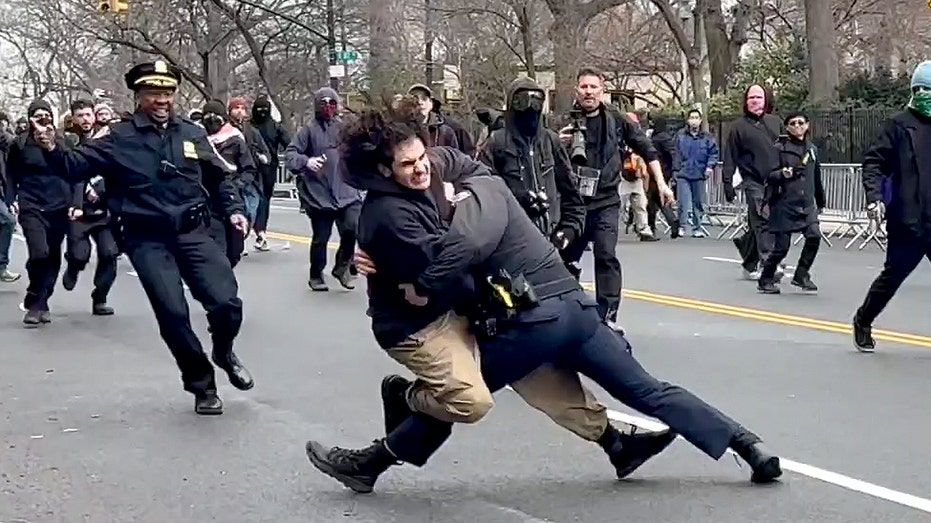

New York City Mayor Zohran Mamdani is dissolving the NYPD’s Strategic Response Group, an elite unit used for crowd control, rapid deployment and major security incidents. The decision follows criticism of the unit’s handling of protests, including demonstrations after George Floyd‘s death and protests involving immigration enforcement and Israel’s war with Hamas. Critics warn that removing a highly visible tactical presence could weaken deterrence at large public events and leave officers less prepared for sudden attacks. The mayor plans to replace the unit with civilian de-escalation staff, specially trained officers and a reorganized patrol division by spring 2027.
| 1) | Mamdani announces the Strategic Response Group’s dissolution |
| 2) | The unit’s record includes protests and critical threats |
| 3) | Replacement programs will divide civilian and police duties |
| 4) | Critics cite deterrence and response risks |
| 5) | The timing leaves major upcoming events unchanged |
Mamdani announces the Strategic Response Group’s dissolution
Zohran Mamdani announced the decision at a briefing early Monday, saying New Yorkers exercising their constitutional right to protest should not receive the same police response as a terrorism threat. He said the city would establish a civilian-led approach centered on dialogue, engagement and de-escalation. The move fulfills a campaign position tied to the unit’s role in managing organized demonstrations and riots.
The Strategic Response Group has been a specialized NYPD unit deployed at large public gatherings across New York City. Its responsibilities included crowd management, rapid mobilization and security support during events where a serious threat could develop quickly.
The unit’s record includes protests and critical threats
The SRG drew criticism for its involvement in protests following George Floyd‘s death in 2020, including an incident involving the kettling tactic, in which officers surround and restrict the movement of demonstrators. A related lawsuit cost city taxpayers millions. Some protests during that period also involved rioting, looting and vandalism, with nationwide damage estimated at $1 billion to $2 billion.
The unit also responded to demonstrations at Columbia University’s Hamilton Hall and to protests involving Immigration and Customs Enforcement. Its duties extended beyond protests. Officers helped search a Manhattan office building floor by floor after a 2025 mass shooting that killed four people, including the gunman, at a building housing the NFL’s headquarters.
In March 2026, the SRG responded to an alleged bombing attempt outside Gracie Mansion. Federal prosecutors charged Emir Balat and Ibrahim Kayumi, who were accused of throwing improvised explosive devices toward protesters and police. The devices failed to detonate, and NYPD Chief Aaron Edwards and Sgt. Luis Navarro tackled the suspects.
Replacement programs will divide civilian and police duties
The administration plans to introduce several programs by spring 2027. The unarmed Community Dialogue and De-escalation Division will work with protesters and other members of the public but will not have arrest authority.
A new First Amendment Support Team will include 30 uniformed officers trained in communication and de-escalation. A separate Patrol Support Division will consist of officers trained in crowd control who will spend most of their time on regular patrol assignments. Counterterrorism responsibilities will be consolidated within the NYPD Intelligence and Counterterrorism Bureau.
Critics cite deterrence and response risks
Retired FBI supervisory special agent James Gagliano said the SRG was designed as a highly mobile and well-equipped unit comparable to a senior SWAT team, while maintaining a public-facing role that differed from the NYPD’s Emergency Services Unit. He argued that uniformed officers positioned near large events provided a visible deterrent and could move quickly when necessary.
“The Strategic Response Group was a deterrent, and it probably caused some people to decide, ‘Yeah, I’m not gonna try that. I’m not gonna do that.’”
Vincent J. Vallelong, president of the NYPD Sergeants Benevolent Association, also criticized the change. Referring to the Gracie Mansion incident, he said unarmed civilians could not talk a determined attacker out of detonating a bomb and warned that violent agitators could infiltrate peaceful demonstrations.
The timing leaves major upcoming events unchanged
The restructuring is not scheduled to take effect until spring 2027, so the 100th Macy’s Thanksgiving Day Parade and the New Year’s ball drop will not be affected by the immediate transition. The SRG has traditionally supported these events, as well as parades and other gatherings that draw large crowds.
NYPD Commissioner Jessica Tisch said the restructuring would not diminish the department’s ability to protect New Yorkers or leave officers without the resources needed to confront a serious threat. The competing positions reflect the central issue in the overhaul: how to reduce confrontational protest policing while preserving a rapid response capability for terrorism, violence and other emergencies.
| Number | Key Point |
|---|---|
| 1 | The NYPD’s Strategic Response Group is being dissolved. |
| 2 | The unit handled protests, major events and emergency responses. |
| 3 | Replacement programs will combine civilian engagement with specialized police teams. |
| 4 | Critics fear the change could reduce deterrence against violent attacks. |
Summary
New York City’s planned dissolution of the Strategic Response Group changes how the city intends to manage protests, large gatherings and rapid security threats. The administration emphasizes civilian dialogue and de-escalation, while police representatives and security experts stress the value of visible officers trained to respond quickly. The effectiveness of the new structure will depend on how clearly civilian responsibilities are separated from police response duties and whether the city retains sufficient capacity for serious threats.
Frequently Asked Questions
Why is New York dissolving the Strategic Response Group?
Mayor Zohran Mamdani said the unit’s protest response did not reflect the city’s goal of using dialogue, engagement and de-escalation for constitutional demonstrations.
What will replace the unit?
The planned replacement includes an unarmed Community Dialogue and De-escalation Division, a 30-officer First Amendment Support Team and a Patrol Support Division. Counterterrorism duties will move to the NYPD Intelligence and Counterterrorism Bureau.
Will upcoming major events be affected?
The changes are not scheduled to begin until spring 2027, so the 100th Macy’s Thanksgiving Day Parade and the New Year’s ball drop are not expected to be affected by the immediate restructuring.
