

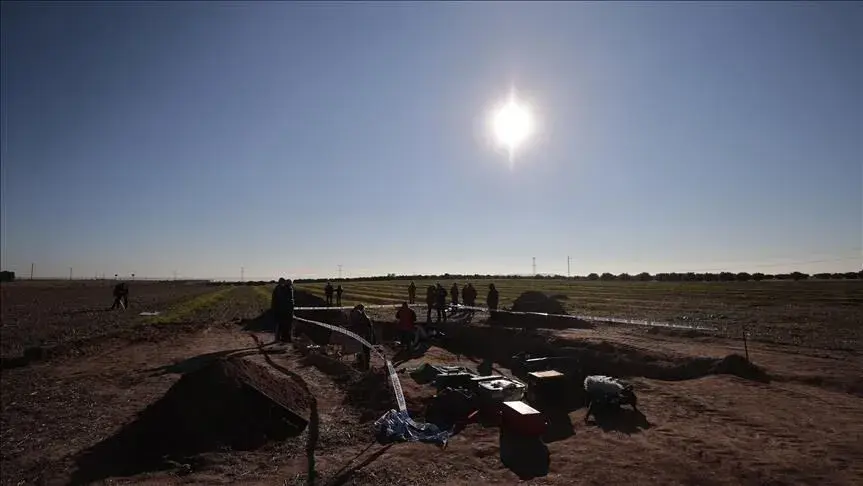

In Spain, a nation grappling with the spectral remnants of its tumultuous 20th-century past, the legacy of the Spanish Civil War (1936-1939) and General Francisco Franco’s subsequent dictatorship (1939-1975) continues to ignite fierce debates. While recent efforts have aimed to confront the atrocities committed during Franco’s regime, an intricate interplay of memory, justice, and political polarization defines the current landscape. This article explores the enduring impact of Francoism, the struggle for historical memory, and the complex legislative responses aimed at reconciling the past with the present.
| Article Subheadings |
|---|
| 1) Understanding the Spanish Civil War and Franco’s Rise to Power |
| 2) The Nature and Consequences of Franco’s Dictatorship |
| 3) The Role of the Amnesty Law in Spain’s Political Transition |
| 4) Legislative Efforts Toward Historical Justice |
| 5) Current Political Climate and Commemorative Initiatives |
Understanding the Spanish Civil War and Franco’s Rise to Power
The Spanish Civil War was a pivotal moment in the nation’s history, serving as a dark precursor to the dictatorship that followed. The conflict emerged against a backdrop of escalating political unrest and ideological factions vying for power. Who were the key players? The war featured the Republicans, who consisted of leftist, socialist, and anarchist groups, against the Nationalists led by Francisco Franco. This bloody struggle, marked by intense violence and international involvement, erupted in 1936 and lasted until 1939, culminating in a decisive victory for Franco’s forces.
What fueled this war were deeply entrenched societal divisions surrounding land reform and workers’ rights, alongside significant cultural and political polarization. The Nationalists were bolstered by military and logistical support from Nazi Germany and Fascist Italy, while the Republicans received limited aid from the Soviet Union, complicating the political landscape. By 1939, Franco’s victory was secured, leading to decades of autocratic rule.
Where did this conflict take place? Throughout Spain, battle lines were drawn in diverse regions, leading to widespread devastation. The war saw unspeakable casualties, estimated at hundreds of thousands of lives lost. Thus, Franco’s ascendance to power not only marked the end of the war but also initiated an era characterized by oppressive governance and the systematic dismantling of democratic frameworks.
The Nature and Consequences of Franco’s Dictatorship
With Franco’s assumption of power in 1939, Spain transitioned into a phase of profound authoritarianism. Franco, a staunch nationalist, employed terror, corruption, and censorship to quell dissent. His regime has been described as one of the most oppressive in contemporary history, curtailing freedoms and exiling thousands. A significant aspect of his rule involved the systematic persecution of political opponents, amounting to approximately 150,000 assassinations and the disappearance of 115,000 to 130,000 individuals deemed as threats to the regime.
How did Franco maintain control? The regime engaged in brutal tactics, including widespread torture and imprisonment alongside enforced disappearances. Additionally, the regime’s ideological foundation was rooted in strong Catholic values, which promoted a view of nationalism that vilified liberalism, socialism, and communism. An estimated 30,000 children were stolen from their parents during this period—a legacy that continues to resonate within families today.
As the regime entrenched itself, its violent legacy became a defining feature of Spain’s societal landscape, fostering themes of trauma that permeate political discourse and cultural memory. The ramifications of this repressive governance extended beyond Franco’s death in 1975, leaving a complicated legacy that spurred both reflection and contention in subsequent generations.
The Role of the Amnesty Law in Spain’s Political Transition
Following Franco’s demise, Spain entered a critical period of transition toward democracy, spearheaded by King Juan Carlos and prominent political leaders. A significant legislative milestone during this period was the enactment of the 1977 Amnesty Law, which sought to facilitate a smooth shift into democratic governance. Who benefited from this law? It provided amnesty for political crimes committed during Franco’s rule, effectively absolving state officials and security forces from accountability for historical injustices.
While proponents argued it was necessary for maintaining peace, critics lamented its implications for justice. The law resulted in a landscape where victims of Francoist violence continued to endure an absence of recognition and accountability. The Amnesty Law engendered what is now referred to as the “Pact of Forgetting,” a social contract between political factions that discouraged confrontation with the past. This pact facilitated a veneer of stability but left many unresolved grievances and a collective amnesia about historical atrocities.
Today, this agreement is subject to sharp criticism, particularly among sociopolitical movements advocating for justice and remembrance. The overwhelming silence surrounding Francoist crimes and the State’s reluctance to address these grievances intensified calls for truth and accountability, particularly from the descendants of victims who seek to rectify the historical narrative.
Legislative Efforts Toward Historical Justice
The pursuit of historical memory in Spain has gained momentum since the early 2000s, propelled by grassroots movements and a desire for accountability. A notable development was the introduction of the Historical Memory Act of 2007, aiming to address the needs of victims by officially recognizing them and advocating for the exhumation of mass graves. However, this legislation faced significant hurdles, as it delegated the responsibilities of exhumation to activist associations without clear national protocols, leading to fragmented and inconsistent efforts.
Legal initiatives gained traction, with various legal avenues pursued to investigate Franco’s crimes and repeal the amnesty law—supported by international human rights organizations. Although these efforts have not achieved substantial victories, they have amplified the voices advocating for justice, drawing attention to the persistent obstacles victims encounter in their quest for truth and reparation. The recent Democratic Memory Law of 2022 seeks to further clarify state responsibilities regarding the identification of mass graves and the acknowledgment of Francoist court sentences’ illegality.
Despite these advancements, significant gaps remain. The legislation fails to eliminate the long-standing legal and institutional barriers that have hindered successful prosecutions of human rights violations linked to Franco’s regime. Key organizations, such as the World Organisation Against Torture, continue to push for the repeal of the Amnesty Law and for Spain to fulfill its obligations toward victims’ rights, stressing that acts of torture and enforced disappearance must never be subject to amnesty.
Current Political Climate and Commemorative Initiatives
Amidst ongoing debates about historical memory, Spain’s political climate remains polarized, particularly concerning how Franco’s dictatorship should be commemorated. In early 2025, Socialist Prime Minister Pedro Sánchez announced significant plans to dedicate the year to acknowledging the impact of Franco’s regime, highlighting a strong inclination to address the wounds of the past. His proposed initiatives include around 100 commemorative events across the country, aimed at fostering dialogue and remembrance.
However, these initiatives have not been universally embraced. The conservative Popular Party (PP) and the far-right Vox party have labeled these commemorative efforts as divisive and politically motivated. Vox’s vehement criticism described the initiative as a form of “necrophilia,” accusing Sánchez of perpetuating division. The contrasting perspectives emphasize the deep societal divide—one that reflects a historical reluctance to confront the past openly and factually.
Exhumation efforts and legal initiatives concerning Francoist victimization are complex and multifaceted, affording a rich area for further study. Contemporary discussions surrounding these topics illustrate the challenges of reconciling a painful history with a modern democratic identity. As Spain navigates this fraught heritage, the tension between remembrance and resentment continues to define its trajectory.
| No. | Key Points |
|---|---|
| 1 | The Spanish Civil War (1936-1939) was a conflict between the Republican government and Nationalist forces led by Francisco Franco. |
| 2 | Franco’s four-decade dictatorship was marked by widespread persecution, violence, and repression of dissent. |
| 3 | The 1977 Amnesty Law facilitated Spain’s transition to democracy but simultaneously granted impunity for human rights abuses committed during Franco’s regime. |
| 4 | The Historical Memory Act of 2007 and the Democratic Memory Law of 2022 represent steps toward acknowledging and addressing Francoist-era crimes. |
| 5 | Current political initiatives surrounding Franco’s legacy are met with significant controversy and reflect deep societal divisions in Spain. |
Summary
The complexities of Spain’s relationship with its past, particularly regarding the legacy of Franco’s dictatorship, continue to influence contemporary society and politics. Despite legislative progress and increasing public awareness, the battle for historical memory is far from settled. As the nation moves forward, the lingering effects of historical denialism and the demand for justice remain at the forefront of both political discourse and collective conscience.
Frequently Asked Questions
Question: What was the main cause of the Spanish Civil War?
The Spanish Civil War was primarily caused by political polarization and social unrest, with conservative and progressive factions clashing over issues such as land reform, secularism, and overall governance.
Question: Why is the 1977 Amnesty Law controversial?
The 1977 Amnesty Law is controversial because it granted legal immunity to those involved in human rights abuses during Franco’s dictatorship, impeding the pursuit of justice for the victims.
Question: What are some recent initiatives addressing Franco’s legacy?
Recent initiatives include the Democratic Memory Law of 2022, which aims to officially recognize Francoist court sentences as illegal and expand the state’s role in locating mass graves of Civil War victims.
