

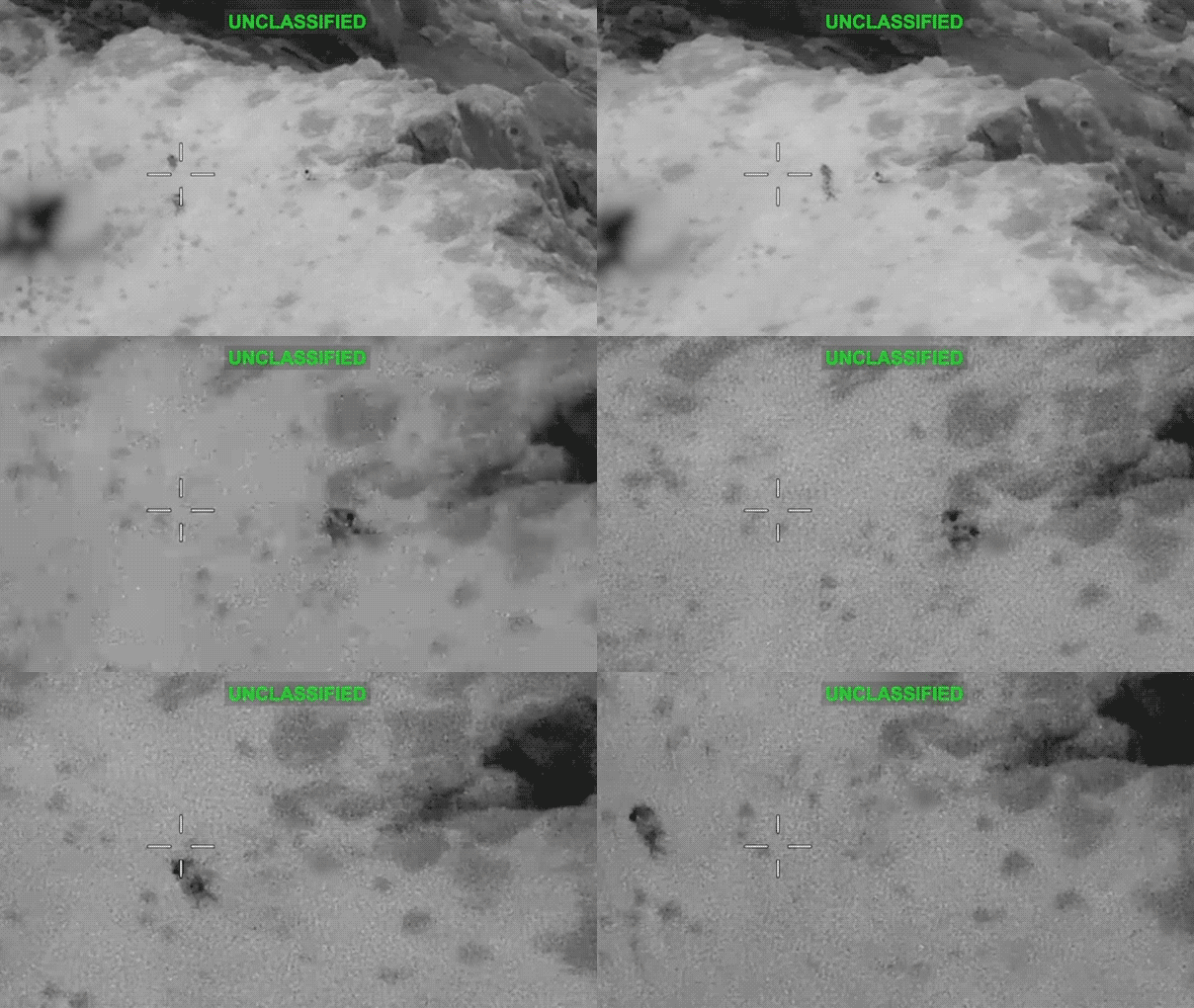

The U.S. military has recently released dramatic footage of a significant combat search-and-rescue operation that unfolded in April, aimed at rescuing two airmen from a downed F-15E Strike Eagle in Iran. The video highlights the intense reality of this daring mission, in which elite U.S. Air Force pararescue operators worked tirelessly to locate and retrieve the stranded airmen, one of whom suffered severe injuries during the incident. As the details of this high-stakes operation emerge, the bravery and coordination of American forces showcase their commitment to successfully complete the mission amid rapidly evolving threats.
| Article Subheadings |
|---|
| 1) Overview of the Rescue Operation |
| 2) The Challenges Faced by the Stranded Airmen |
| 3) The Role of Technological Assistance |
| 4) Ground Forces and Their Importance |
| 5) Conclusion of the Operation and Its Implications |
Overview of the Rescue Operation
In April, the U.S. military launched a rescue operation that became one of the largest of its kind in modern history. The operation commenced after an F-15E Strike Eagle, known by its call sign Dude 44, was shot down over Iranian territory by a shoulder-fired missile. The incident left the two-man crew, pilot Dude44 Alpha and weapons systems officer Dude44 Bravo, ejected but separated as they plummeted to the ground.
Dude44 Alpha was successfully rescued in a little over six hours, but Dude44 Bravo faced a much more perilous situation due to a malfunctioning parachute, which resulted in a hard landing and multiple severe injuries. This triggered an extensive and complex search and rescue operation involving hundreds of service members on land and in the air, reflecting the U.S. military’s capacity to coordinate massive, multi-faceted missions under extreme duress.
The Challenges Faced by the Stranded Airmen
Following their ejection from the aircraft, the two airmen faced immediate challenges as they navigated the terrain of Iran. While Dude44 Alpha managed to evade capture and was extracted within hours, Bravo’s situation was dire. After his hard landing, he sustained significant injuries including a broken back, arm, and shoulder, critically limiting his mobility. Despite these obstacles, he made the decision to move away from his landing site, instinctively climbing toward higher ground where he hoped to attract rescuers’ attention.
His efforts to ascend a rugged mountain ridgeline, reaching approximately 7,000 feet in elevation, exemplified the desperate measures taken to survive. For nearly two days, with daylight revealing the desert valley and steep cliffs around him, Bravo remained resilient, navigating the harsh terrain while American forces worked tirelessly to locate him.
The Role of Technological Assistance
During the multifaceted rescue effort, advanced technological systems played a crucial role in effectively coordinating search and rescue operations. U.S. military helicopters and drones were deployed for both reconnaissance and active combat support, targeting nearby Iranian Revolutionary Guard forces that posed a threat to the stranded airmen. The real-time footage taken during the operation provided key intel that proved vital for both the location of Bravo and the safety of the rescue teams.
The video recordings revealed the strategic airstrikes conducted by American bombers and drones against enemy positions, effectively neutralizing potential threats that jeopardized the safety of the team attempting the rescue. This integration of technology not only aided in the rescue mission but also demonstrated the U.S. military’s commitment to preserving the lives of its personnel even in clandestine missions.
Ground Forces and Their Importance
The April mission represented a significant operation for U.S. ground forces, as it marked the first time since 1980 that American troops were deployed on Iranian soil. Following the location of Bravo, an elite group of pararescue operators, commonly referred to as PJs, initiated their critical descent onto the ridgeline. This unit was instrumental in providing immediate medical assistance and protection against possible Iranian forces in pursuit of the American airmen.
As the operation unfolded, the extraction phase was not without its complications. The landing gear of the rescue aircraft became ensnared in the desert sand, leaving Bravo and numerous support personnel stranded temporarily. The rapid adaptability and problem-solving of the ground crew highlight the dedication and expertise that define U.S. military elite units, ultimately leading to a successful extraction of the airman after considerable challenges.
Conclusion of the Operation and Its Implications
Approximately 50 hours elapsed from the time Dude44 was shot down to the successful rescue of Dude44 Bravo, a mission concluded dramatically on Easter Sunday at dawn. This operation not only embodied the commitment of the U.S. military to uphold its responsibilities in protecting its personnel but also served as a stark reminder of the high stakes involved in military engagements in hostile territories.
The implications of this operation could influence future U.S. military tactics and decisions in the Middle East, shedding light on the need for more comprehensive strategies to navigate complex regional dynamics. As crises arise in conflict zones, the lessons learned from the challenges of this mission will inform the Pentagon’s operations and ensure that American forces are adequately prepared to respond effectively in similar situations in the future.
| No. | Key Points |
|---|---|
| 1 | The rescue operation marked one of the largest combat search-and-rescue missions in U.S. military history. |
| 2 | Dude44 Bravo faced severe injuries and navigated treacherous terrain while separated from his fellow crew member. |
| 3 | Advanced technology played a critical role in the operation, aiding in reconnaissance and direct combat support. |
| 4 | The involvement of ground forces marked the first American military presence in Iran since 1980. |
| 5 | The successful rescue operation highlights the U.S. military’s commitment to safeguarding personnel under duress. |
Summary
The recent U.S. military operation to rescue Dude44 Bravo underscores not only the extraordinary challenges faced in combat rescue missions but also the importance of strategic planning, coordination, and technological advancements. As American forces engage in complex maneuvers in hostile territories, the lessons gleaned from this significant operation will undoubtedly shape the future of military operations and the broader security landscape in the region.
Frequently Asked Questions
Question: What was the reason for the F-15E Strike Eagle’s shot down?
The F-15E Strike Eagle, known as Dude 44, was shot down by an Iranian shoulder-fired missile while on a combat mission over Iranian territory, prompting an urgent rescue operation.
Question: How long did it take for Dude44 Bravo to be rescued?
Dude44 Bravo was stranded for approximately 50 hours before U.S. forces successfully conducted a rescue operation on Easter Sunday.
Question: What kind of support did technology provide in the rescue mission?
Advanced technology, including drones and bombers, was employed during the mission to locate Bravo and neutralize potential threats, enhancing the safety of the rescue operations.
