

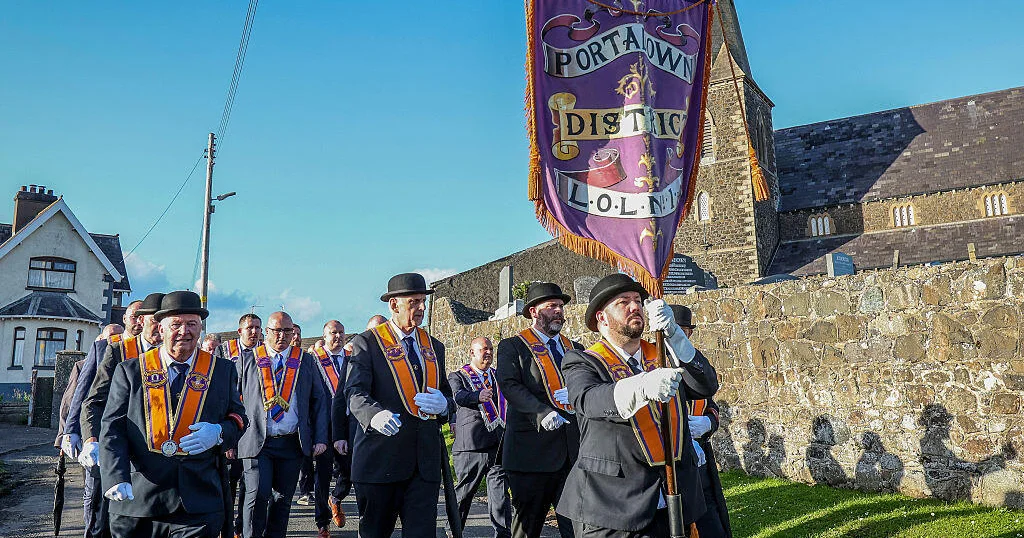

Tensions escalated in Northern Ireland’s Portadown on Sunday as a contested parade sparked massive protests. Thousands of demonstrators, many with their faces covered, blocked the parade route, which a recent High Court ruling had permitted. Key political figures, including Sinn Féin President Mary Lou McDonald and First Minister Michelle O’Neill, joined the protesters, creating a charged environment reminiscent of the region’s tumultuous past.
| Article Subheadings |
|---|
| 1) Background of the Controversial Parade |
| 2) Key Figures and Their Responses |
| 3) Historical Context of the Conflict |
| 4) Calls for Calm Amidst Tensions |
| 5) Significance of the Events Going Forward |
Background of the Controversial Parade
The parade that prompted this unrest is organized by the Orange Order, a fraternal organization with roots in Northern Ireland’s Protestant community. It celebrates Protestant heritage and has scheduled its procession to pass through Garvaghy Road, an area historically associated with severe tensions between the Protestant unionist community and the Catholic nationalist community. The local court decision, made in the early hours of Sunday morning, just before the planned parade, had granted official permission for the march, igniting considerable backlash among local community members who view the event as provocative.
This year’s parade is notably significant, as it marks a historic moment; it is the first time in nearly three decades that the Orange Order has attempted to accomplish this route. The days leading up to the event were filled with uncertainty, and many perceived the legal ruling as an affront to many in the community. As a result, images of protesters gathering and forming human barricades flooded the media, reflecting widespread discontent among the populace.
Key Figures and Their Responses
In response to the unfolding events, First Minister Michelle O’Neill took a prominent stance by actively participating in the peaceful protests, urging the crowd to remain steadfast until midnight. Her presence has sparked considerable discourse, particularly as she leads Sinn Féin, a party with historical ties to the Irish Republican Army, which seeks unification with the Republic of Ireland. Many leaders, including loyalist Democratic Unionist Party’s head Gavin Robinson, condemned her actions, arguing that they disregarded the rule of law and showed disrespect for the courts.
“O’Neill is prepared to wilfully disregard the ruling of our courts,”
said Gavin Robinson, reflecting the sentiments of unionist supporters who feel marginalized by these developments. The situation escalated as both sides exchanged harsh words, further deepening the divide as each group continued to assert their stance.
Historical Context of the Conflict
The backdrop of these tensions is rooted in a complex history between North Ireland’s two primary communities: Protestant unionists who favor remaining part of the United Kingdom, and Catholic nationalists advocating for unification with the Republic of Ireland. This division culminated in the Troubles, a period of violent conflict that lasted approximately three decades, resulting in about 3,600 fatalities and over 50,000 injuries. The 1998 Good Friday Agreement marked a significant turning point aimed at peace, laying a framework for a power-sharing government that acknowledges the interests of both communities.
However, issues persist. The Orange Order’s attempt to march through Garvaghy Road reflects unresolved tensions, with many viewing it as a symbol of unionist dominance. While significant progress has been made since the Agreement, events like this parade illustrate that the roots of division may still linger beneath the surface of the region’s political landscape.
Calls for Calm Amidst Tensions
As protests erupted, numerous officials urged both sides to maintain decorum and avoid escalating the situation. Andy Burnham, the British Prime Minister, emphasized the necessity of avoiding further tensions, mirroring sentiments echoed by local leaders including Jon Boutcher, the head of the Police Service of Northern Ireland. Boutcher noted the presence of sensible voices within the community, promoting a mature dialogue. He sought to guide all involved towards a resolution devoid of violence, expressing optimism for a peaceful outcome.
Despite these calls for peace, there remained tensions in the air, a product of the conflicting emotions surrounding this historic moment. Many protesters were firmly rooted in their beliefs, refusing to budge, while others were equally resolute in their defense of the parade. Such scenarios reflect a disconnected dialogue between the communities involved, necessitating sensitive and proactive interventions. Both sides ultimately share a desire for respect and acknowledgment, even amid profound disagreements.
Significance of the Events Going Forward
The events of Sunday are anticipated to have lasting implications for Northern Ireland. The demonstration line drawn by the community can lead toward either increased divisions or a new dialogue entirely dependent on future interactions and escalations. While it is clear that the Orange Order parade garners strong emotions, how politicians react in the days to come will define the trajectory of peace or conflict in the region.
Many fear that if the atmosphere remains charged, it could lead to a resurgence of violence, reminiscent of the past. Alternatively, this pivotal moment could serve as a springboard for dialogue and mediation aimed at reconciling these historic grievances. The critical balance point lies in ensuring suitable communication pathways, among all Northern Irish communities, to foster understanding and potentially pave the way for a more inclusive framework moving forward.
| No. | Key Points |
|---|---|
| 1 | Tensions flared in Portadown as a contentious parade was blocked by protesters. |
| 2 | Key political figures joined protesters, raising questions about legal and social responsibilities. |
| 3 | The Orange Order parade is historically significant, marking the first time in decades it could attempt to march on Garvaghy Road. |
| 4 | Calls for peace were made from multiple political factions, but existing tensions highlighted the fragility of the situation. |
| 5 | Future implications could lead to either escalating conflict or increased dialogue between the communities. |
Summary
The parade in Portadown has sparked a significant dispute, again illustrating the deeply-rooted divisions present in Northern Ireland. Political responses from key figures have intensified the discourse, pointing to the need for careful navigation through a landscape riddled with historical grievances. As both sides remain entrenched in their positions, the necessity for productive dialogue becomes paramount to avoid regressing to past conflicts.
Frequently Asked Questions
Question: Why was the parade significant in Northern Ireland?
The parade, organized by the Orange Order, aimed to celebrate Protestant heritage and signifies historical divisions within Northern Ireland, attempting to march through a town with a contentious history of conflict between communities.
Question: What were the reactions from political leaders during the protests?
Key political figures, including Michelle O’Neill, participated in the protests, arguing against the parade, while others like Gavin Robinson condemned their actions, claiming they undermined the rule of law.
Question: How does this situation reflect Northern Ireland’s historical context?
The unrest and reactions encapsulate the unresolved tensions stemming from decades of conflict known as the Troubles, highlighting ongoing divisions between unionist and nationalist communities despite the peace established by the Good Friday Agreement.
